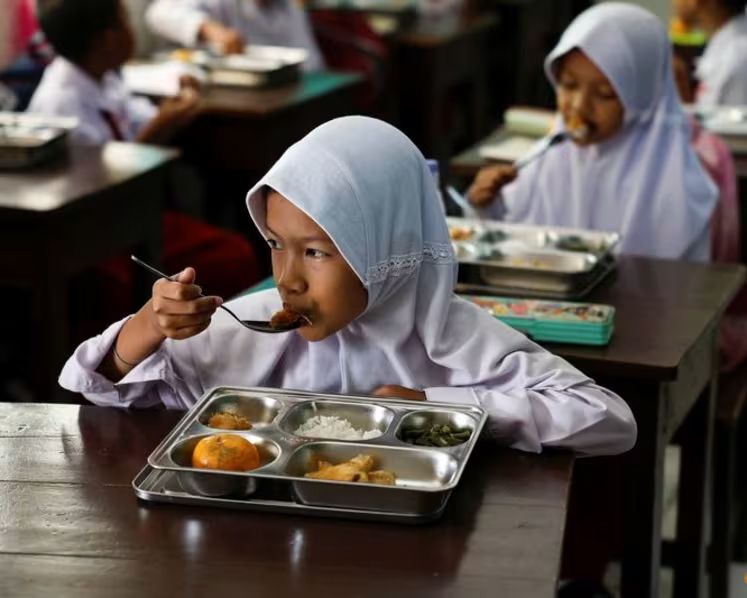
Indonesia's ambitious free meals programme, centrepiece of President Prabowo Subianto's election campaign, has entered fresh turbulence with the resignation of National Nutrition Agency chief Nanik Sudaryati Deyang, intensifying questions about the stability and future direction of the multibillion-dollar initiative.
Nanik, who assumed leadership of the embattled agency in June following her predecessor's dismissal and arrest, announced her departure on Wednesday, citing serious health complications requiring overseas treatment. In her resignation statement posted to Facebook, she revealed that medical assessments had flagged dangerously clogged arteries, a condition she attributed to the extreme stress associated with managing the sprawling nutritional programme. Her departure marks the second significant leadership upheaval at the agency within roughly five weeks, underscoring deepening institutional instability just months into the programme's implementation.
The timing of her exit is particularly telling given the converging pressures facing the agency. Beyond personal health concerns, Nanik's resignation coincides with mounting financial constraints, an active criminal investigation into programme operations, and persistent operational difficulties that have plagued the initiative since its January 2025 launch. The forced departure of her predecessor, who was arrested following raids connected to corruption allegations tied to the free meals scheme, established a troubling pattern of leadership disruption at a critical juncture when institutional continuity would be essential.
Budgetary pressures have intensified dramatically over recent weeks. The National Nutrition Agency disclosed that its 2026 allocation had been slashed for the second occasion, reducing the budget from 268 trillion rupiah to 229 trillion rupiah, equivalent to approximately USD 12.79 billion. This latest reduction represents a staggering 106 trillion rupiah decrease from the original 335 trillion rupiah appropriation, effectively cutting the programme's financial capacity by nearly a third before its full implementation cycle even completes. Agency officials indicated that additional budget reductions remain probable pending a forthcoming budgetary review, creating an atmosphere of financial uncertainty that compounds operational challenges.
The cascading difficulties confronting Prabowo's flagship initiative reflect deeper complications extending beyond administrative reshuffles and fiscal constraints. Since commencing operations, the free meals programme has confronted logistical bottlenecks, quality assurance failures, and multiple incidents of mass food poisoning that have generated public health concerns and undermined confidence in programme management. These operational stumbles are particularly damaging for an initiative presented as fundamental social policy and economic commitment rather than routine government expenditure.
The scope of the original vision underscores what has been lost to budgetary retrenchment. The programme initially targeted 83 million beneficiaries encompassing schoolchildren, pregnant women, and vulnerable populations, representing a substantial portion of Indonesia's population. As of the latest update, the agency had successfully distributed meals to approximately 62.5 million people. However, with budget allocations shrinking further and additional cuts pending, the trajectory suggests that coverage targets will continue declining unless political will reverses the current financial trajectory.
Prabowo's handling of the programme's institutional difficulties reveals a complex political calculus. Rather than displacing Nanik summarily, the president apparently accepted her health-based resignation with some sympathy, reportedly considering appointing her to lead a newly contemplated supervisory board designed to provide enhanced oversight of agency operations. This arrangement suggests potential recognition that the agency requires structural reinforcement and elevated governmental attention, though it simultaneously indicates acknowledgment that existing management structures have proven insufficient.
The political ramifications of the programme's difficulties extend beyond internal governance concerns. Opponents have characterised the free meals scheme as politically motivated rather than substantive policy, a criticism Nanik explicitly rejected in her resignation communication. She reframed the programme as a nutritional intervention mechanism serving legitimate public health objectives rather than electoral positioning. Nevertheless, the accumulation of scandals, leadership instability, and persistent operational failures provides ammunition to critics questioning whether Prabowo's most expensive campaign promise has become a liability rather than an asset.
For Malaysia and the broader Southeast Asian region, the Indonesian programme's trajectory offers instructive lessons about scaling ambitious social welfare initiatives. Large-scale public feeding programmes, while administratively complex under optimal conditions, become substantially more vulnerable to implementation failures when coupled with inadequate institutional capacity, insufficient oversight mechanisms, and budgetary constraints emerging after programme commencement. The Indonesian experience demonstrates the risks of launching major initiatives without fully resolving operational architecture and securing sustained financial commitments.
The succession question surrounding Nanik's replacement introduces additional uncertainty. She indicated that her successor would be a junior colleague within the agency, suggesting continuity in institutional culture rather than external reform leadership. This approach may prioritize stability over transformative change, potentially perpetuating existing operational patterns that have generated quality and logistical difficulties. Without clear indication of which junior leader will assume the position, the agency enters a transition period where decision-making authority remains ambiguous.
Looking forward, the programme faces a critical juncture. Continued budget reductions combined with leadership instability risk compromising delivery to the remaining 20 million intended beneficiaries beyond those already reached. The emerging supervisory board structure, should it materialise, could either strengthen accountability and operational performance or become a redundant bureaucratic layer without substantive authority. Indonesia's fiscal authorities must determine whether the free meals scheme represents core social policy warranting sustained investment, or a discretionary programme susceptible to retrenchment as budgetary pressures intensify.
The resignation of Nanik Sudaryati Deyang, whatever its immediate health justifications, symbolises broader systemic stress afflicting an initiative that Prabowo had positioned as defining his presidency. As institutions and officials exit this troubled programme, the fundamental questions persist: whether Indonesia can reorganise the initiative sufficiently to deliver on its original ambitions, and whether subsequent budget cycles will provide the financial foundation necessary for meaningful expansion or even stability of existing coverage.

