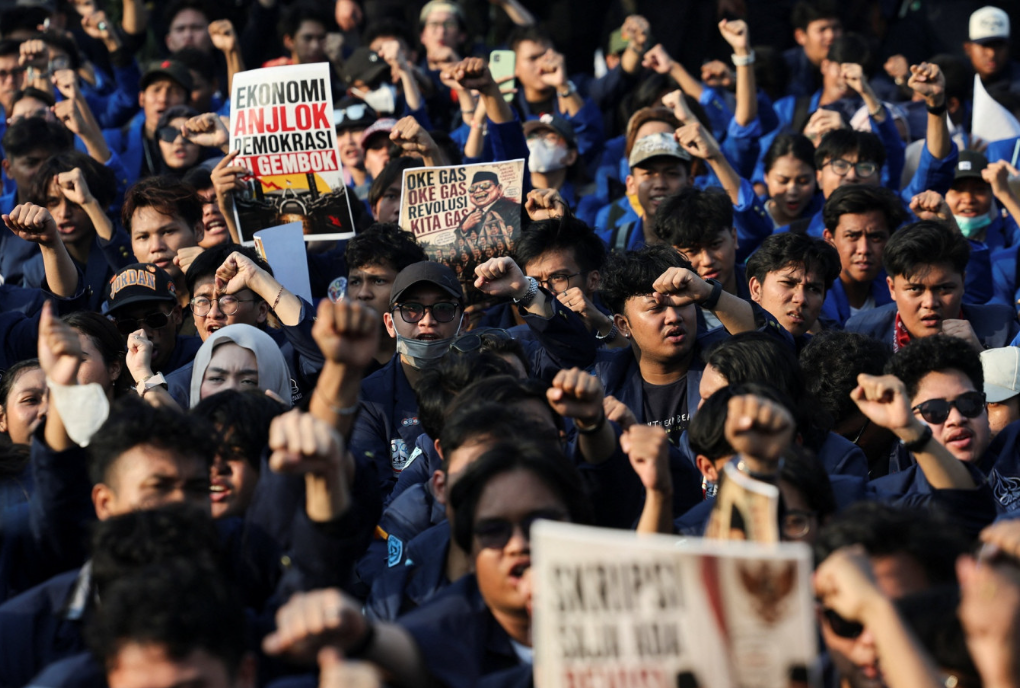
A deepening public rift has emerged across Indonesia over President Prabowo Subianto's marquee free nutritious meal scheme, as university students and civil society groups stage increasingly vocal demonstrations calling for either sweeping reforms or outright suspension, while beneficiaries and workers mobilise simultaneously to defend the initiative. The competing rallies underscore the programme's controversial position within the administration's policy agenda—touted as a centrepiece anti-poverty measure yet facing mounting pressure over financial sustainability, alleged mismanagement, and food safety incidents.
In Bali, hundreds of university students converged outside the Regional Legislative Council in Denpasar on Monday to demand a thorough independent audit of the meal scheme's implementation and finances. The protesters specifically petitioned both the government and the Supreme Audit Agency to investigate the programme's substantial budget allocation at a time when broader fiscal austerity measures are being rolled out across public spending. Their grievances extend beyond the meals initiative itself, reflecting wider anxieties about Indonesia's economic trajectory and institutional governance. The students framed their call as part of a larger democracy accountability movement, linking nutrition policy to questions about state efficiency and transparent resource management.
Meanwhile in Jakarta, thousands of students affiliated with the Indonesian Islamic Student Movement staged demonstrations outside the House of Representatives complex on June 22, specifically targeting leadership at the National Nutrition Agency following the arrest of three senior officials on corruption charges. The timing proved symbolically significant—occurring just days after a similar gathering of over one thousand protesters had convened at the same location to decry what they characterised as extravagant state spending. Led primarily by Trisakti University students and supported by counterparts from Mercu Buana and Esa Unggul universities, the demonstrators called not only for replacement of BGN management but also demanded broader economic stimulus and improvements to educator compensation packages. Their chants directly challenged President Prabowo to halt what they termed wasteful initiatives, explicitly naming the multi-trillion-rupiah meal programme as a prime target for suspension.
Students in Batam, Riau Islands, similarly organised a Thursday rally demanding that authorities conduct a comprehensive effectiveness review, with calls to suspend the programme if it failed to serve its stated nutritional objectives or reach intended beneficiaries appropriately. Muryadi Agus Priawan, representing the Batam Student Movement Alliance, characterised the demonstrations as necessary democratic oversight, arguing that student activism served an essential checking function to ensure government policies genuinely prioritised public welfare over institutional interests. This framing positioned university mobilisation as a legitimate accountability mechanism rather than mere protest activity, reflecting how Indonesian student movements have historically functioned as institutional critics.
The federal government has allocated at least Rp 335 trillion (US$15 billion) to the meal programme this year, targeting approximately 83 million recipients encompassing schoolchildren, pregnant women, and nursing mothers. Since its January launch, the initiative has become emblematic of the Prabowo administration's commitment to addressing malnutrition and childhood stunting across the archipelago. Yet the programme has simultaneously emerged as a major vulnerability for the government, attracting sustained criticism regarding its escalating costs relative to demonstrated outcomes, documented cases of food contamination, and an active corruption investigation that has already ensnared several agency leadership figures. These multiple vulnerabilities have transformed what was envisioned as a signature welfare achievement into a genuine political liability.
Government officials have steadfastly rejected calls for suspension, arguing instead for programmatic improvement rather than abandonment. Muhammad Qodari, head of the Government Communications Agency, has publicly defended continuation of meal distributions despite mounting pressure. In response to efficiency demands, the National Nutrition Agency has reduced the annual budget to Rp 228.4 trillion and implemented several operational modifications, including halting meal service during the late June through mid-July school break and ceasing distributions in 76 schools located in more affluent areas deemed capable of meeting student nutritional requirements independently. These adjustments represent an implicit acknowledgment of funding constraints while attempting to preserve the programme's core functions.
However, the government's rationalisation measures have provoked vigorous counter-mobilisation from constituencies directly dependent on the scheme's continuation. Hundreds of kitchen workers across Batam organised their own weekend demonstration outside the local legislative council, protesting efficiency measures that would compress distribution schedules from six to five days weekly and suspend operations during school holidays. Langga Husein, protest coordinator representing approximately 1,500 affected kitchen workers in Batam alone, emphasised the direct income implications of reduced operating schedules for daily-wage labourers whose families depend on consistent employment. The workers contended that suspending services during academic holidays would particularly disadvantage vulnerable populations including pregnant women, nursing mothers, and toddlers requiring year-round nutritional support regardless of school calendar.
Support for programme continuation has extended beyond kitchen workers to encompass broader agricultural and rural constituencies. In Bandar Lampung, residents rallied in support of maintaining meal distributions, with field coordinator Maradoni highlighting the scheme's substantial economic multiplier effects within local commodity markets. The programme absorbs considerable volumes of locally-sourced products including corn, rice, cassava, and seasonal fruits and vegetables, generating price stability benefits for agricultural producers. Maradoni stressed that farmers and rural communities view the initiative as economically beneficial beyond its stated nutritional objectives, providing reliable demand that stabilises commodity prices and supports agricultural livelihoods. Similar pro-continuation mobilisations have surfaced across Jakarta, West Nusa Tenggara, and East Java, indicating that support extends well beyond Lampung constituencies.
The ideological and material divisions exposed by these competing demonstrations reveal fundamental disagreements about the programme's actual utility and sustainability. Student protesters operating from a fiscal conservatism framework emphasise budget constraints and demand accountability measures before continued spending increases. Kitchen workers and farmers conversely emphasise the programme's livelihood implications and economic stimulus dimensions, viewing suspension as socially destructive despite acknowledged implementation problems. These competing claims cannot be easily reconciled within existing policy frameworks, suggesting that any government decision—whether to continue, suspend, or substantially restructure the initiative—will necessarily disappoint significant constituencies while satisfying others only partially.
The corruption investigation surrounding National Nutrition Agency officials has compounded the reputational damage to the programme while simultaneously providing student activists with specific grievance anchors beyond general fiscal objections. The fact that agency leadership has faced arrest on alleged misappropriation charges validates concern about implementation integrity while providing fuel for broader arguments about systemic governance problems within the Prabowo administration. For worker and farmer constituencies, however, such allegations represent management problems addressable through oversight reform rather than programme abolition, distinguishing their response from student demands for fundamental suspension. This distinction between demanding improved implementation versus demanding termination represents the core fault line dividing public opinion.
Looking forward, the trajectory of these competing protests will likely shape how effectively the government can sustain its flagship welfare initiative. Sustained student mobilisation maintaining pressure for suspension or dramatic restructuring could force further reductions despite worker and farmer opposition. Conversely, continued demonstrations by beneficiary constituencies might embolden government officials to resist student demands while implementing the modest efficiency measures already introduced. What remains clear is that the free meal programme, initially conceived as an unambiguous poverty-reduction achievement, has instead become a focal point for broader contestations about state capacity, fiscal responsibility, and whose interests—vulnerable populations, agricultural producers, or fiscal conservatives—should weigh most heavily in determining Indonesian economic policy during a period of acknowledged budgetary constraint.

