President Prabowo Subianto's centrepiece nutritional meal scheme faces mounting scrutiny as beneficiaries themselves question its value, with some openly stating they would rather go without assistance than accept substandard food for their children. The controversy reflects deeper frustrations over programme implementation, raising questions about whether the Rp 268 trillion (US$18.74 billion) initiative is delivering meaningful results or becoming a vehicle for waste and mismanagement across Indonesia's sprawling kitchen network.
The quality crisis became public when a mother from Kediri in East Java posted images of meals meant for her eight-month-old child—unidentifiable white paste portions so unappealing she ultimately fed them to her chickens. The post resonated widely, accumulating over 11,000 likes within 24 hours and sparking broader conversation about what recipients actually receive. Nesti Nagari, the mother who shared the incident, explained that she possesses sufficient means to feed her child nutritious food independently and saw no value in accepting meals that appeared potentially unsafe or nutritionally questionable. Her decision to decline future portions signals a troubling disconnect between the programme's intentions and its ground-level reality.
Similar complaints emerged from Semarang, where Diah Farika documented receiving unripe fruit, inadequately portioned meals, and menus that deteriorated in nutritional value over consecutive months. Her attempts to address these concerns through official channels yielded dismissive responses from the nutrition fulfilment service unit (SPPG) responsible for meal preparation. Rather than accept substandard provisions, Farika chose to decline them entirely, advocating instead for a temporary programme halt to permit comprehensive kitchen inspections by the National Nutrition Agency (BGN). Her position reflects a striking willingness among beneficiaries to sacrifice immediate benefits if doing so enables systemic reform.
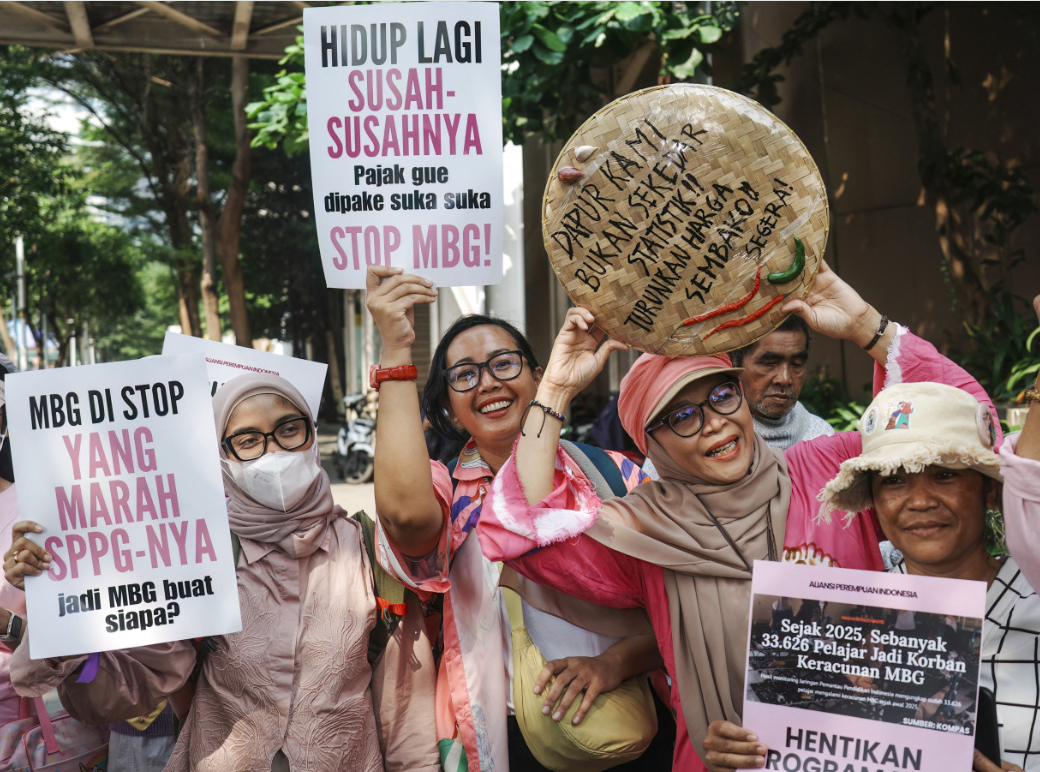
The willingness of mothers to forgo assistance extends beyond individual families. On Thursday, dozens of women's rights activists affiliated with the Indonesian Women's Alliance (API) rallied in Central Jakarta, explicitly demanding the government suspend and comprehensively review the initiative. This grassroots pressure from those intended to benefit—rather than external critics—lends particular weight to calls for reform. The fact that programme beneficiaries themselves are leading demands for suspension suggests confidence problems run deeper than isolated kitchen management failures.
Operational dysfunction compounds quality concerns. Several nutrition preparation facilities reported temporary closures during early June resulting from delayed funding disbursements, though some subsequently reopened. These closures left enrolled families without meals while raising questions about the BGN's capacity to manage logistics across approximately 27,000 kitchens nationwide. Meanwhile, a recent corruption scandal involving former BGN leadership prompted the agency's incoming management to freeze further network expansion, creating uncertainty among the private investors and operators who have collectively invested hundreds of billions of rupiah into kitchen infrastructure.
Investor concerns reflect the scale of private sector involvement in the programme. A group of investors recently visited BGN offices seeking clarity about the initiative's future viability, explicitly stating they required assurances regarding returns on massive capital investments should the system contract. This dynamic introduces complications: political pressure to suspend or reform the programme faces resistance from commercial stakeholders whose economic interests depend on continued operation and expansion. The tension between accountability demands and investor protection creates institutional gridlock that may obstruct necessary improvements.
Independent oversight platform MBG Watch, established by civil society groups, has documented how mounting problems erode public confidence. Researcher Isnawati Hidayah from the Center of Economic and Law Studies (CELIOS) posed a crucial question gaining traction among sceptical Indonesians: What does this multi-billion-dollar budget actually accomplish, and whose interests does it ultimately serve? A CELIOS study revealed approximately 34 per cent of current beneficiaries—roughly 61 million children and pregnant women—do not belong among groups most requiring government nutrition intervention. These findings suggest the programme may be subsidising families with adequate economic resources while simultaneously failing to properly serve vulnerable populations.
In response to mounting criticism, the BGN has initiated beneficiary reassessment and removal procedures. As of Thursday, the agency dropped 76 schools across Java, affecting more than 39,000 beneficiaries it deemed capable of meeting nutritional needs independently. Agustina Arumsari, the BGN's deputy head and spokesperson, characterised this refocusing as a necessary step toward concentrating resources on Indonesians genuinely requiring state intervention. The agency simultaneously announced austerity measures, including ending daily kitchen incentives during non-operational periods and conducting evaluations of underperforming facilities.
These adjustments acknowledge programme dysfunction while attempting to salvage its credibility through targetted reforms rather than wholesale suspension. However, the effectiveness of such measures remains uncertain given the institutional problems already apparent. The BGN's capacity to identify and eliminate underperforming kitchens depends partly on administrative systems and oversight mechanisms that the corruption scandal suggested were themselves compromised. Meaningful improvement likely requires more fundamental restructuring than current efficiency adjustments provide.
For Malaysian observers, Indonesia's nutritional meal programme experience offers instructive lessons about the implementation challenges facing large-scale, nationally coordinated social assistance schemes. The initiative's architects designed an ambitious response to documented stunting problems affecting millions of Indonesian children—a goal worthy of regional attention given similar challenges across Southeast Asia. Yet the execution difficulties—from food safety and quality control to logistics, corruption risks, and beneficiary targeting—suggest that programme scale and budget size do not automatically translate into effective service delivery or measurable health outcomes.
The willingness of Indonesian programme beneficiaries to sacrifice immediate assistance if doing so enables genuine reform suggests public recognition that poorly executed aid programmes may cause more harm than benefit. This sentiment challenges conventional assumptions that rejection of government assistance signals programme success. Instead, beneficiaries appear evaluating the initiative on genuine utility measures: whether it provides safe, nutritious, appropriate food delivered consistently. Their conclusion that current provision fails these basic standards carries implications beyond Indonesia's borders, particularly for other Southeast Asian governments considering similar mass nutrition initiatives.
The coming months will reveal whether the BGN's reform efforts address underlying implementation problems or merely adjust programme scope while preserving dysfunctional systems. Meanwhile, the image of meals intended for vulnerable children being fed to chickens remains a powerful indictment of bureaucratic failure in service delivery, a reminder that good intentions and substantial budgets cannot compensate for absent oversight, inadequate quality control, and institutional cultures resistant to accountability. Indonesia's nutritional crisis demands solutions, but solutions that do not function effectively may ultimately do more damage to public health and public trust than transparent acknowledgement of problems and systemic overhaul.

