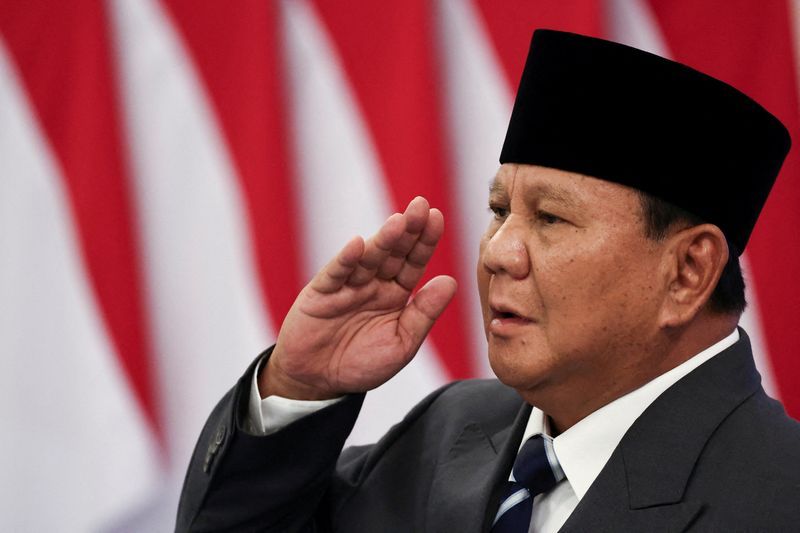
Indonesia is preparing to weave artificial intelligence across its most ambitious social programmes in a strategic push to modernise governance and accelerate economic growth. A draft presidential regulation, which has not previously been publicly disclosed, outlines an ambitious roadmap for embedding AI across multiple departments and local administrations from 2026 through 2029, with the overarching objective of leveraging technology to enhance the nation's flagship initiatives. The regulation is currently pending President Prabowo Subianto's signature and represents Jakarta's most comprehensive attempt yet to mainstream AI adoption across the civil service.
The Indonesian government has identified its massive free meals initiative—a programme with a USD 15 billion budget aimed at ensuring food security for schoolchildren and vulnerable populations—as a priority area for AI integration. According to the draft regulation, artificial intelligence would serve multiple functions within this sprawling operation: designing menus tailored to regional tastes and nutritional requirements, deploying computer vision to monitor kitchen hygiene standards, forecasting food demand patterns to minimise waste, flagging operational irregularities that might indicate mismanagement or fraud, and cross-referencing health data systems to generate early warnings of potential health emergencies or disease outbreaks. This multifaceted application reflects Jakarta's belief that technology can address persistent governance challenges that have plagued the programme.
The free meals scheme has faced sustained criticism and recent crises that have underscored the urgency of improved oversight mechanisms. Earlier this year, the programme's leadership faced upheaval when the head of the initiative was dismissed and arrested amid allegations of impropriety. The initiative has been tainted by documented irregularities in kitchen construction and safety protocols, while a food poisoning outbreak affecting tens of thousands of schoolchildren last year exposed serious gaps in emergency response capacity and quality control. These failings have also triggered concerns about fiscal discipline, particularly given Indonesia's constrained budgetary position and competing demands for public resources.
Indonesia's push to become an AI-adopting nation follows a trajectory considerably slower than its more advanced regional neighbours. Both Singapore and Malaysia have moved decisively to position themselves as regional development hubs for artificial intelligence and cloud computing, successfully attracting billions of dollars in investment from multinational technology firms seeking to establish infrastructure that meets surging demand for data processing and machine learning capabilities across Asia. By contrast, Indonesia's progress in developing domestic AI capacity has lagged behind these competitors, prompting government policymakers to recalibrate strategy around rapid adoption and integration rather than indigenous development.
The underlying economic ambition is substantial. The draft regulation projects that strategic deployment of AI across the economy could expand Indonesia's gross domestic product by as much as 12 percent, or approximately USD 366 billion, by the end of the decade. This transformative figure underpins the government's urgency in moving forward with the initiative. However, realising such gains depends on surmounting formidable obstacles that currently constrain Indonesia's AI readiness. The country lacks adequate foundational infrastructure, particularly semiconductor and chip manufacturing capabilities, and suffers from a pronounced shortage of workers possessing the technical skills required to develop, deploy, and maintain sophisticated AI systems at scale.
Tech analyst Wahyudi Djafar, who contributed to drafting the regulation and serves on the government's AI task force, has disclosed that multinational corporations including Meta Platforms, IBM, and Microsoft participated in shaping the proposed framework. Microsoft has already signalled its commitment to Indonesia's digital transformation, announcing in 2024 a planned investment of USD 1.7 billion over several years to expand cloud infrastructure and artificial intelligence capabilities throughout the archipelago. These corporate partnerships underscore how Indonesia's AI strategy hinges substantially on foreign technology providers and foreign-invested facilities rather than homegrown innovation.
Academic observers offer a sobering assessment of Indonesia's structural position within the global AI landscape. Derwin Suhartono, a professor of artificial intelligence at Bina Nusantara University in Jakarta, contends that Indonesia lacks the foundational capabilities to transition into an AI developer nation and may become locked into a position as a consumer of technologies that foreign corporations export to its markets. He further critiques the government's current approach, suggesting that while a structured and well-organised roadmap could theoretically enable productive AI integration into existing programmes, the government's stated ambitions remain largely rhetorical when measured against actual implementation capacity and institutional readiness.
Beyond the free meals scheme, the regulation envisions deploying AI across Indonesia's public health infrastructure. The government intends to utilise artificial intelligence to analyse health screening data collected through its free health testing programmes and to improve the efficiency of tuberculosis detection and diagnosis. These applications reflect a broader philosophy that AI-driven automation can simultaneously enhance service quality and reduce operational expenditures—a particularly appealing proposition for a government managing a sprawling archipelago with finite resources.
Recognising that technology deployment alone cannot succeed without adequate human capital and institutional foundations, the draft regulation also proposes a suite of supporting measures. A proposed "sovereign AI fund," to be administered primarily through Indonesia's newly established wealth vehicle, Danantara Indonesia, would direct capital toward developing the ecosystem. The regulation similarly contemplates fiscal incentives to attract and retain AI researchers and specialists, acknowledging the urgent need to close substantial talent gaps within the public and private sectors. These measures represent an acknowledgment that building sustainable AI capacity requires investment across multiple dimensions simultaneously.
Concomitant with its adoption strategy, the government has drafted a separate regulation requiring government bodies to identify, report, and mitigate AI-related risks and vulnerabilities. The framework specifically flags concerns including misuse of biometric data systems, violations of intellectual property rights, and the generation and dissemination of deepfake content. This risk-focused regulation suggests that policymakers are not proceeding with technological enthusiasm unchecked by cautionary considerations, recognising that rapid AI deployment without robust safeguards could create novel vulnerabilities within government operations and public service delivery systems.
The current regulatory proposal builds upon foundations laid in a white paper released during the preceding administration, indicating that AI integration represents genuine strategic continuity rather than a passing initiative. The timeline for President Prabowo's signature remains uncertain, and his office has not yet commented publicly on the regulation's status or expected timeline for formalisation. Nevertheless, the breadth and specificity of the draft suggests that Indonesia's leadership views AI integration as integral to the administration's broader reform and modernisation agenda, even as implementation challenges loom large. Whether Indonesia can convert strategic ambition into operational reality will significantly influence whether the nation can narrow its widening technological gap with regional peers.

