Indonesia's anti-corruption drive into its flagship free meals programme has intensified with the arrest of two more suspects, expanding an already significant investigation that has entangled three former senior officials from the National Nutrition Agency (BGN). The probe now encompasses a wider network of individuals allegedly involved in manipulating procurement processes and exploiting government resources within the multitrillion-rupiah initiative designed to feed over 80 million schoolchildren and pregnant women across the nation.
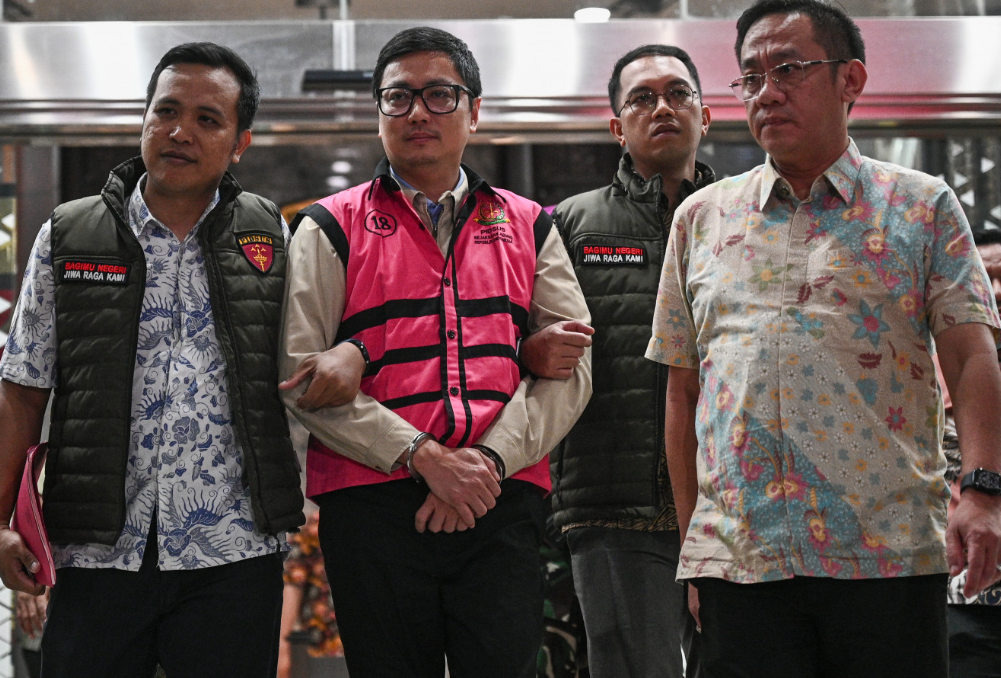
Andri Mulyono, a commissioner at logistics company PT Yasa Artha Trimanunggal, became the fourth suspect after interrogation on Friday (June 12) by the Attorney General's Office (AGO). Investigators allege that Andri orchestrated a systematic scheme to artificially inflate the cost of more than 21,000 electric motorcycles intended for programme kitchen operations, deliberately engineering prices to consume nearly the entire Rp 1.03 trillion (US$58.2 million) procurement budget allocated by BGN. According to Syarief Sulaeman Nahdi, investigation director at the Office of Assistant Attorney General for Special Crimes (Jampidsus), the suspect deliberately manipulated the tender process to create unlawful financial gains through the inflated procurement exercise.
The electric motorcycle purchases themselves sparked considerable public controversy in April when critics questioned the timing and necessity of such acquisitions for a nutrition programme nominally focused on food provision. Finance Minister Purbaya Yudhi Sadewa subsequently announced that no additional electric motorcycle procurement would proceed in 2026, attributing the earlier approvals to internal miscommunication within his ministry that resulted in partial components of the proposal receiving clearance without comprehensive review. This explanation, however, has done little to restore public confidence in the initiative's management and implementation structures.
A second businessman arrested last week, Asep Yusuf Somantri, represents another layer of the alleged conspiracy. Investigators assert that Asep leveraged his relationship with former BGN deputy head Sony Sonjaya to gain irregular access to the partner verification mechanisms, enabling him to circumvent normal registration deadlines and facilitate kitchen applications after the official closure of enrollment periods. This type of insider manipulation suggests the corruption extended beyond simple procurement padding into the fundamental gatekeeping processes that were meant to ensure programme integrity and appropriate partner selection.
The acceleration of arrests reflects the AGO's systematic dismantling of what appears to be a coordinated network rather than isolated misconduct. Sony Sonjaya, fellow former deputy Lodewyk Pusung, and former BGN head Dadan Hindayana were arrested on June 3, within 24 hours of President Prabowo Subianto's dismissal of all three officials. This swift sequence of events underscores the government's apparent determination to address the scandal decisively, though it also raises questions about whether institutional safeguards were adequate to prevent such high-level involvement in corrupt practices.
Investigators are now reviewing Sony's application to become a justice collaborator, a mechanism that would allow him to disclose information about more than 20 additional individuals allegedly implicated in the scheme in exchange for more lenient treatment. Syarief indicated that further questioning of Sony will occur as the AGO evaluates this application, suggesting that the investigation's scope could expand significantly beyond the five currently arrested suspects. The potential involvement of additional actors indicates this may represent a more systemic problem within the programme's governance structures rather than merely opportunistic wrongdoing by a few officials.
The reputational damage has been compounded by widespread reports of food safety failures. Since the programme's rollout in early 2025, authorities have recorded at least 33,000 cases of mass food poisoning, indicating that corruption allegations are merely one dimension of serious implementation failures. These health incidents have naturally intensified public concern about whether funds ostensibly directed towards nutrition provision have been diverted or whether quality standards have been compromised by cost-cutting linked to the procurement manipulations now under investigation.
Public discontent crystallized into a significant protest on Friday dubbed #MenujuIndonesiaBangkrut (Indonesia heading for bankruptcy), during which demonstrators characterised the free meals programme as a misallocation of resources given the nation's currency weakness and mounting economic pressures. This framing represents a political challenge extending beyond the corruption allegations themselves, as critics now question whether the entire initiative represents sound governance during economically challenging times. The protest dynamics suggest that restoring programme credibility will require not only prosecuting individual wrongdoers but addressing fundamental questions about priorities and management competence.
Government Communications Agency head Muhammad Qodari responded to the protests by defending the programme's continuation, arguing that implementation challenges are inevitable in any large-scale initiative and do not warrant abandonment. His somewhat dismissive comments about criticism—delivered through the analogy that "only dead people have no problems"—appear unlikely to satisfy sceptics increasingly concerned about the combination of corruption, food safety failures, and economic opportunity costs. The rhetorical gap between government assurances and public concerns reflects deeper erosion of institutional confidence that prosecutions alone may struggle to repair.
For Malaysia and other Southeast Asian nations observing Indonesia's institutional response to the scandal, the case illustrates both the complexities of managing large welfare programmes and the critical importance of robust oversight mechanisms. The rapid cascade of arrests suggests that Indonesia's anti-corruption institutions possess some capacity to respond decisively when scandals surface, though the depth of involvement by senior BGN officials raises troubling questions about whether adequate internal controls existed to prevent such misconduct. The intersection of corruption, food safety failures, and public sector management challenges presents a cautionary narrative about the operational difficulties inherent in executing ambitious social programmes at scale, particularly within institutional environments where oversight structures may remain underdeveloped.