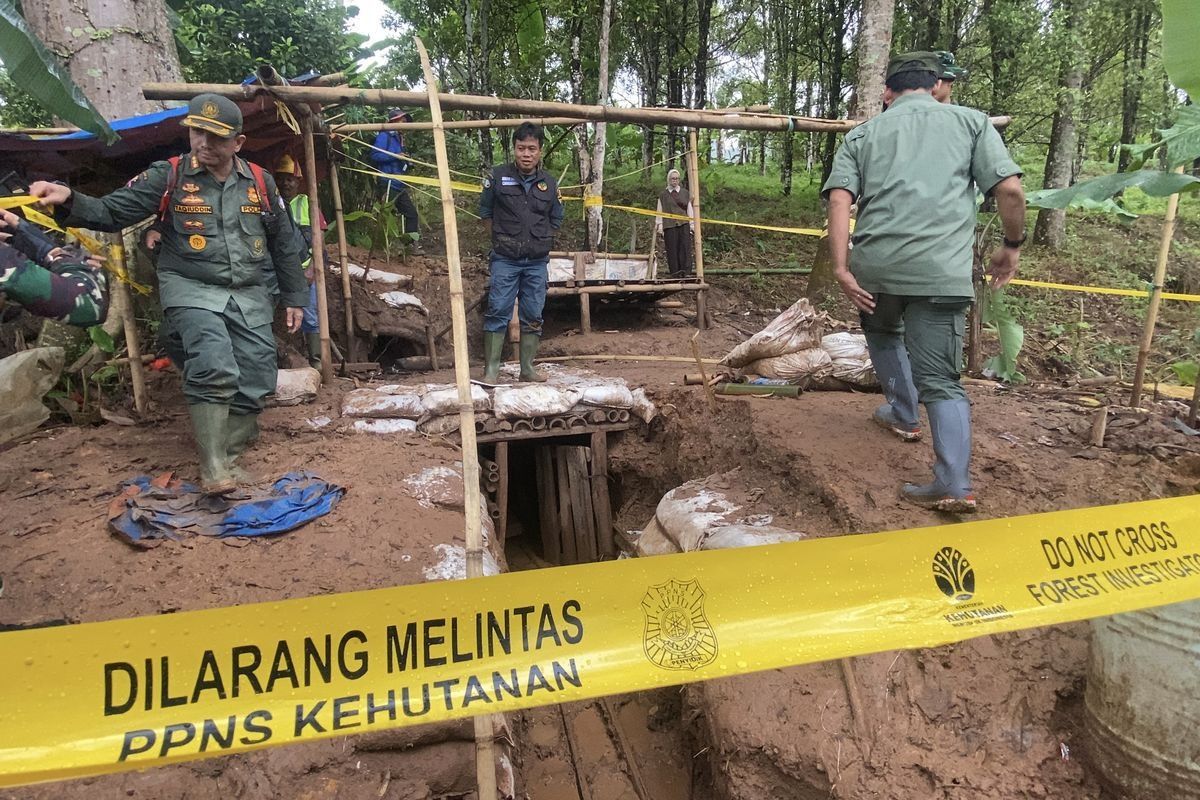
Indonesia's energy ministry has escalated enforcement action against a large-scale illegal gold mining operation by formally charging 24 foreign nationals as criminal suspects, marking a significant development in the country's battle against unauthorised resource extraction in its eastern regions. The charges, announced late on Thursday, relate to infrastructure development and processing activities surrounding the Gunung Botak area in Maluku, with energy ministry official Jeffri Huwae indicating that the suspects faced serious allegations of building roads, facilities, and equipment to support the clandestine mining venture.
The legal consequences for those convicted could be substantial, with maximum prison sentences reaching five years under Indonesia's mining regulations. However, the ministry's initial statement withheld critical details about the defendants' nationalities and the volume of gold extracted, limiting immediate public understanding of the operation's scale and international dimensions. Earlier reporting suggested the involvement of Chinese nationals operating through the local company PT Harmoni Alam Manise, though officials have not formally confirmed these details or provided broader context about the network's structure.
The enforcement action reflects a bifurcated challenge for Indonesian authorities. Of the 24 foreign suspects, only 12 are currently in custody within Indonesia's jurisdiction, while the remaining 12 have evaded capture and remain outside the country. This jurisdictional barrier complicates prosecution and highlights the transnational nature of sophisticated illegal mining operations, which often exploit Indonesia's vast territorial expanse and the relative isolation of resource-rich regions. The ability of half the suspects to remain beyond reach underscores persistent weaknesses in border monitoring and international cooperation frameworks that could benefit from regional coordination, particularly given Southeast Asia's shared experience with cross-border resource crimes.
Beyond the foreign nationals, Indonesian authorities have also identified two domestic suspects in connection with the operation, suggesting involvement from local facilitators who may have provided essential permits, land access, or protection. This dimension points to a deeper systemic issue affecting Indonesia's resource governance: the complicity of insider actors who enable illegal operations to flourish despite formal regulatory frameworks. The presence of local co-conspirators often indicates that illegal mining enjoys at least tacit tolerance or active support within regional power structures, complicating enforcement even when central authorities mobilise resources.
Maluku's emergence as a focal point for illegal mining reflects broader patterns across Indonesia's eastern archipelago. The region's geological richness, combined with limited institutional capacity and economic pressures facing local communities, creates conditions favourable to illicit extraction. The Gunung Botak operation appears particularly ambitious in its scope, having invested in substantial infrastructure rather than employing purely artisanal methods, suggesting either significant capital backing or a long-term commitment to the venture.
This case does not represent an isolated incident in Indonesia's enforcement landscape. Illegal mining involving foreign nationals has appeared repeatedly across the archipelago, with Papua province experiencing its own high-profile incidents. Last year, police in Papua's Senggi district apprehended four Chinese nationals engaged in unauthorised mining activities, demonstrating that the phenomenon extends across multiple regions and has recurred despite periodic crackdowns. The geographic spread of these operations—from Maluku to Papua—indicates either a loosely coordinated network of operations or separate groups exploiting similar opportunities across Indonesia's vast eastern territories.
For Malaysian readers and regional observers, Indonesia's challenges with illegal foreign mining carry instructive significance. The ease with which foreign operators can establish infrastructure and extract resources within Indonesian territory suggests vulnerabilities in monitoring and enforcement that could, in principle, affect other Southeast Asian nations with comparable geological endowments and geographical characteristics. The involvement of well-organised groups capable of building processing facilities and road networks implies professional operational capacity that transcends simple opportunistic extraction, raising questions about financing, supply chains, and markets for illicitly sourced gold.
The enforcement response also highlights Indonesia's determination to reassert control over its resource base, particularly in peripheral regions where central authority can be attenuated. The energy ministry's public disclosure of charges signals political commitment to tackling the issue, though the escape of half the suspects suggests that intentions may outpace operational capacity. Effective action will require sustained coordination between law enforcement agencies, tighter border controls, and mechanisms to address the local grievances and economic incentives that enable illegal mining to persist.
Moving forward, the case may catalyse broader discussions within Indonesia about regulatory reform, community engagement in resource-rich areas, and international cooperation mechanisms for combating transnational resource crimes. The scale of the Gunung Botak operation—requiring substantial investment in infrastructure and coordination across multiple nationalities—demonstrates that illegal mining has evolved beyond small-scale, low-tech extraction into a more sophisticated enterprise. Addressing this evolution will demand equally sophisticated responses that combine enforcement, governance reform, and regional collaboration among Southeast Asian nations sharing similar vulnerabilities.

