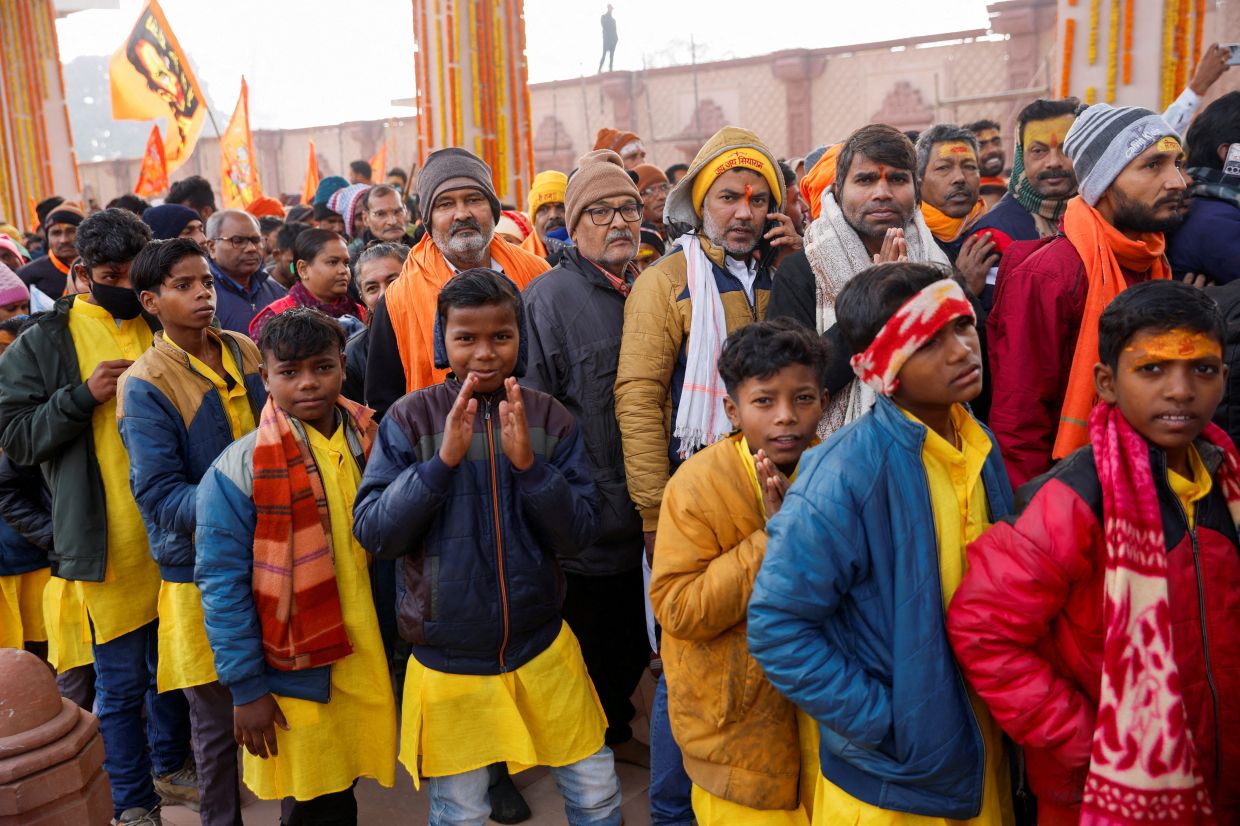
An investigation into missing donations at India's prominent Ram temple has shone a spotlight on the precarious state of financial oversight at major religious institutions across the country, prompting calls for sweeping reforms to how temples and shrines manage the enormous sums entrusted to them by devotees. Since launching the probe in June, authorities arrested eight individuals tasked with handling contributions at the revered Hindu shrine located in Ayodhya in northern India. Though exact figures have not been publicly disclosed, media accounts suggest the alleged theft could total around 30 million rupees, equivalent to approximately US$314,000.
For ordinary devotees like Ashok Prasad Kushwaha, an auto-rickshaw driver in Delhi who has made three pilgrimages to the Ram temple within two years, the breach represents a profound violation of religious trust. Kushwaha articulated the sense of betrayal many feel when learning of such misconduct, noting that contributions typically come from individuals with limited means who view their donations as participation in divine purpose. The realisation that money surrendered in good faith might be diverted for personal gain strikes at the emotional core of religious practice, transforming what should be a spiritually uplifting act into a source of disillusionment.
This case represents merely the latest chapter in an expanding narrative of financial impropriety at India's most sacred sites. Previous scandals have implicated other major temples, including the Badrinath shrine and the Tirumala Tirupati Devasthanams trust, which ranks among the world's wealthiest religious organisations with estimated assets reaching US$31 billion. The pattern suggests systemic vulnerabilities rather than isolated incidents of individual misconduct, pointing to fundamental structural weaknesses in how India's religious institutions handle their finances.
Expert analysis indicates the core deficiency lies in the absence of standardised transparency mechanisms and independent accountability structures. Rahul Easwar, a Hindu activist and descendant of a former chief priest at Kerala's Sabarimala temple, identifies the crux of the problem as inadequate institutional safeguards. He advocates for comprehensive financial controls encompassing mandatory receipt issuance, computerised accounting infrastructure, video surveillance of donation processing areas, and autonomous external auditing. At the Ram temple specifically, the compromised individuals exploited loose counting protocols and insufficient camera coverage to execute their alleged scheme.
The gravity of reform requirements becomes apparent when considering the scale at which the Ram temple operates. Inaugurated by Prime Minister Narendra Modi in 2024, this newly constructed shrine has rapidly become one of India's most significant religious destinations, welcoming approximately 90,000 visitors daily. These pilgrims arrive bearing diverse offerings—currency notes, jewellery, precious metals—creating substantial daily revenue streams that rival many commercial enterprises in volume and complexity. The financial velocity alone demands institutional-grade management systems rather than the traditional, informal approaches that currently predominate.
The theft allegations carry heightened sensitivity given the temple's historically fraught circumstances. The construction site itself became the focal point of India's most bitter religious conflict in modern history. Hindu believers maintain their deity Ram was born at this location thousands of years ago, though a mosque subsequently occupied the spot following construction by a Mughal emperor in the sixteenth century. This dispute triggered catastrophic intercommunal violence in 1992 when Hindu activists demolished the mosque, resulting in more than 2,000 deaths in nationwide riots. Resolution came only in 2019 when India's Supreme Court determined the land should be allocated for temple construction, unleashing an ambitious nationwide fundraising campaign that ultimately accumulated roughly US$341 million—funds now requiring rigorous accounting.
The economic dimensions of India's religious sector underscore why governance failures carry national implications. Current market valuations place India's spiritual and religious economy at approximately US$70.14 billion, with projections suggesting this figure will nearly double to US$135.41 billion by 2034. As this sector expands exponentially, the absence of consistent regulatory frameworks creates mounting vulnerability. Legal specialists including Sonam Chandwani, managing partner at KS Legal & Associates, identify a fundamental governance vacuum: India lacks a unified national standard establishing uniform financial transparency requirements across all religious organisations. Instead, temples operate under divergent legal arrangements and varying tax systems, generating a patchwork of inconsistent oversight.
The challenges multiply during mass religious gatherings that temporarily concentrate unprecedented numbers of devotees. The Kumbh Mela pilgrimages, which attract millions of worshippers simultaneously, exemplify the operational complexity modern temples face. During such events, collection volumes expand to magnitudes that demand sophisticated cash-handling procedures and real-time accountability mechanisms. Contemporary Hindu institutions have evolved beyond their traditional function as places of prayer into complex organisations operating multiple services, managing substantial property portfolios, and administering educational and charitable programmes. Political commentator Anurag Naidu emphasises that this transformation necessitates institutional frameworks rivalling those of major commercial and governmental bodies, complete with robust internal controls and independent external oversight.
The path toward meaningful reform must address both immediate security concerns and longer-term governance architecture. Industry specialists advocate implementing digital accounting systems that create permanent, auditable transaction records; installing comprehensive surveillance infrastructure in all donation collection areas; requiring standardised protocols for cash handling and reconciliation; and establishing independent audit committees comprising external experts unaffiliated with temple management. Additionally, temples should transition toward encouraging digital payment methods, which simultaneously increase security, provide automatic documentation, and reduce the physical handling of large cash volumes that creates both temptation and logistical complexity.
These reforms hold implications extending beyond India's borders. Southeast Asian nations with significant Hindu and other faith communities, including Malaysia, Singapore, and Thailand, operate temples and religious institutions managing comparable volumes of donations. The governance lessons emerging from India's investigation offer relevant cautionary insights for regional religious organisations seeking to prevent similar scandals. As religious institutions globally encounter modernisation pressures and expanding financial responsibilities, establishing transparent, accountable systems becomes not merely advisable but essential to maintaining donor confidence and institutional legitimacy.

