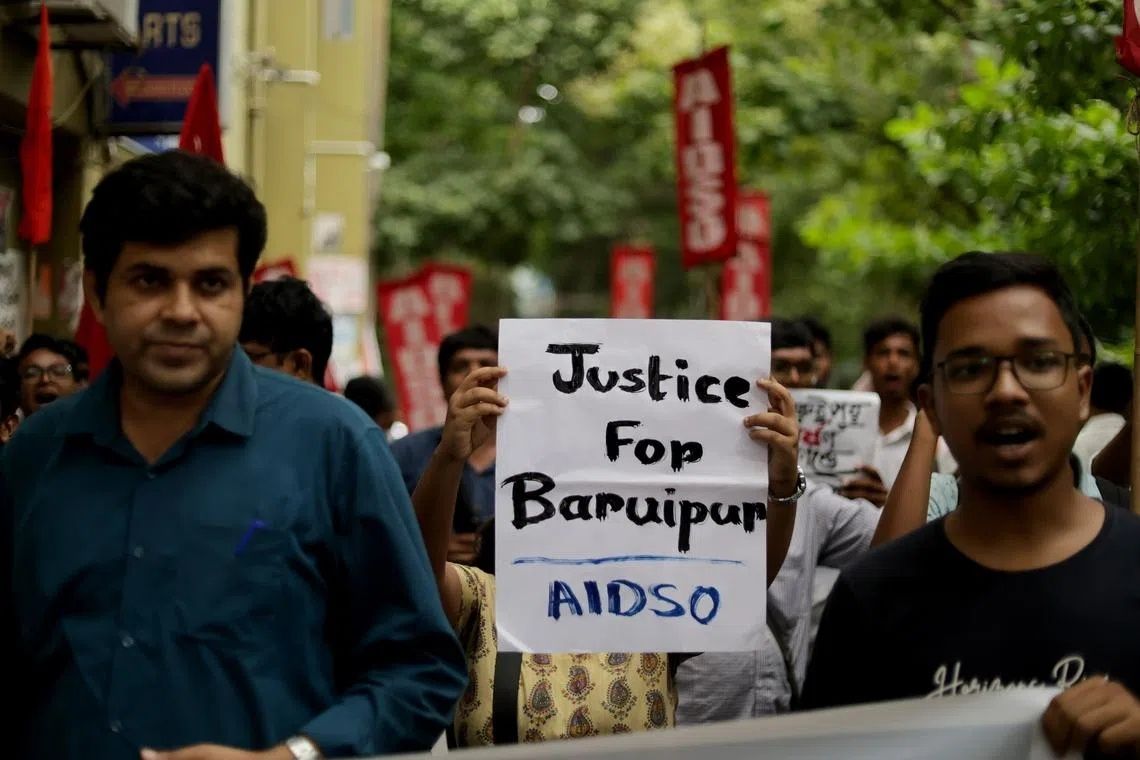
The arrest of 35 individuals for rioting and property damage marks a significant escalation in India's response to public outcry over the death of an 11-year-old girl discovered in a pond in Baruipur, a city roughly 30 kilometres south of Kolkata in West Bengal state. The discovery on July 5, a day after the child went missing, ignited widespread fury that transformed into street violence as communities took law enforcement into their own hands. The subsequent crackdown on protesters illustrates the tension between public demand for immediate justice and state efforts to maintain order in a deeply traumatised region.
The incident has exposed the fragility of public confidence in formal judicial mechanisms across India's eastern regions. During the days following the discovery, angry mobs blocked major thoroughfares and set multiple vehicles ablaze as anger over the crime became uncontrollable. These actions, while rooted in genuine community distress, resulted in collateral damage and raised concerns about vigilante justice spiralling beyond the original crime. Police officials, including senior officer Arvind Kumar Anand, acknowledged they continue identifying additional participants through digital evidence, suggesting the final arrest toll may rise substantially.
One tragic dimension of the protests involved the death of an innocent bystander, who was killed by the very crowds demanding justice for the young victim. This development underscores how collective outrage, when channelled through violent action rather than institutional processes, frequently harms those caught in its path. The lynching represents a troubling pattern visible in Indian society where communities increasingly bypass legal systems when trust erodes, with devastating consequences for vulnerable individuals who cannot defend themselves against mob violence.
The investigation itself has been marked by controversial police actions that merit international scrutiny. Among four men arrested in connection with the rape and murder, one suspect identified as Prabhas Mondal was shot dead by police on July 8 during the early morning hours. Authorities claimed he was attempting to flee while being escorted to the crime scene as part of investigative procedures. Such encounters—colloquially termed "encounter killings"—remain a contested practice in Indian law enforcement, raising questions about due process even when perpetrators have allegedly committed heinous crimes.
The victim's family and broader society have grappled with profound moral questions highlighted by Mondal's mother's refusal to accept her son's body. In a television appearance, she acknowledged the gravity of his alleged crimes while expressing that he had received punishment for his actions. Her words reflect the impossible position families of accused perpetrators occupy when crimes generate extreme community anger, essentially forced to publicly dissociate themselves from their relatives or face potential retribution themselves.
Further complications emerged regarding the validity of arrests, with Indian media outlets reporting that relatives of at least one other suspect claim he was apprehended based on mistaken identity rather than genuine evidence. Such allegations, if substantiated, would demonstrate how investigative processes can become contaminated by pressure to produce results quickly when public fury demands immediate accountability. The lack of comment from families of the remaining two accused individuals suggests either confidence in guilt or fear of speaking publicly in a charged environment.
West Bengal's newly appointed chief minister Suvendu Adhikari, whose Bharatiya Janata Party secured electoral victory in May under Prime Minister Narendra Modi's leadership, seized the opportunity to signal his government's commitment to law enforcement. In a statement posted on social media, Adhikari promised zero tolerance for sexual violence, murder, and vigilante killings, framing the administration's approach as one of comprehensive legal pursuit against all categories of criminal behaviour. This positioning suggests awareness that the new government must demonstrate competence in protecting vulnerable populations to maintain legitimacy.
The tragedy resonates against a broader backdrop of persistent concerns about women's and girls' safety across India despite legislative reforms implemented over the past decade. The 2012 gang rape and murder of a 22-year-old woman in Delhi catalysed national awakening regarding sexual violence and prompted parliament to strengthen criminal penalties and broaden legal definitions. Four convictions resulted in executions in that landmark case. However, the continued occurrence of high-profile assaults indicates that statutory changes alone have not fundamentally altered ground-level realities or cultural attitudes toward gendered violence.
West Bengal specifically experienced international attention in 2024 when the rape and murder of a trainee doctor at Kolkata's prestigious RG Kar Medical College and Hospital triggered nationwide demonstrations centred on institutional accountability and systemic failures in protecting women. That incident revealed how vulnerable young women remain even within supposedly secure professional environments, and exposed weaknesses in investigative procedures and institutional safeguarding. The current case, occurring within the same state, suggests these concerns remain unresolved and that West Bengal's healthcare and safety systems continue experiencing fundamental challenges.
For Malaysian and Southeast Asian observers, the unfolding situation in West Bengal underscores how societies struggling with endemic violence against women often confront a vicious cycle: institutional failures generate public distrust, public distrust triggers vigilante responses, and vigilante violence further destabilises formal justice systems. This pattern has implications across the region, particularly in jurisdictions where women's safety remains inadequately addressed through existing legal and institutional mechanisms. The case demonstrates that retaliatory legislation and high-profile prosecutions, while symbolically important, cannot substitute for sustained cultural change and professional improvements in investigation, prosecution, and prevention.
Looking forward, the handling of these cases—both the investigation itself and the state's response to resulting unrest—will significantly shape public perception of West Bengal's capacity for governance. The balance authorities strike between pursuing justice through lawful procedures and accommodating public demands for swift accountability will carry implications beyond this singular tragedy, influencing whether communities retain faith in institutions or increasingly resort to extrajudicial measures.

