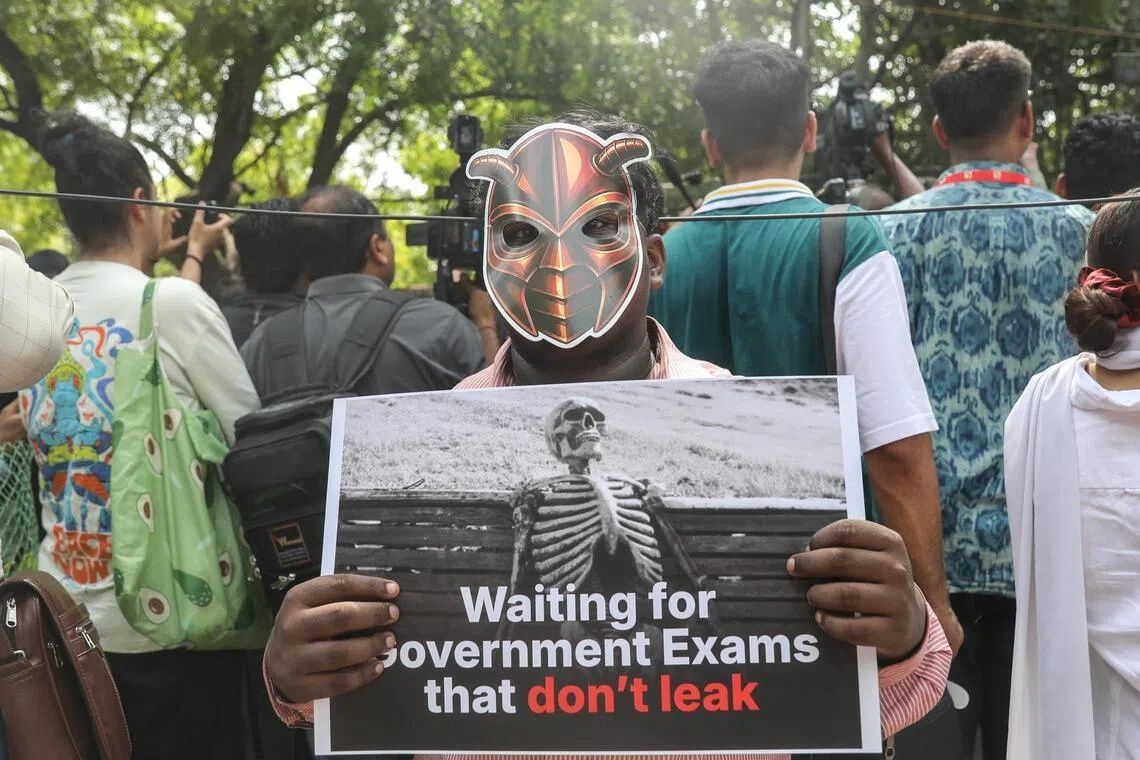
India's educational establishment faces a credibility crisis as 2.2 million aspiring medical students prepare to sit a tightly guarded re-examination on Sunday, June 21, merely weeks after the previous iteration was scrapped over a catastrophic paper leak. The incident has become emblematic of deeper systemic failures within India's testing infrastructure, exposing vulnerabilities that have long plagued the country's highly competitive entrance exam regime. The National Testing Agency's decision to scrap the original examination triggered an unprecedented wave of public discontent, with students, parents, and civil society groups united in condemning what many viewed as institutional negligence of monumental proportions.
The National Eligibility cum Entrance Test, commonly known as NEET, serves as the primary gateway for admission to India's medical colleges, with competition so fierce that only just over 100,000 undergraduate positions are available to the millions who attempt the test annually. This extraordinary pressure has created an ecosystem ripe for exploitation, transforming the examination into a flashpoint for organised criminal networks specialising in paper leaks and systematic fraud. The May examination's failure has exposed how deeply embedded these networks have become within India's education system, operating with apparent impunity despite the enormous stakes involved.
The fallout from the leak scandal extended far beyond immediate concerns about examination integrity. Indian media reports documented tragic outcomes including suicides among teenagers, underscoring the psychological toll that examination failures and perceived unfairness impose on India's youth. These deaths have galvanised public opinion, transforming what might have remained a technical administrative problem into a full-scale political crisis. The tragedy has resonated particularly strongly among families who view educational success as their child's primary pathway to social mobility, making examination tampering not merely a legal issue but a violation of fundamental fairness and opportunity.
Parallel controversies have compounded the crisis and eroded public confidence in educational institutions more broadly. A separate marking debacle affecting nearly two million high school students, where candidates alleged that incorrect grades were assigned or results sent to wrong recipients, created a perfect storm of frustration. These concurrent failures suggested systemic dysfunction rather than isolated incidents, prompting soul-searching questions about the competence and accountability of India's testing agencies. The cumulative effect has been unprecedented youth mobilisation, with students and parents demanding meaningful reform and, most prominently, the resignation of Education Minister Dharmendra Pradhan.
To restore credibility and ensure the retest proceeds without compromise, Indian authorities have implemented an elaborate security apparatus. The deployment of more than 200,000 officials, including police personnel distributed across examination centres, represents one of the largest coordinated security operations in recent Indian history. Beyond traditional security measures, the authorities have embraced technological solutions including biometric authentication at examination centres, artificial intelligence-enabled camera surveillance to monitor for suspicious activity, and GPS tracking of question paper distribution and retrieval. These layered approaches reflect a recognition that the previous system's vulnerabilities were both human and technological in nature.
The decision to restrict access to the Telegram messaging application throughout the testing period represents a stark illustration of how examination fraud has evolved in the digital age. Investigators determined that cheating syndicates had exploited encrypted messaging platforms to distribute leaked questions to paying candidates, circumventing traditional detection methods. The move reflects a broader challenge facing Indian authorities in balancing security imperatives against civil liberties, a tension that has not escaped public notice. Telegram head Pavel Durov publicly questioned the effectiveness of such restrictions, arguing persuasively that restricting a single platform merely displaces the problem to alternative applications rather than addressing root causes.
Durov's critique points toward a fundamental challenge in the Indian examination system that cannot be solved through technical measures alone. The leak, he noted, originated with insiders who had authorised access to examination materials—individuals positioned within the testing infrastructure itself. This observation implicates not merely criminal networks but systemic vulnerabilities in how India's testing agencies vet, monitor, and manage personnel with access to sensitive materials. The chemistry lecturer arrested as the alleged kingpin in the conspiracy exemplifies this insider threat problem, revealing how trusted institutional positions can be weaponised for profit.
The retest scheduled to commence at 2 pm local time will commence under circumstances substantially different from the cancelled May examination. Students will encounter not merely the same questions presented under new conditions, but rather a test administered within a climate of heightened surveillance and dramatically reduced trust in institutional fairness. The psychological impact of these conditions cannot be quantified easily but will inevitably affect performance across millions of candidates, potentially influencing their entire medical careers. For students already traumatised by the previous examination's cancellation, the security apparatus, however necessary, may feel oppressive rather than protective.
Beyond the immediate retest, the crisis has catalysed unusual forms of political protest. The rise of the satirical "Cockroach People's Party", which has accumulated millions of followers since its launch in May, reflects how examination failures have transcended technical issues to become symbols of broader institutional corruption and incompetence. This movement's explicit demand for Education Minister Dharmendra Pradhan's resignation indicates that public anger extends beyond a single examination to encompass systemic failures requiring leadership change. The emergence of humour-based political protest suggests citizens feel traditional channels for expressing grievances have failed them.
For Malaysian and Southeast Asian observers, India's examination crisis offers uncomfortable lessons about the fragility of large-scale testing systems. As several countries in the region operate similarly competitive entrance examinations determining access to limited places in prestigious institutions, India's experience demonstrates how quickly organisational failures can cascade into widespread public distrust. The vulnerability of insider threats, the difficulty of monitoring millions of test-takers across geographically dispersed locations, and the challenge of maintaining examination integrity within corrupt institutional environments are challenges that transcend national boundaries.
The retest represents not a resolution but rather a temporary procedural reset within a much larger institutional crisis. While enhanced security measures may successfully prevent another leak on June 21, they address symptoms rather than root causes. Meaningful reform would require comprehensive review of personnel vetting, whistleblower protections, audit mechanisms, and punishment frameworks sufficiently severe to deter insider participation in fraud schemes. Such structural changes require time, institutional will, and potentially political sacrifice—outcomes that remain uncertain despite the evident public appetite for transformation.
For the 2.2 million students preparing to sit Sunday's examination, these systemic considerations offer cold comfort. They face the immediate challenge of performing under unprecedented security conditions, with their futures contingent on a single test administration. The retest, whatever its technical specifications, occurs within a climate of demonstrated institutional unreliability. Whether enhanced security measures can restore sufficient confidence in examination fairness to validate the results remains an open question that will only be answered through time.

