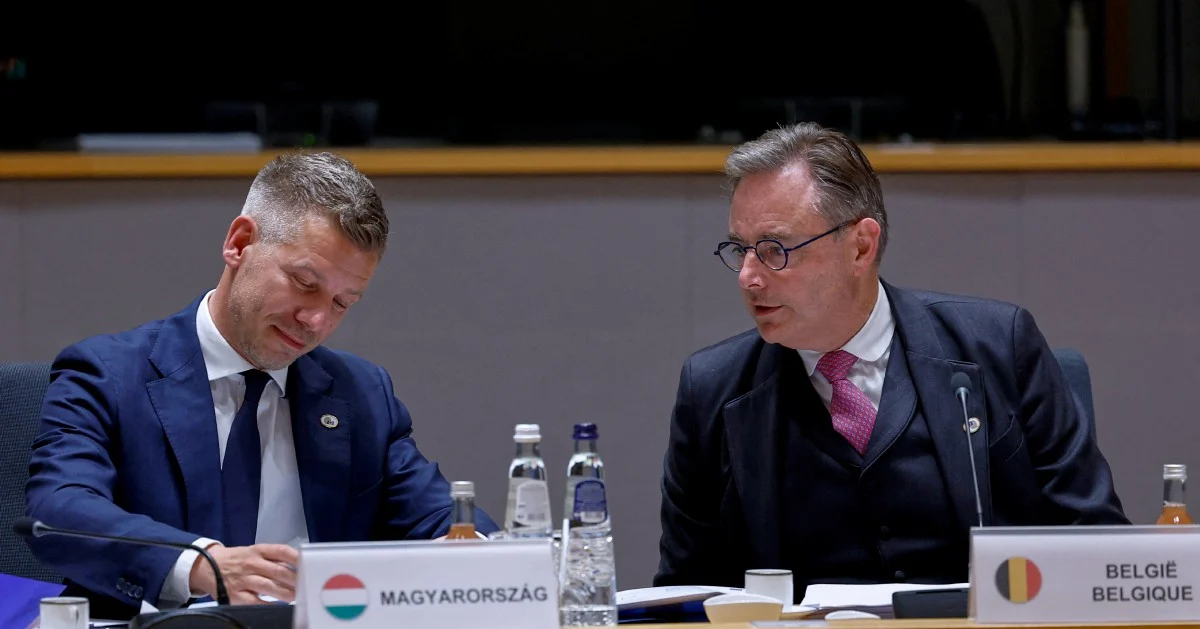
Budapest is preparing to mark a significant political inflection point as Hungarian lawmakers gear up to vote on comprehensive anti-corruption legislation this week. The approval represents a central plank of new Prime Minister Peter Magyar's ambitious reform agenda, signalling a potential shift in Budapest's relationship with Brussels after years of tension over democratic standards and fiscal oversight. The timing of these measures is strategically significant, as Hungary has faced the prospect of losing substantial European Union financing due to longstanding concerns about governance, judicial independence, and transparency in public procurement—issues that have strained ties across the bloc and left Budapest increasingly isolated within European policymaking circles.
The road to Tuesday's vote reflects broader pressures facing the Hungarian government as it attempts to reconcile internal political realities with external demands from European institutions. The European Union has withheld considerable sums from Hungary's allocation under various funding mechanisms, citing violations of democratic principles and rule-of-law standards. For Budapest, regaining access to these resources is not merely a matter of prestige but a genuine economic imperative, particularly as Central Europe faces inflationary pressures and competing demands for investment in infrastructure, healthcare, and education. The magnitude of frozen funds at stake has grown substantially over time, making the anti-corruption package a financial necessity rather than an optional policy adjustment.
Magyar's ascent to the premiership itself represents a turning point in Hungarian politics. His predecessor's government had maintained a defiant posture toward European criticism, framing Brussels' concerns as interference in national sovereignty. In contrast, Magyar has signalled a willingness to engage constructively with EU institutions and to implement changes that address the specific concerns raised by Brussels. This rhetorical shift, coupled with concrete legislative proposals, suggests a recalibration of Budapest's EU strategy and a recognition that cooperation on governance matters will be essential for economic recovery and political normalisation. The anti-corruption measures therefore serve as a tangible demonstration of this new orientation.
The substance of the proposed legislation appears designed to address the most critical EU objections by strengthening institutional oversight mechanisms and enhancing transparency in areas where the European Commission has documented systemic weaknesses. Anti-graft frameworks typically involve reinforcing anti-corruption agencies, improving whistleblower protections, tightening procurement regulations, and establishing clearer conflict-of-interest rules for public officials. In Hungary's specific context, reforms may also touch on judicial independence and the autonomy of institutions responsible for investigating government misconduct—areas where Brussels has identified particular deficiencies. The comprehensiveness of Magyar's approach suggests recognition that piecemeal adjustments will not satisfy EU demands or unlock the full range of withheld funds.
For neighbouring Southeast European and Central European states, Hungary's anti-corruption drive carries instructive implications. The region as a whole has struggled with similar governance challenges, and several countries face their own difficulties in accessing EU funds or maintaining positive assessments from international monitoring bodies. Hungary's experience demonstrates both the costs of prolonged institutional deficiency and the potential for policy reversal when political leadership changes. Other regional governments may view Budapest's pivot either as a pragmatic necessity or as a cautionary tale about the price of sustained confrontation with Brussels—a distinction that will influence their own institutional trajectories.
The political economy of these reforms warrants careful attention. Anti-corruption measures, if implemented rigorously, can constrain the informal networks and patronage systems that have historically characterised Hungarian governance. This creates potential domestic political friction, as entrenched interests and actors benefiting from the previous system may resist enforcement. Whether Magyar possesses sufficient political capital and institutional backing to overcome such resistance remains a critical variable. Successful implementation will require not merely legislative approval but sustained commitment from executive agencies, judicial institutions, and oversight bodies, all of which may be staffed with individuals whose careers were built under prior governance arrangements.
The broader regional context matters as well. Hungary's relationship with the EU cannot be disentangled from wider geopolitical questions about European cohesion, Central European security interests, and the continent's stance toward Russia. Hungary's previous government had maintained notably warmer ties with Moscow than most EU member states, a posture that complicated Brussels' consensus on Russia policy, particularly following the 2022 invasion of Ukraine. Whether Magyar's EU-facing reforms signal a recalibration on geopolitical matters too remains unclear, but a government genuinely committed to European integration would likely align more closely with EU positions on such fundamental questions.
The financial stakes cannot be overstated. EU funding streams supporting regional development, research, agriculture, and cohesion represent a substantial portion of Hungarian government revenues and investment capacity. The withholding of these funds has created bottlenecks in project implementation and constrained Budapest's ability to respond to constituent demands. Unlocking even a significant portion of the frozen allocations would provide breathing room for fiscal policy and allow for resumed implementation of important infrastructure and social programmes. For ordinary Hungarians, the practical consequence of anti-corruption reforms is the difference between a government with resources to invest in public services and one operating under financial constraint.
The legislative path forward will reveal much about the depth of Magyar's commitment and the breadth of parliamentary support for his reform agenda. A unanimous or near-unanimous vote would suggest genuine consensus around the necessity of change, whereas a narrow passage might indicate that substantial domestic political opposition persists. The European Commission will scrutinise not merely the laws themselves but their implementation record in coming months, making this vote only the beginning of a longer process of demonstration and verification. For Hungary, the anti-corruption measures represent both an economic lifeline and a political test of whether meaningful institutional change is genuinely achievable.

