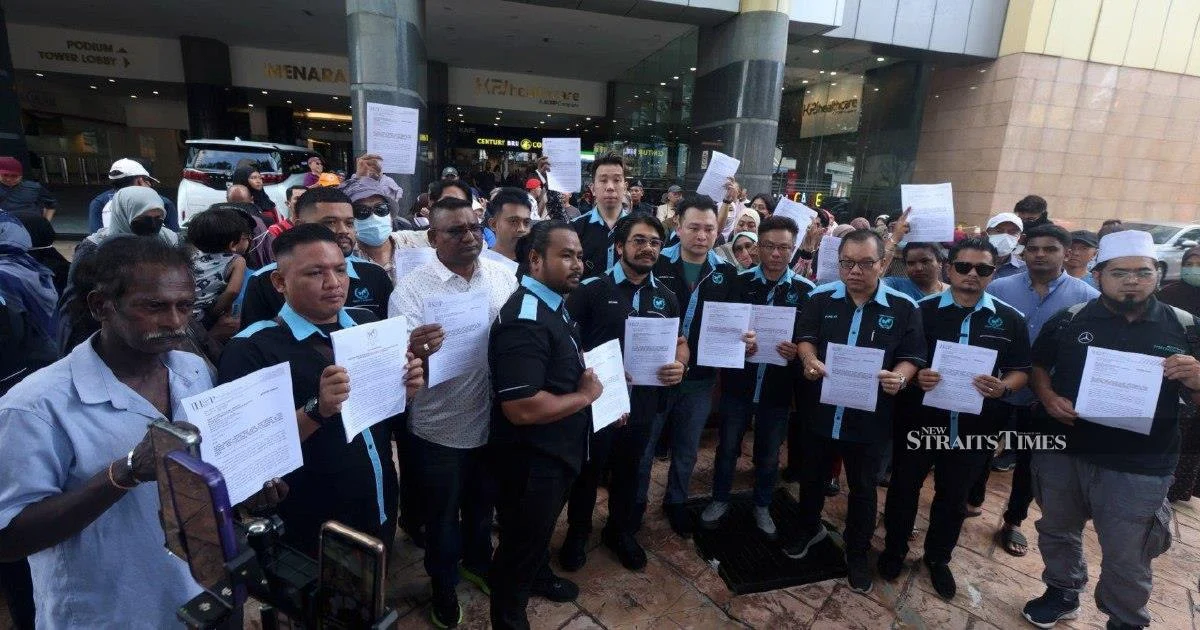
The Malaysia International Humanitarian Organisation brought together over 100 victims of investment-related fraud in Kuala Lumpur to publicly demand that police intensify their investigative efforts against 18 companies and investment platforms allegedly running coordinated deception operations. The gathering underscores growing frustration among scam survivors over the pace of law enforcement responses and reflects a broader pattern of mounting financial crimes targeting Malaysian investors across multiple platforms and schemes.
Investment scams have emerged as one of Malaysia's most persistent and damaging criminal enterprises, with perpetrators increasingly exploiting digital channels and social media to reach unsuspecting targets. The scale of the problem has expanded significantly in recent years, with criminals refining their tactics to impersonate legitimate financial institutions and registered investment advisors. By consolidating cases against multiple entities simultaneously, investigators can potentially uncover connections between supposedly independent operations and expose the networks coordinating such schemes at higher levels.
The involvement of MHO in mobilising victims reflects the inadequacy of current public communication channels between law enforcement and affected individuals. Victims often report feeling abandoned by the authorities after lodging complaints, with investigations apparently stalling for months or years without visible progress or updates. This communication gap not only prolongs the psychological trauma of those defrauded but also discourages other victims from coming forward, allowing criminals to operate with reduced accountability and confidence in their impunity.
Scam syndicates typically employ layered structures to obscure accountability and complicate investigations. Front companies handle customer interactions and fund collection, while subsidiary entities manage money movement and asset concealment. Multiple interconnected platforms may operate under different brand names and legal registrations but share the same perpetrators and operational infrastructure. Identifying these connections requires sustained investigative pressure, forensic financial analysis, and inter-agency coordination that often falls behind other criminal priorities in resource-constrained police departments.
The 18 companies and platforms named in this action likely represent only a fraction of active fraud networks operating within Malaysia's financial ecosystem. Many victims remain unaware they have been defrauded, particularly in schemes structured as long-term investment programs where promised returns are consistently postponed with plausible-sounding explanations. Others hesitate to report losses due to embarrassment or fear that inadequate police response will simply document their victimisation without achieving justice or recovery of funds.
For Malaysian investors and the broader financial system, the persistence of these scams signals a critical vulnerability in digital financial services and investor protection mechanisms. Regulatory bodies oversee licensed investment advisors and registered platforms, but unregistered investment schemes operate in regulatory grey zones where initial intervention proves challenging. Many victims only discover they have dealt with unlicensed entities after suffering losses, making prevention more difficult than prosecution of already-identified operations.
The public gathering organised by MHO also serves an important advocacy function by transforming individual victimisation into collective political pressure. Concentrated media attention and public awareness campaigns can accelerate police resource allocation to high-priority cases and encourage cooperation between investigating units that may normally operate in isolation. Regional coordination with authorities in Singapore, Thailand, and Indonesia becomes increasingly important as fraud networks often move stolen funds across borders through layers of money laundering and overseas bank transfers.
Successful prosecution of organised scam networks requires not only identifying individual fraudsters but also establishing the financial chains through which money flows from victims to criminal beneficiaries. This necessitates specialist investigators with expertise in digital forensics, cryptocurrency tracing, and international financial transfers. Malaysia's police force has developed such capacity in recent years, but sustained pressure from victim advocacy groups ensures these resources remain directed toward significant cases rather than being reallocated to other priorities.
The timeframe for investigation completion often extends across multiple years, particularly when cases involve cross-border elements or complex financial architectures. Victims and their representatives must therefore maintain sustained pressure to prevent investigations from becoming administratively dormant. By consolidating demand for action around 18 specific entities, MHO creates a measurable benchmark against which police progress can be tracked and publicly reported.
Moving forward, addressing Malaysia's investment scam epidemic requires a multifaceted response combining accelerated prosecution of identified perpetrators, enhanced regulatory oversight of digital financial platforms, and comprehensive public education about investment fraud red flags. The participation of over 100 victims in this mobilisation demonstrates both the scale of the problem and the political capital available to advocates pushing for stronger enforcement action against well-organised criminal syndicates targeting Malaysian investors.

