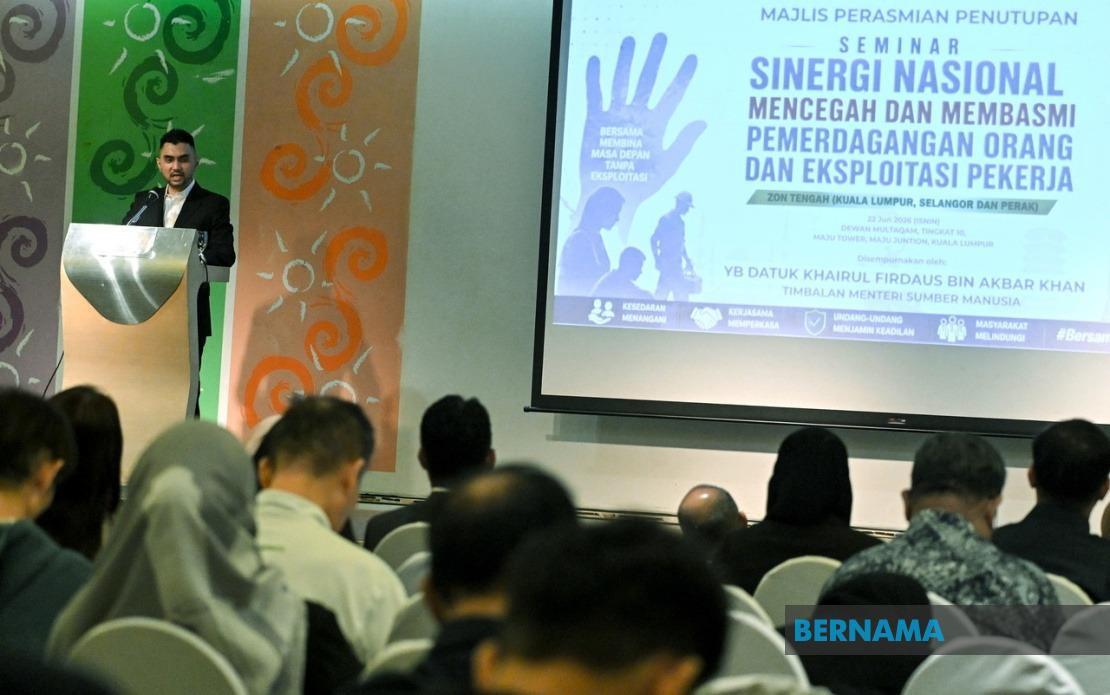
The number of people rescued from human trafficking and labour exploitation in Malaysia has declined markedly over the past three years, according to data presented by Deputy Human Resources Minister Datuk Khairul Firdaus Akbar Khan at a national seminar here. The downward trend offers an encouraging sign that the government's multi-pronged enforcement and prevention strategy is gaining traction, though authorities remain acutely aware that reported rescues may represent only the visible portion of a much larger hidden problem.
Figures from the Peninsular Malaysia Manpower Department reveal the scale of the improvement. In 2023, 70 victims were identified and assisted following rescue operations. This number contracted sharply to 10 cases during 2024, rose slightly to 17 in 2025, and has stood at just four through May of this year. The trajectory, though not uniformly downward, suggests that coordinated anti-trafficking measures are beginning to disrupt trafficking networks and improve victim identification systems. However, the minister struck a cautious note, acknowledging that the official statistics capture only those cases that come to the attention of authorities through reporting or operational discovery.
Datuk Khairul Firdaus emphasised a critical reality often overlooked in crime statistics: the cases that authorities detect and prosecute are frequently the most visible subset of criminal activity. Many victims of trafficking and forced labour remain hidden from view, deterred by fear, language barriers, debt bondage, or lack of awareness about available support. This sobering reality means that while the government can take modest satisfaction from declining reported figures, the true extent of human trafficking and labour exploitation across the country remains unknowable and potentially substantial. The authorities' candid acknowledgement of this gap demonstrates a mature understanding of the limitations of enforcement data.
Paralleling the decline in rescue numbers, Malaysian authorities have intensified operational activity across the country. Between January and May 2026, law enforcement teams conducted 386 separate enforcement operations with a labour exploitation focus, resulting in the opening of 311 investigation files. This intensity of enforcement activity indicates sustained governmental commitment to identifying and disrupting trafficking operations, even as the number of victims coming into state care diminishes. The ratio of operations to investigations opened suggests that authorities are casting a wider net and investigating suspected violations more thoroughly, improving the quality of cases brought to prosecution rather than simply pursuing higher volumes.
Malaysia's efforts align with international obligations undertaken through the International Labour Organisation framework. The ILO protocols ratified by the Malaysian government establish minimum standards for anti-trafficking work and forced labour prevention. By placing these efforts within the ILO context, the government signals that anti-trafficking work is not merely a domestic law enforcement matter but part of a broader regional and global commitment to labour rights protection. This alignment with international standards also opens avenues for technical cooperation and best-practice sharing with other ILO member states facing similar challenges.
The government's strategy extends beyond enforcement into awareness and prevention through a national educational campaign. The National Synergy Seminar on Preventing and Eradicating Human Trafficking and Labour Exploitation represents a touring series of regional events designed to build understanding and coordination among stakeholders. The Central Zone seminar was the most recent iteration of this programme, following earlier sessions in the North Zone held in Sungai Petani, Kedah on May 18 and the South Zone event in Kluang, Johor on June 8. Together, these seminars attracted nearly 1,000 participants from law enforcement, labour departments, civil society organisations, and community groups.
The broad participation in these seminars reflects recognition across Malaysian society that human trafficking transcends traditional sectoral boundaries. Effective counter-trafficking work requires coordination between immigration authorities, labour inspectorates, police, social welfare agencies, and civil society. By convening nearly 1,000 stakeholders across three regional events, the government creates forums for sharing intelligence, aligning procedures, and building a common understanding of trafficking patterns and vulnerabilities. The suggestion that participants shared views and suggestions indicates genuine dialogue rather than one-way information dissemination, potentially strengthening the practical effectiveness of interventions.
The regional variation in seminar locations—covering the peninsula's north, south, and central zones—acknowledges that trafficking patterns and risk factors differ geographically. Northern border areas face distinct vulnerabilities related to cross-border movement, while southern regions near ports may encounter different trafficking routes. Central zone challenges may emphasise urban trafficking contexts and industrial labour exploitation. By conducting regionally tailored seminars, authorities can address local conditions and build capacity within each region's institutions and communities.
Malaysia's experience with declining rescue numbers must be contextualised within Southeast Asian patterns more broadly. The region remains a source, transit, and destination area for trafficking victims, with vulnerable populations including migrant workers from neighbouring countries, rural-to-urban migrants, and impoverished communities. Malaysia, as a relatively high-income destination within ASEAN, continues to attract both traffickers and vulnerable migrants seeking employment. The decline in official rescue numbers could reflect genuine reduction in trafficking activity, improved prevention measures that prevent victimisation before it occurs, or potentially a shift in trafficking methods and concealment strategies that evade detection.
Moving forward, the challenge for Malaysian authorities lies in sustaining momentum while addressing the dark figure of unreported cases. Strengthened victim identification training for frontline workers, improved access to services for vulnerable populations, and enhanced coordination with ASEAN neighbours on transnational trafficking cases will be essential. The government's acknowledgement that falling numbers do not necessarily indicate a full solution suggests policymakers understand that complacency would be dangerous. Continued investment in prevention, enforcement, and awareness campaigns, coupled with honest assessment of remaining challenges, offers the most promising path forward in addressing this serious human rights violation.

