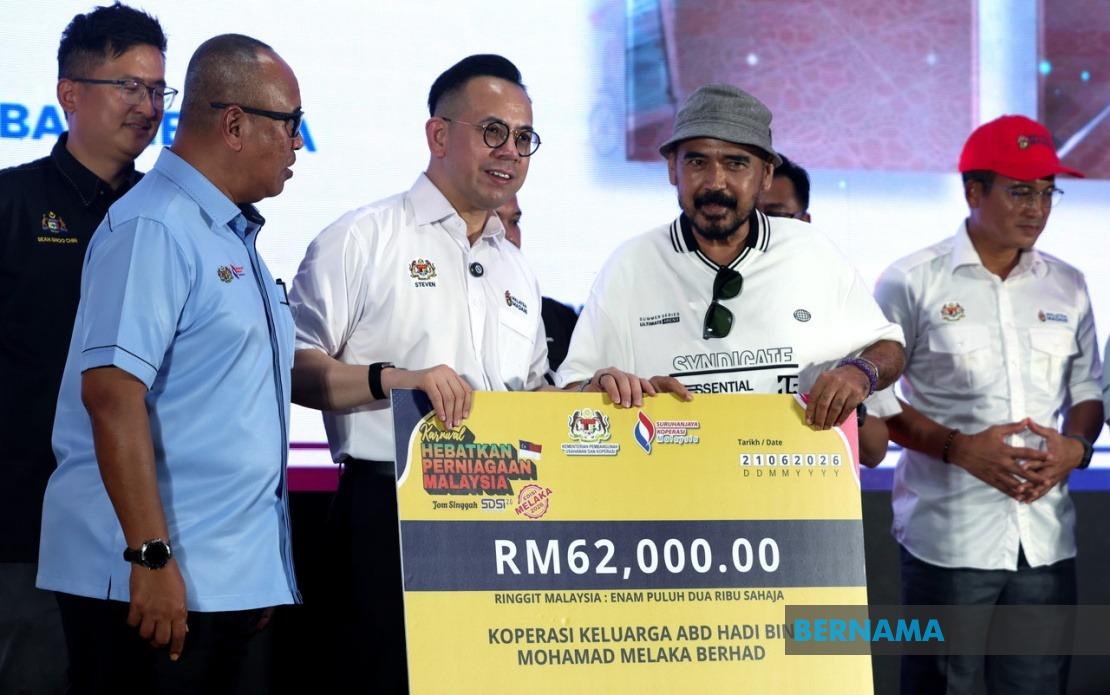
The 2026 Empowering Malaysian Businesses Carnival, held in Melaka from June 19 to 21, has delivered substantial results for Malaysia's entrepreneurial ecosystem, with total business matching value and financing potential reaching RM8.45 million. The event, organized under the Ministry of Entrepreneur Development and Cooperatives' (KUSKOP) strategic initiative to strengthen local enterprises, attracted 70,000 visitors and generated direct product sales exceeding half a million ringgit, demonstrating strong market appetite for locally-produced goods and services.
KUSKOP's announcement highlights the carnival's success in creating tangible business connections for entrepreneurs at various stages of development. The core achievement was a RM6.4 million business matching value generated through 72 dedicated sessions that brought together 25 potential entrepreneurs with established business partners, investors, and industry stakeholders. This structured approach to facilitating B2B interactions represents a shift towards more organized networking mechanisms within Malaysia's entrepreneurial landscape, moving beyond traditional trade fairs towards targeted partnership facilitation.
Beyond direct business matching, the carnival provided critical financial access pathways for cash-constrained SMEs. A total of 55 micro, small and medium enterprises participated in financial interaction sessions that unlocked RM2.05 million in potential financing arrangements. This component addresses one of Malaysia's persistent MSME challenges—access to affordable capital—by bringing lenders and financial institutions directly into dialogue with qualifying businesses, potentially reducing transaction costs and accelerating funding cycles that typically bog down smaller operators.
The direct sales figure of RM532,802.77 in entrepreneur products, whilst appearing modest relative to the matching value, carries significance for individual participating businesses. For many micro-entrepreneurs and home-based operations, three days of sustained commerce at a high-traffic venue can represent meaningful revenue and crucial market validation. This aspect of the carnival also provides product exposure and customer acquisition opportunities that might otherwise require substantial individual marketing investment.
The HPM 2026 Carnival series forms part of KUSKOP Minister Steven Sim Chee Keong's broader Hebatkan Perniagaan Malaysia agenda, which operationalizes the ABCD strategic framework encompassing Accelerating Productivity, Bureaucracy Reduction, Capital Accessibility and Developing Market Access. By hosting regional carnivals across multiple Malaysian states, the ministry is decentralizing access to these opportunities beyond Kuala Lumpur, acknowledging that entrepreneurial talent and untapped business potential exist throughout the country, particularly in secondary cities and less-developed regions.
Melaka's selection as the carnival's third venue reflects deliberate geographic distribution strategy. The state has significant MSME clusters, particularly in heritage tourism, manufacturing, and services sectors. By bringing the carnival to Melaka, KUSKOP enables local entrepreneurs to access financing and partnership opportunities without the cost and logistical burden of traveling to federal territories, potentially increasing meaningful participation from smaller or resource-constrained businesses that lack sophisticated business development infrastructure.
The carnival's integrated platform approach—combining business matching, financing access, and direct sales opportunities—represents a comprehensive ecosystem intervention. Rather than addressing singular pain points, the event acknowledges that SME growth requires simultaneous attention to multiple barriers: finding customers and partners, securing capital, and building credibility through successful transactions. This holistic methodology reflects lessons from more mature entrepreneurship support systems, where isolated interventions show limited impact without complementary services.
For Malaysian entrepreneurs, particularly those in secondary markets, the carnival phenomenon offers structured alternatives to organic networking. Building business relationships traditionally requires time, social capital, and insider knowledge of industry gatekeepers. By aggregating stakeholders—banks, corporate buyers, service providers, and fellow entrepreneurs—in single venues, the carnival democratizes access to normally fragmented business networks, potentially accelerating growth trajectories for well-prepared but geographically isolated operators.
The upcoming Penang edition scheduled for July 17 to 19 at Penang Waterfront Convention Centre signals momentum for the initiative. Penang's position as a major manufacturing and services hub, combined with its significant logistics and export infrastructure, suggests the carnival will attract different entrepreneur profiles and opportunities compared to Melaka. Geographic variation in participating businesses and financial institutions across carnival locations indicates that KUSKOP is tailoring regional engagement rather than deploying identical templates, though maintaining consistent operational frameworks.
From a policy perspective, the carnival's success metrics—particularly the RM8.45 million in quantifiable business potential—provide measurable indicators for the ABCD agenda's progress. These figures allow government stakeholders to assess whether structured intervention platforms effectively mobilize private sector engagement in supporting MSME ecosystems. The data also informs resource allocation decisions for future carnival editions and whether expanded frequency or additional regional events are justified by demonstrated demand and outcomes.
For Malaysian corporate buyers and larger enterprises, the carnival structure provides qualified sourcing pipelines and partnership opportunities with SMEs. Rather than conducting independent supplier discovery, corporations can engage multiple vetted entrepreneurs simultaneously, potentially identifying long-term partners for components, services, or distribution arrangements. This corporate participation strengthens the sustainability of carnival outcomes, as business connections forged during the event often translate into ongoing commercial relationships rather than one-time transactions.
The RM532,802.77 in direct sales, while significant for participating entrepreneurs, also indicates market validation for diverse product categories. This data point interests policymakers examining consumer demand patterns and product-market fit across different MSME segments, providing indicators of which sectors show strongest commercial viability and customer enthusiasm in the current economic environment. Such granular information guides ministry policy towards supporting high-demand entrepreneurial categories.

