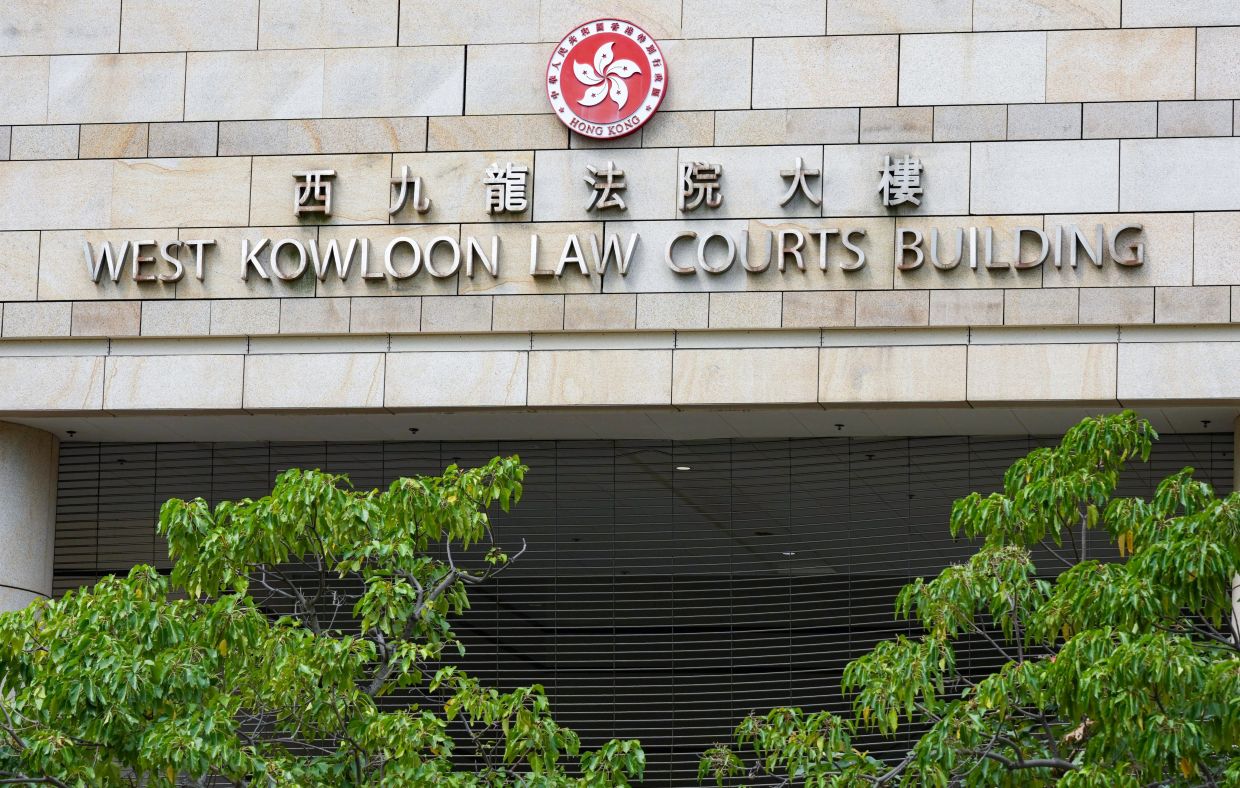
A 65-year-old repeat sex offender in Hong Kong has been sentenced to four months imprisonment following his assault on a secondary school student aboard a public bus, in an incident that prompted public outcry after video footage circulated widely on social media. William Wu Yiu-shing, a former household hardware salesman, appeared before West Kowloon Court on Tuesday where he pleaded guilty to the indecent assault charge stemming from an attack on June 5 that drew particular attention due to being documented and shared online.
The incident occurred on a KMB double-decker bus at approximately 12.10pm when the vehicle stopped at the intersection of Mong Kok Road and Sai Yeung Choi Street South. Video footage lasting 37 seconds, recorded by a pedestrian outside the bus and subsequently posted to social media platforms, shows Wu wearing a white tank top reaching his left arm forward to make contact with the 17-year-old victim's chest. The girl was seated in the row directly ahead of Wu on the upper deck of the bus.
Despite verbal warnings from bystanders on the street, Wu continued his assault as the bus proceeded away from the location. The victim subsequently reported to police that she experienced contact to her armpit area and witnessed the defendant attempting to grab her. Overcome by fear during the incident, she chose not to resist and instead hurried home after the bus reached its destination, where she later disclosed what had transpired.
Wu's criminal history significantly influenced the court's approach to sentencing. The defendant carries three prior convictions for indecent assault, establishing a troubling pattern of similar behaviour over an extended period. When apprehended by authorities at the Hong Kong-Zhuhai-Macau Bridge border checkpoint later on June 5, as he returned from Macau, Wu admitted that his actions were driven by sexual gratification. His swift arrest at the checkpoint demonstrated effective law enforcement coordination in preventing the suspect from evading custody.
The legal framework governing such offences in Hong Kong permits sentences of up to ten years imprisonment, though when cases are adjudicated by a magistrate—as occurred in this matter—the maximum penalty is capped at two years. The four-month sentence imposed by the court reflects the gravity of the offence balanced against mitigation factors. Wu was formally prosecuted on June 8, and has remained in remanded custody throughout the proceedings, making him eligible for early release in approximately one month from the sentencing date.
Mitigation during sentencing came from Wu's legal representative, who emphasised that the defendant had candidly acknowledged his culpability and provided forthright admissions regarding his prior convictions and the similar nature of previous offences. Notably, Wu expressed willingness to undergo psychological treatment as part of his rehabilitation programme, signalling a readiness to address underlying issues contributing to his criminal behaviour. Such cooperation and expressed commitment to treatment typically carry weight in sentencing considerations in Hong Kong's courts.
The incident resonates beyond Hong Kong's borders, reflecting broader regional concerns regarding public safety and sexual harassment in crowded urban environments. Southeast Asian cities face similar challenges with harassment on public transport, where dense passenger loads and the transient nature of encounters create environments where offenders may believe they can act with impunity. The recording and online sharing of this incident by a vigilant bystander exemplifies how public surveillance and social media can complement formal law enforcement in bringing perpetrators to account, a dynamic increasingly relevant across the region.
For Malaysian readers and transport users throughout Southeast Asia, this case underscores persistent vulnerabilities facing young people in public spaces. Form Three students, equivalent to Malaysian secondary school students aged around 14-16, represent a particularly vulnerable demographic. The incident occurred during daytime hours on a busy bus route, demonstrating that harassment can occur even when witnesses are present. The victim's initial paralysis—feeling too frightened to respond—reflects common trauma responses that underscore why public awareness and bystander intervention training remain important components of community safety strategies.
The sentencing also highlights ongoing debate within Hong Kong and across Asia regarding whether existing penalties adequately deter repeat offenders. Wu's history of three prior convictions for identical offences, culminating in this brazen assault on a minor despite public witnesses, suggests that existing consequences may insufficiently interrupt patterns of reoffending. Mental health and psychological interventions, which Wu has now agreed to pursue, may represent a more comprehensive approach than custodial sentences alone, particularly for offenders demonstrating compulsive sexual behaviour linked to identifiable psychological drivers.
The rapid identification and arrest of Wu via border checkpoint systems reflects sophisticated law enforcement infrastructure in Hong Kong. Such coordinated responses, combining public vigilance with technological capability, offer lessons for other regional authorities seeking to enhance public transport safety. Malaysian transport authorities and police forces might consider similar measures to expedite identification and apprehension of suspects involved in sexual harassment incidents on buses and trains, particularly given Malaysia's growing urban populations and expanding public transport networks.

