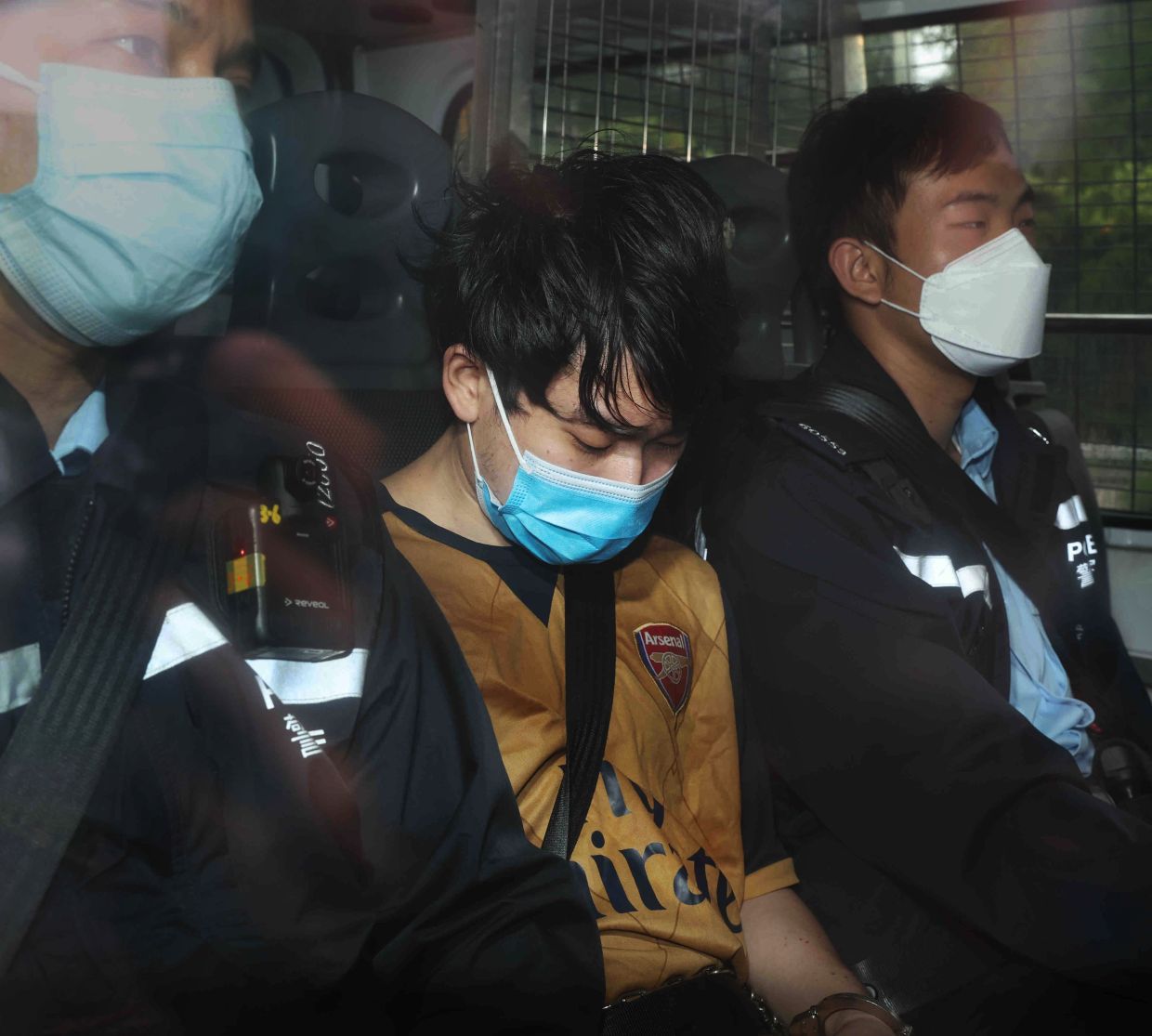
A 29-year-old jobless man has mounted an extraordinary defence in a Hong Kong murder trial, asserting that he unintentionally caused his girlfriend's death while attempting to help her slim down by deliberately preventing her from sleeping. Ng Ka-sing is being prosecuted at the High Court for the alleged murder of 30-year-old Yip Tsz-ching, whose body was discovered wrapped in quilts and plastic sheeting on a street in Hung Shui Kiu on 29 April 2022. The couple had been living together in a modest 700 square-foot flat at Galore Garden when the fatal incident occurred between 28 and 29 April of that year. The case has drawn significant attention for the troubling circumstances surrounding both the death and its aftermath, including the unusual explanation offered by the defendant.
Prosecutors have rejected Ng's offer to plead guilty to the lesser charge of manslaughter, signalling their confidence in pursuing the more serious murder conviction. Senior public prosecutor Audrey Parwani laid out the Crown's case to a seven-member jury on Tuesday, emphasising that Ng's various explanations to police lack credibility and internal consistency. The prosecutor explicitly told jurors that "the prosecution does not accept the accused was telling the whole truth," setting the tone for a case that depends heavily on forensic evidence and witness testimony.
According to court records, Ng admitted in a cautioned police interview that he had struck his girlfriend repeatedly with a rod beginning on the night of 27 April, with the stated intention of preventing her from sleeping as a means of promoting weight loss. The assault continued intermittently over two days: from 10pm on 27 April until 1.30am on 28 April, and again from 3am until 5.30am that same morning. Ng claimed to police that he persisted in this brutal treatment because Yip never explicitly told him to stop. He also told investigators that Yip had poured drain cleaner on herself, though he alleged he had only splashed the corrosive liquid on the floor to "stimulate" her feet.
A particularly disturbing element of Ng's account involves his sworn sister, who shared the flat with the couple. According to the prosecution's opening statement, when Ng asked whether he should cease the beatings, his sworn sister allegedly encouraged him to "continue for a bit longer." This detail suggests a deeply troubling domestic environment and raises questions about the knowledge and complicity of others present in the household during the fatal assault.
The evidence of physical trauma presented to the court paints a grim picture of Yip's final hours. Yip reportedly sustained extensive corrosive burns covering 55 per cent of her body, along with numerous bruises, abrasions, and lacerations across her head and other regions. At approximately 5am on 28 April, Yip informed Ng that she was experiencing severe pain and believed she might not survive the night. She fell into a coma after speaking for the last time at 7.21am that morning. Government pathologist Dr Foo Ka-chung determined that the cause of death was suffocation following head injuries and the severe burns, indicating that Yip likely suffered tremendously before losing consciousness.
The discovery of the body came when early morning joggers spotted a human leg protruding from a rolled-up quilt loaded onto Ng's wheelboard at approximately 6am on 29 April. Witness Lau Kwok-yan, who reported the scene to police, testified that Ng made no attempt to flee or conceal what he was doing, instead standing passively on the street while waiting for officers to arrive. Lau noted that Ng "did not appear to be in a panic," a detail that prosecutors may argue undermines any claim of genuine accident or remorse. Street cleaner Wong Ah-sum provided further testimony, recounting that when he questioned Ng about the body, the defendant matter-of-factly identified it as a "corpse" and stated his intention to transport it to a police station.
Upon arrest at 6.36am, Ng made a confession that seemed to acknowledge culpability: "This was my girlfriend. I hit her to death with a rod by mistake." However, the critical legal distinction lies in whether this was genuinely accidental or a deliberate act dressed in the language of accident. The manner in which the body was prepared for removal is consistent with intentional concealment. Forensic evidence specialist Lo Man-hung documented that Yip's body had been tied to a toppled wooden chair with black rubbish bags, covered with a quilt, and her head wrapped in multiple layers of cling film and adhesive tape—preparations that suggest deliberate effort to dispose of evidence rather than actions taken in confused distress.
Pathologist Dr Foo Ka-chung estimated that Yip had been dead for between 12 and 24 hours at the time of discovery, providing a window for when the fatal injuries were sustained. The extensive nature of her injuries—the blunt force trauma consistent with punching and kicking, the chemical burns, and the suffocation caused by head injuries—all point to a sustained and violent assault rather than an isolated accident. The specificity of Ng's claimed method (using a rod to keep his girlfriend awake for weight loss purposes) strains credulity given the severity of the injuries inflicted.
For Malaysian readers, this case underscores the alarming reality of domestic violence across East Asia and the devastating consequences when abusive behaviour escalates unchecked. The case also highlights how vulnerable individuals—particularly women in cohabiting relationships—can be subjected to extreme control under the guise of concern for their wellbeing. The involvement of Ng's sworn sister raises broader questions about complicity and the responsibility of witnesses to violent acts within households.
The trial before Justice Judianna Barnes is scheduled to run for 18 days, with prosecutors building their case through forensic evidence, autopsy findings, and eyewitness accounts. The credibility of Ng's account—that a sustained and severe beating leaving extensive trauma across the body could be accidental—will likely prove central to the jury's deliberations. The second charge related to unlawfully disposing of the body carries additional weight, as the methodical preparation of the corpse for transport suggests consciousness of guilt and deliberate concealment rather than panic following an unforeseen tragedy.

