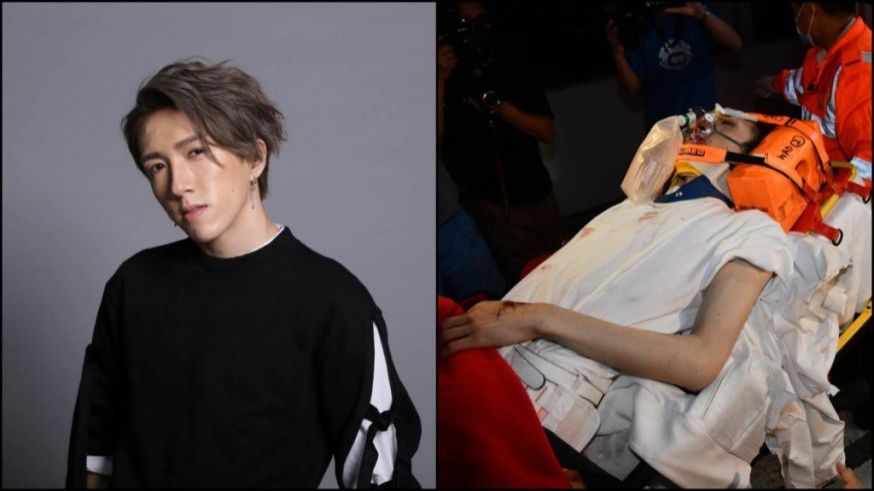
A Hong Kong District Court has awarded HK$6.29 million (approximately RM3.32 million) in compensation to dancer Mo Li Kai-yin, whose life was irreversibly changed when a four-by-four-meter LED panel collapsed onto him during a Mirror concert at Hong Kong Coliseum on July 28, 2022. The ruling, delivered on June 15, represents a significant victory for the 31-year-old performer, who was paralyzed from the neck down in what the court described as a "catastrophic" workplace accident, and underscores the serious safety concerns that persist in the live entertainment industry across Asia.
Mo's case centres on negligence by his employer, Studiodanz, the company responsible for overseeing stage operations during Mirror's ambitious 12-concert residency. The court found that the production company had failed in its duty to ensure adequate safety measures were in place, awarding Mo the maximum damages available across multiple categories: permanent total incapacity, lifetime caregiving expenses, periodic payments for ongoing medical treatment, and rehabilitation costs. Beyond the financial award, the judgment carries symbolic weight, establishing a legal precedent regarding employer accountability when performance venues fail to meet occupational safety standards.
The extent of Mo's injuries and the corresponding care requirements illustrate the gravity of the accident. Medical assessments determined that cervical spine dislocation left him unable to move independently or perform any self-care functions. He now requires three full-time caregivers to assist with fundamental daily activities, a necessity that will persist throughout his lifetime. Following the accident, he underwent emergency surgery at Queen Elizabeth Hospital before being transferred to private institutions in Hong Kong and abroad, where he has continued undergoing multiple surgical procedures and intensive rehabilitation programmes in hopes of achieving even marginal functional improvements.
Mo's path to becoming a professional dancer was relatively recent. He discovered dance during his university years between 2015 and 2019, and by 2019 had committed fully to performance work. Before the accident, his career encompassed diverse entertainment opportunities: he performed at concerts, appeared on television programmes, featured in advertising campaigns and music videos, and worked as an instructor at four dance studios simultaneously while maintaining an active performance schedule. This multifaceted career trajectory, though brief, demonstrates the significant professional disruption caused by the accident—not merely the loss of his own performing income, but also his capacity to teach and guide emerging dancers.
The personal toll on Mo's family has been equally devastating. His father, Reverend Derek Li Shing-lam, made the extraordinary decision to leave Canada, where he had been serving in pastoral duties, to return to Hong Kong and become Mo's primary caregiver following the accident. Rather than hiring external support, he devoted himself entirely to his son's care and rehabilitation. The emotional and practical burden of this commitment ended unexpectedly when Reverend Derek passed away on April 25, adding bereavement to the complex medical and psychological challenges Mo already faced. His mother and other family members have since stepped into caregiving roles, but the loss of his father represents a secondary tragedy compounding the initial accident.
Despite the severity of his injuries, Mo has demonstrated remarkable resilience in pursuing rehabilitation opportunities. He has participated in an intensive programme combining conventional therapy with cutting-edge medical technologies, including regenerative medicine treatments and implantable microstimulator devices designed to restore neural function. These interventions, while experimental and demanding, have yielded measurable progress: he has regained some movement in his right arm and has recovered sensation in bladder and bowel functions. A video posted to his Instagram account in March demonstrated that he had achieved sufficient upper-body control to independently operate an electric wheelchair using his right hand—a seemingly modest accomplishment that represents profound significance given his initial prognosis of complete paralysis.
The compensation judgment includes a notable penalty against Studiodanz beyond the damage award to Mo. The company was previously fined HK$132,000 by occupational safety authorities for violations of workplace safety regulations related to the incident. Studiodanz notably declined to participate in the District Court trial, neither presenting a defence nor contesting the findings, effectively conceding liability. This absence from proceedings suggests either an acknowledgment of fault or a strategic decision that contesting the case would prove counterproductive. The court also ordered the company to pay interest on the awarded compensation and to cover Mo's legal expenses, substantially increasing the total financial burden.
For the broader entertainment industry across Southeast Asia and Greater China, this judgment carries important implications regarding safety standards and liability frameworks. Hong Kong's live performance sector, which draws international audiences and hosts major international acts, operates under regulatory structures that this case has now tested in court. The ruling affirms that employers and production companies bear meaningful legal responsibility when safety protocols prove inadequate, a principle that should encourage similar venues and companies across the region to conduct comprehensive safety audits of their infrastructure, particularly regarding rigging, structural supports, and contingency systems for heavy suspended equipment.
Mo's ongoing recovery journey continues to unfold through his social media presence, where he shares updates about his rehabilitation progress and adaptive technology developments. The compensation award, while substantial, primarily serves to ensure his access to continued medical care, therapy, and the essential assistance he requires rather than providing genuine restoration of his former life. The financial settlement acknowledges the permanence of his condition and the comprehensive nature of his care needs, but it cannot restore the career trajectory that was interrupted at its beginning or return him to the independent adult existence he had just begun to establish.

