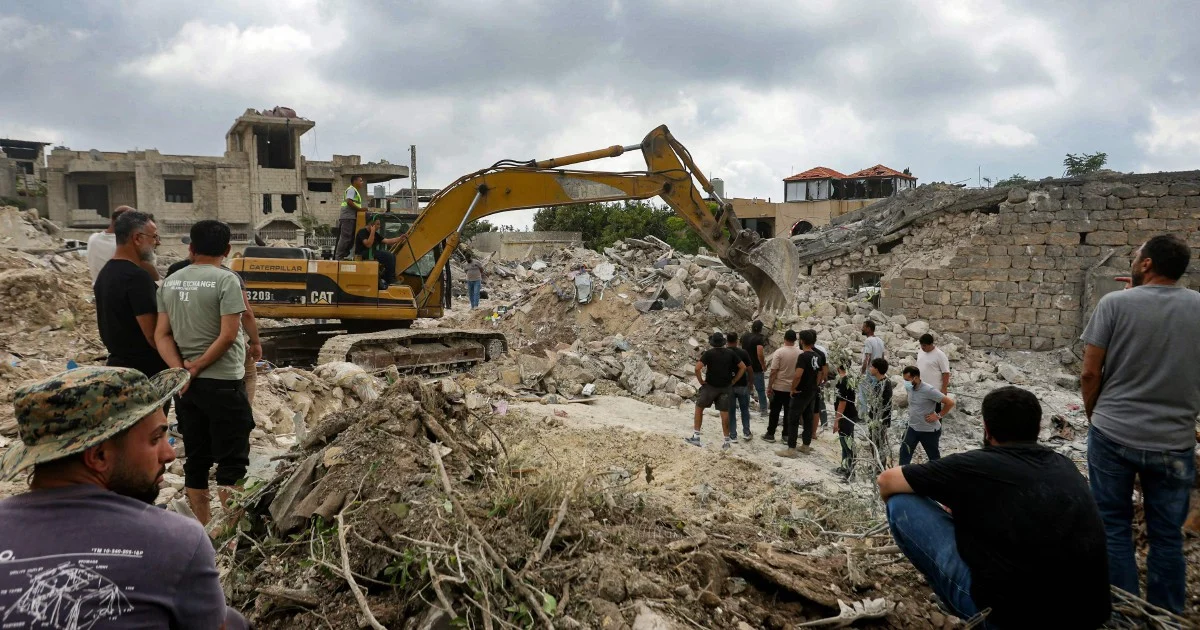
Hizbollah's political leadership has drawn a firm line against any permanent Israeli military footprint in Lebanese territory, with party chief Naim Qassem categorically dismissing proposals for an Israeli-controlled security zone in the country's south. The declaration comes as Israeli Prime Minister Benjamin Netanyahu publicly committed to keeping troops deployed across the Lebanese border region for an indefinite period, creating a stark collision between the two sides' post-conflict visions.
The standoff reflects the deep mistrust that persists between Israel and the Iranian-backed militant organisation, even as formal ceasefire arrangements take shape following months of intense cross-border hostilities. Qassem's rejection signals that despite any international agreements or temporary truces, fundamental disagreements about territorial control and military security arrangements remain unresolved in the region. His statement underscores how difficult the transition from active conflict to genuine peace will prove to be.
Israeli military operations in southern Lebanon have intensified dramatically over recent months, with Netanyahu's government defending the operations as essential counter-terrorism measures against Hizbollah infrastructure. The Israeli leadership argues that maintaining a security buffer zone is necessary to prevent the group from reconstituting weapons arsenals and launching attacks across the border. From Tel Aviv's perspective, the presence of Israeli forces in the south is a temporary requirement to guarantee civilian safety in northern Israeli communities that have faced rocket barrages.
Hizbollah's position reflects both nationalist sentiment within Lebanon and the group's own strategic interests in maintaining its military capabilities and operational freedom. The organisation views any long-term Israeli military presence as an occupation rather than a security arrangement, drawing parallels to Israel's previous occupation of southern Lebanon that lasted until 2000. For Hizbollah, accepting an Israeli security zone would amount to surrendering territorial sovereignty and accepting diminished military autonomy in regions where the group has substantial influence and support networks.
The disagreement extends beyond military positioning to encompass broader questions about Lebanese sovereignty and the country's ability to exercise effective governance over all its territory. Lebanon's government, already fragile and internationally supported, faces pressure to assert control over the south but lacks the military capacity to enforce authority against organised armed groups. This creates a dangerous vacuum where neither Israeli military presence nor Lebanese state authority provides clear governance, leaving the region in a precarious state of limbo.
Regional dynamics complicate the situation considerably. Iran, as Hizbollah's principal strategic patron and weapons supplier, has incentives to preserve the group's military capacity and regional standing. Similarly, various Western powers maintain different priorities regarding Lebanese stability, Israeli security concerns, and the broader conflict dynamics in the eastern Mediterranean. These competing interests make negotiated settlements difficult to achieve and sustain over time.
The international community has attempted to mediate through frameworks like United Nations Resolution 1701, which theoretically calls for Hizbollah disarmament and full Lebanese government control over the entire country. However, enforcement mechanisms remain weak, and no party has demonstrated genuine commitment to fully implementing these provisions. The gap between international agreements on paper and their realisation on the ground has been a persistent feature of Lebanon's sectarian and security landscape.
Hizbollah's rejection also serves important domestic political functions within Lebanon. The group maintains substantial support among sections of the Lebanese population who view it as a resistance movement against Israeli aggression rather than as a militia threatening national stability. For Qassem and the party's leadership, maintaining a hardline stance on Israeli military presence reinforces this narrative and prevents rival factions or critics from characterising Hizbollah as capitulating to Israeli demands.
For Malaysian and Southeast Asian observers, this conflict highlights how regional tensions rooted in historical grievances and unresolved territorial questions create instability that resists diplomatic solutions. The Israeli-Hizbollah standoff demonstrates that military ceasefires can coexist with fundamental strategic disagreements, requiring careful management to prevent renewed hostilities. Countries across Southeast Asia managing their own territorial disputes and great-power tensions can draw lessons about the importance of establishing clear international frameworks and enforcement mechanisms rather than relying solely on goodwill.
The trajectory of Israeli-Lebanese relations will significantly influence broader Middle Eastern stability. If the current disagreements over military positioning escalate into renewed conflict, the consequences would extend beyond the two countries directly involved, affecting refugee flows, regional security arrangements, and international efforts to contain sectarian tensions. Conversely, if both sides manage to negotiate sustainable arrangements respecting Lebanese sovereignty while addressing Israeli security concerns, it could establish precedents for managing other intractable regional conflicts.

