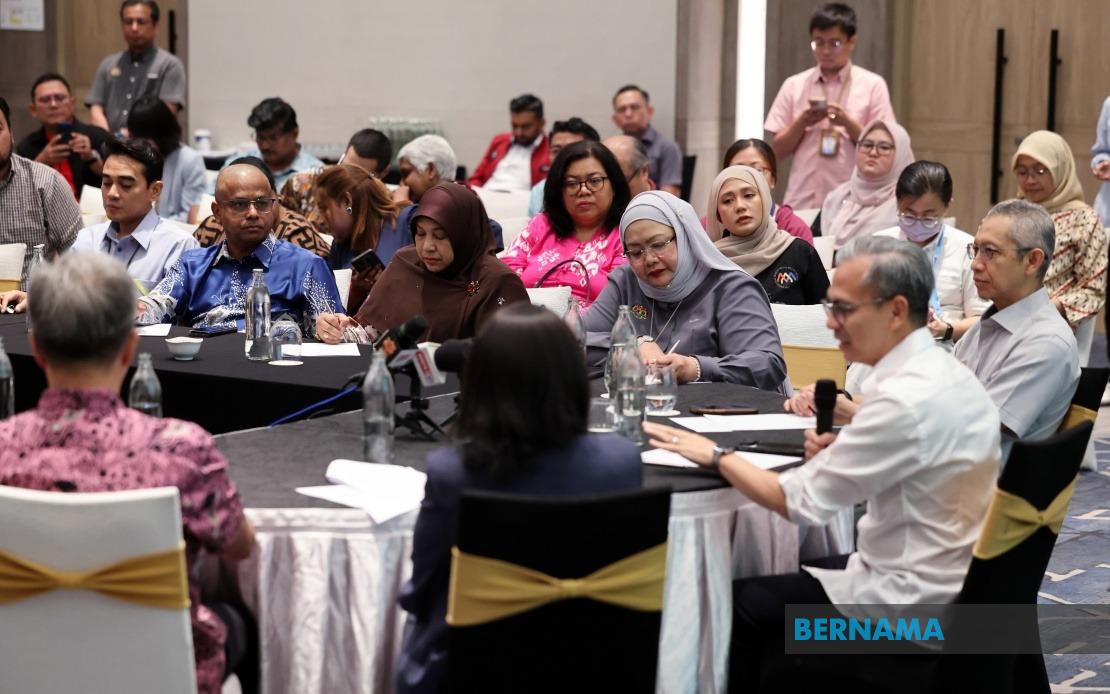
Journalists and media representatives from across Malaysia and neighbouring ASEAN nations have started converging on the PICCA@Arena Butterworth Convention Centre for the National Journalists' Day (HAWANA) 2026 Summit, marking a significant gathering of the region's news media professionals. The influx of delegates reflects growing momentum for a summit that promises to become one of the year's most important forums for media practitioners grappling with persistent questions about journalism's role in an increasingly digital world.
The arrival period has already created opportunities for spontaneous professional networking and relationship-building among newsroom leaders, editors and reporters who often operate across competing organisations. Exhibition booths have proven particularly popular, with attendees browsing displays and reviewing materials in the convention centre's foyer. A specially curated photo gallery has also drawn considerable interest, offering participants a visual narrative that resonates with the summit's broader themes about visual storytelling and journalistic authenticity.
The cross-border participation underscores HAWANA's evolving significance as more than a domestic occasion. By drawing media professionals from across the ten-nation ASEAN bloc, the summit demonstrates journalism's fundamentally transnational character in an era when misinformation and disinformation spread instantaneously across borders. Southeast Asian newsrooms increasingly share similar pressures: economic disruption, digital transformation, regulatory scrutiny, and audience fragmentation all demand coordinated professional responses.
Prime Minister Datuk Seri Anwar Ibrahim will formally open proceedings, signalling the Malaysian government's commitment to supporting professional journalism at a time when trust in media institutions faces global challenges. The government's institutional backing through the Ministry of Communications and the Malaysian National News Agency (Bernama) suggests media sector development remains a policy priority, despite competing demands on ministerial attention and public resources.
The summit's organising theme—'Media Integrity Strengthens Credibility'—addresses a core challenge facing contemporary journalism. Integrity encompasses accuracy verification, source transparency, correction protocols, and editorial independence from commercial or political pressure. Credibility, the theme's second element, represents the essential currency journalists trade in; without it, reporting becomes merely opinion, regardless of its factual accuracy. This conceptual pairing suggests summit organisers recognise that journalistic survival depends not on defending traditional formats but on demonstrating deeper commitment to truthfulness and accountability.
Expectations are that roughly one thousand media practitioners will participate in the full three-day programme. That scale permits meaningful sectoral conversations while remaining intimate enough for substantive professional exchange. Regional attendance diversifies these conversations beyond Malaysia's particular media landscape, introducing comparative perspectives from Thai, Indonesian, Philippine, Singaporean and other Southeast Asian newsrooms. These cross-pollinations often prove more valuable than formal presentations, as practitioners from different regulatory environments share practical strategies for sustaining journalism quality.
Bernama's role as implementing agency reflects its position as Malaysia's state news organisation and a key national communications infrastructure. The agency serves as both a news service provider and a professional standard-setter within the Malaysian media ecosystem. By hosting and facilitating HAWANA, Bernama positions itself as a convener of sector-wide conversations rather than merely a competing news provider. This institutional positioning carries symbolic weight; it suggests that sustaining journalism's credibility transcends individual news organisations' competitive interests.
The summit arrives amid a complex moment for Southeast Asian journalism. While digital platforms have democratised publishing capacity and enabled citizen journalism, they have simultaneously accelerated the spread of false and misleading content. Traditional commercial pressures on newsrooms have intensified as advertising revenue continues migrating to technology platforms. Meanwhile, several countries in the region maintain restrictive media environments, making spaces for frank professional dialogue increasingly valuable. HAWANA provides a sanctuary for regional journalism conversations that might prove politically sensitive within individual national contexts.
For Malaysian news organisations specifically, the summit offers opportunity to benchmark their editorial practices and audience strategies against regional peers facing similar disruptions. It also provides a forum to collectively articulate media's role in democratic societies, particularly relevant given ongoing debates about journalism's relationship with government institutions and political movements. The presence of international delegates amplifies these conversations, introducing global best practices while affirming that media integrity challenges transcend borders.
The exhibition period preceding formal opening sessions allows participants to assess new journalistic tools, publishing platforms, and professional training offerings. Technology companies, journalism schools, media associations, and innovation labs typically maintain booths at such gatherings, seeking to influence the next generation of newsroom investments and professional development priorities. These informal interactions often generate the most productive ideas for sector improvement.
For Southeast Asia's media sector broadly, HAWANA 2026 represents a rare opportunity for collective reflection and strategic planning. The region's journalists face mounting pressures that no individual newsroom can address alone: algorithmic disruption, audience attention fragmentation, economic sustainability challenges, and regulatory pressures from governments increasingly concerned about media's societal influence. Conferences that bring practitioners together across national boundaries help build regional solidarity and shared professional standards that transcend individual nation-state interests.
The summit's timing is notably deliberate. Coming at a moment when media trust metrics decline across the developed and developing worlds alike, HAWANA offers an opportunity to reassert journalism's foundational commitments to accuracy, independence and public service. Malaysian practitioners and their ASEAN colleagues arriving in Butterworth this week are, in essence, voting with their presence for journalism's continued relevance and defending the professional values that distinguish reporting from propaganda or mere entertainment.

