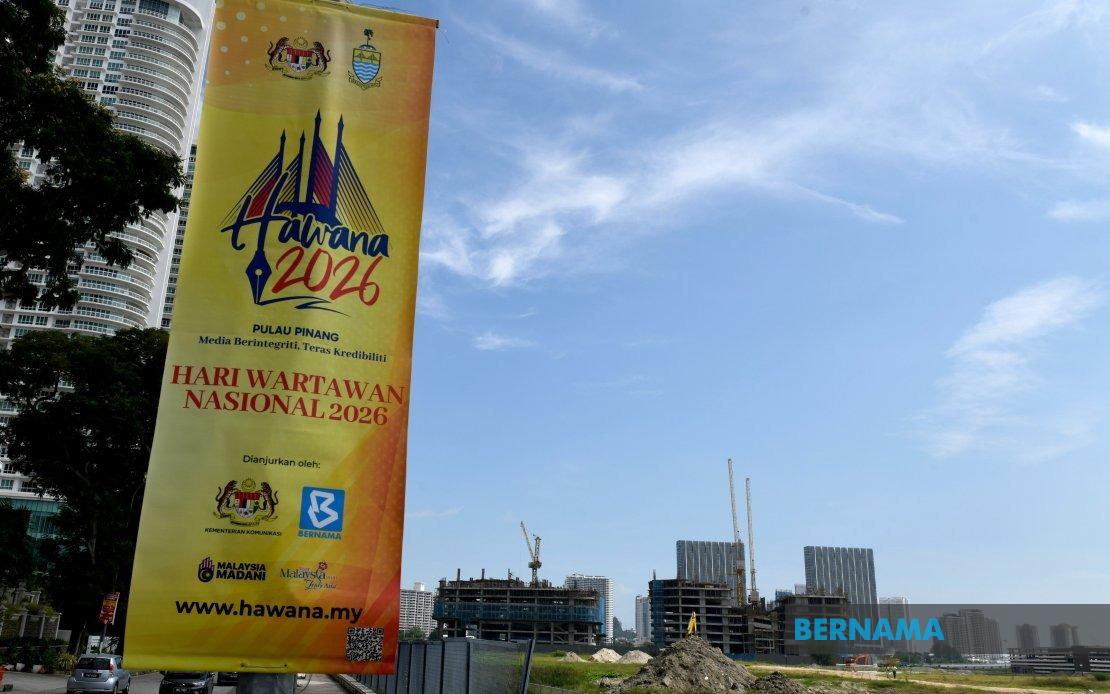
Penang will serve as the inaugural host for Malaysia's National Journalists' Day (HAWANA) 2026 celebration, an honour that state officials believe will catalyse economic activity and position the northern peninsula state more prominently on the regional tourism map. The three-day event, running from June 19 to 21, brings together the machinery of Malaysia's media industry with a broader public carnival designed to generate widespread visibility for Penang's tourism offerings and burgeoning creative sector. State Tourism and Creative Economy Committee chairman Wong Hon Wai framed the selection as a validation of Penang's growing capacity to host large-scale international gatherings while simultaneously serving as a magnet for tourists seeking distinctive cultural and culinary experiences.
The state's first-time hosting of HAWANA represents more than ceremonial recognition; it signals confidence in Penang's infrastructure and hospitality readiness at a moment when the state is aggressively positioning itself as a creative and cultural hub within Southeast Asia. Wong emphasised that the convergence of media professionals from across Malaysia and the ASEAN region will create a concentrated window of high-quality exposure for Penang's unique positioning. The coverage generated by attending journalists—whose networks extend across print, broadcast, and digital platforms—is expected to reach millions of readers and viewers across borders, effectively marketing Penang's tourism products and cultural credentials to audiences far beyond what traditional advertising channels might achieve. This type of earned media carries particular credibility with potential visitors, as it flows through trusted editorial voices rather than sponsored content.
The economic multiplier effects anticipated from the event reflect standard tourism development theory applied to Penang's specific circumstances. Wong noted that hotel operators have reported robust bookings ahead of the June event, with the primary venue in Seberang Perai offering sufficient accommodation capacity for the influx of visitors and media personnel. Beyond lodging, the anticipated visitor numbers—including approximately 1,000 media practitioners and tens of thousands of carnival-goers—will generate demand across the broader hospitality ecosystem: restaurants and food establishments, ground transportation services, retail shopping districts, and individual tourist attractions spanning Penang's diverse offerings from heritage sites to natural attractions. For a state economy increasingly reliant on tourism diversification, such concentrated visitor surges create temporary revenue spikes that, when managed effectively, can catalyse longer-term visitation patterns and repeat business.
Central to the official narrative is the recognition that media institutions function as essential partners in any destination's marketing infrastructure. Rather than viewing journalists primarily as observers or critics, Wong positioned the media as active participants in building and sustaining tourism momentum and amplifying creative sector achievements. By ensuring accurate reporting and compelling storytelling about Penang's attractions, media practitioners help construct the mental maps that potential visitors carry when making travel decisions. In the creative economy specifically, media coverage becomes a mechanism for elevating local talent—musicians, visual artists, designers, and innovators—to wider recognition and economic opportunity. This symbiotic relationship means that events celebrating journalists themselves simultaneously celebrate their role as champions of cultural and economic development.
The main HAWANA 2026 celebration will be officially opened by Prime Minister Datuk Seri Anwar Ibrahim on June 20 at the PICCA Convention Centre @ Butterworth Arena, lending the proceedings significant political weight and national visibility. This prime ministerial participation signals that the federal government views the event as substantive rather than merely ceremonial, aligning journalists' professional recognition with broader national development priorities. The gathering of approximately 1,000 media practitioners—representing the country's largest concentration of news professionals assembled for a single event—will engage with the event's overarching theme of "Media Integrity Strengthens Credibility," a message particularly resonant in an era of widespread information disorder and declining trust in institutions. The deliberate framing connects professional journalism standards to broader social stability and informed citizenship.
Complementing the formal convention programme is the RIUH Pi HAWANA Carnival, a three-day public festival commencing June 19 at the same convention centre venue. This carnival component, projected to draw approximately 30,000 visitors, functions as both a celebration of Penang's creative industries and a public-facing platform for showcasing the state's economic diversification efforts. The event's free admission removes financial barriers to participation, allowing broader cross-sections of Penang's population and visiting tourists to engage with local creative talent and entrepreneurship. The carnival's programming includes over 24 local creative brands displaying their work, 20 food vendors representing Penang's celebrated diverse gastronomy, and 16 live stage performances featuring musicians and entertainers such as Exists, Bunkface, Masdo, Sakura Band, Budak Nakal Hujung Simpang, and Chelsea Ng. This mix of visual arts, music, food culture, and interactive creative workshops creates multiple entry points for visitor engagement and media coverage.
The creative economy segment of the carnival reflects Penang's strategic pivot toward higher-value cultural industries as manufacturing sectors face structural pressures and automation. By showcasing local creative brands alongside entertainment performances, the event presents Penang's creative sectors as economically viable, culturally vibrant, and worthy of both consumer investment and media attention. Food vendors featured at the carnival represent particularly important economic actors, as Penang's culinary reputation—built over centuries of multicultural trade and settlement—has become a primary tourism draw and cultural marker. The event effectively packages Penang's multiple competitive advantages: heritage architecture, religious and cultural pluralism, innovative creative enterprises, and celebrated food culture into a single experiential narrative that journalists can readily convey to their audiences.
For Malaysian and broader Southeast Asian contexts, Penang's hosting of HAWANA 2026 carries implications beyond the immediate event footprint. The state has historically positioned itself as Malaysia's intellectual and cultural capital, home to prestigious educational institutions, historically significant colonial architecture, and a cosmopolitan population reflecting centuries of regional trade networks. By securing the first-time hosting of a national journalists' day celebration, Penang reinforces its standing as a destination capable of managing prestigious international-scale events while simultaneously advancing its creative and tourism sectors. This success may encourage the state government and private sector to bid for additional regional conferences, festivals, and cultural events, gradually shifting Penang's economic profile toward high-value service sectors and experience economies.
The event's success will likely be measured not merely in immediate visitor numbers or hotel occupancy rates during the June period, but in longer-term changes to Penang's media profile and tourism trajectory. Journalists attending HAWANA 2026 will carry stories and impressions of the state back to their newsrooms and audiences, potentially seeding feature stories, travel recommendations, and cultural coverage that extend well beyond the formal event calendar. The visibility generated during June may influence destination selection decisions by tourists planning trips months later, while media coverage of Penang's creative brands could attract business partnerships, investment, or talent migration to the state. For Malaysian readers following this story, the HAWANA 2026 event represents both an immediate celebration of journalistic professionalism and a longer-term investment in Penang's regional competitive positioning, demonstrating how cultural events can function as economic development tools when strategically conceived and executed.

