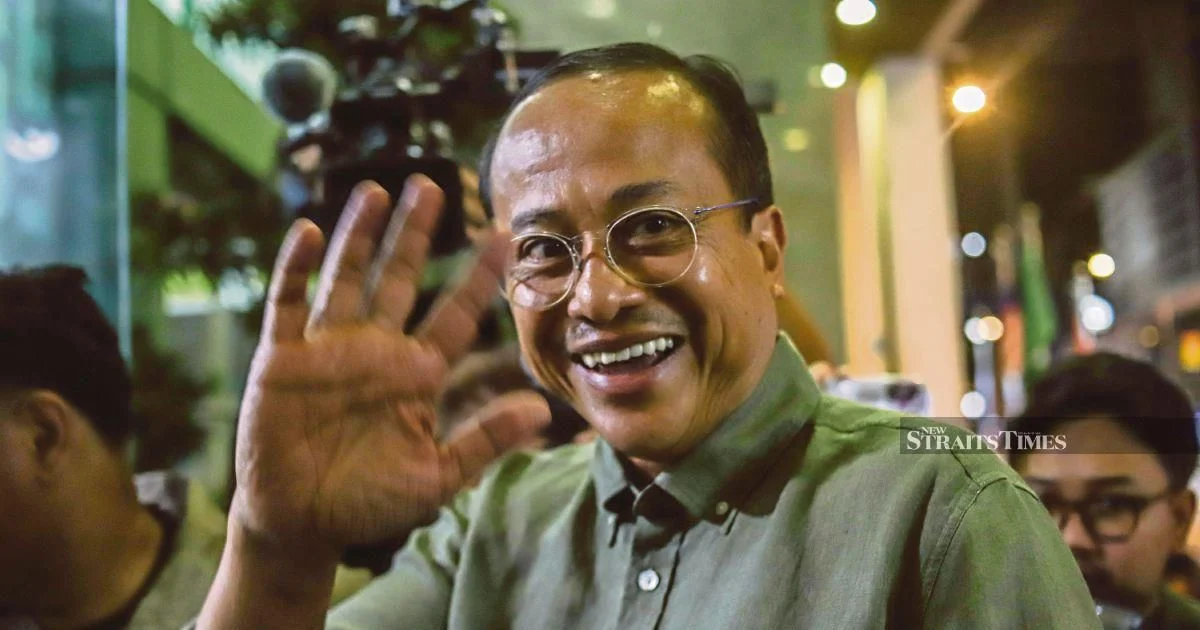
Datuk Seri Hamzah Zainudin's grip on the Opposition Leader position in the Dewan Rakyat is shakier than it appears, with no formal documentation yet reaching the parliamentary hierarchy to confirm his continued tenure. The Larut member of Parliament had been expected to maintain his role as leader of the Opposition bloc, but the absence of any official notice from Perikatan Nasional—the coalition that holds this designation—has injected an unexpected measure of uncertainty into what should have been a procedural formality.
The lack of proper notification raises fundamental questions about the administrative processes governing parliamentary leadership appointments in Malaysia. Typically, when a major coalition shifts its Opposition Leader or formally reconfirms an incumbent in the role, a written notice is submitted to the Dewan Rakyat Speaker's office, officially recorded in parliamentary records, and acknowledged through appropriate channels. This documentation serves more than ceremonial purposes—it establishes the official chain of command for the Opposition, clarifies who holds decision-making authority within that bloc, and provides clarity to all parliamentary stakeholders about the institutional structure.
The timing of this oversight carries implications for PN's internal cohesion and parliamentary strategy. By mid-2023, Perikatan Nasional had consolidated itself as the primary opposition force following the formation of the Anwar Ibrahim-led coalition government. As the largest opposition coalition, PN retained both the symbolic prestige and practical advantages of holding the Opposition Leader position, which comes with enhanced speaking rights, priority in parliamentary scheduling, and greater media visibility for messaging. Hamzah Zainudin, as a senior political figure and Larut representative, seemed the natural choice to continue stewarding this role.
However, the failure to formally process his reappointment suggests potential disorganization within PN's parliamentary management apparatus, or perhaps deliberate strategic choices about how visibly to assert his leadership. Coalition leaderships sometimes defer formal notifications while consolidating internal alignment, particularly when there are ongoing negotiations about roles and responsibilities among multiple parties within that coalition. PN comprises Parti Islam Se-Malaysia (PAS), Bersatu, and other component parties, and managing consensus among such diverse groups can be cumbersome.
From a procedural standpoint, this ambiguity carries risks for PN. Without official recognition, Hamzah's authority to speak on behalf of the Opposition bloc during parliamentary debates, negotiations with the government, or interactions with the Speaker could theoretically be challenged. Opposition business—including the tabling of motions, questioning priorities, and orchestrating parliamentary tactics—relies on clear command structures. If there is genuine doubt about who legitimately holds which role, opposition effectiveness can fragment.
For Malaysian parliamentarians and observers familiar with Westminster-derived democratic procedures, the situation underscores how institutional conventions sometimes falter under the pressures of coalition politics. Many Southeast Asian parliaments operate with comparable procedural frameworks inherited from their colonial legal traditions, making this Malaysian development relevant across the region. When formal notices and appointments become obscured, it reflects deeper questions about whether the underlying conventions that stabilize parliamentary democracy remain robust enough to withstand modern coalition complexity.
The Speaker's office necessarily maintains records of officially designated Opposition Leaders, as this status carries resource allocations, security protocols, and parliamentary privileges. If Hamzah has not been formally notified to the Speaker, then from an institutional perspective his position exists in a gray zone—he may exercise opposition leadership functions in practice, but without the documentary backing that would validate those activities if ever formally contested.
This situation also highlights how Malaysian Opposition coalitions have struggled with institutional permanence compared to the governing coalition. While the government's structures, ministerial appointments, and parliamentary roles are meticulously documented and processed through formal state apparatus, Opposition arrangements sometimes receive less rigorous administrative attention. Whether this reflects deliberate underinvestment, capacity constraints, or simple oversights varies by circumstance, but the pattern has been observable across multiple parliamentary cycles.
Stakeholders within PN face a choice about how to proceed. Submitting a formal reappointment notice now would clarify Hamzah's status and restore full procedural propriety, but it might also suggest recent confusion within coalition ranks. Alternatively, continuing without formal notification—if Hamzah's practical authority remains unchallenged—represents a more casualized approach to parliamentary governance that risks complications if internal PN dynamics shift or if the government decides to exploit the ambiguity.
For Malaysian voters and political observers, this episode illustrates that even seemingly settled parliamentary arrangements require ongoing administrative attention. The process of confirming Opposition Leaders is not inherently controversial, but failing to execute it properly can create technical vulnerabilities that undermine democratic institutional health. Moving forward, ensuring that all Opposition and government appointments receive proper documentation should become a standard expectation, reinforcing the idea that parliamentary democracy depends on meticulous adherence to procedural norms rather than relying on informal understandings.