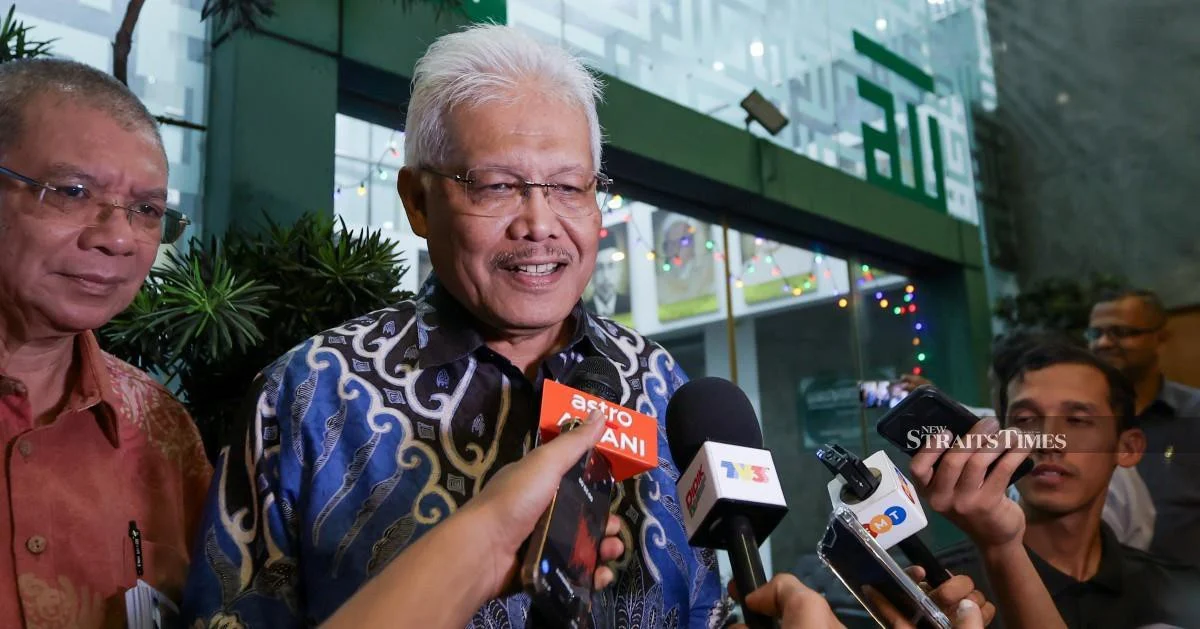
Datuk Seri Hamzah Zainudin is poised to reclaim the opposition leader's seat in the Dewan Rakyat when Parliament reconvenes on Monday, marking a significant repositioning of Malaysian political leadership. The relocation will see Bersatu president Tan Sri Muhyiddin Yassin moved several positions along the opposition bench, a physical manifestation of changing dynamics within the coalition.
The seating adjustment, confirmed through Parliament's official arrangement, reflects the formal recognition of Hamzah's reinstated role within the opposition bloc. His return to the frontbench position carries symbolic weight beyond mere parliamentary protocol, representing a consolidation of authority as the opposition navigates its strategy for legislative sessions ahead. The move underscores how physical positioning in the chamber continues to carry considerable political meaning in Malaysia's parliamentary system.
Muhyiddin's relocation from the opposition leader's seat represents a notable shift in the Bersatu president's standing within the broader coalition. The party, which has undergone considerable realignment in recent years, finds itself recalibrating its influence and prominence as the opposition continues to reconfigure following numerous coalition changes. This seating change may signal adjustments in how opposition leadership responsibilities are being distributed among key figures.
The timing of this transition occurs as Malaysian politics remains fluid, with ongoing discussions about opposition unity and strategy. The opposition bloc has consistently sought to present a cohesive front despite occasional friction between constituent parties and their leaders. Hamzah's elevated positioning in the chamber may facilitate his coordination of opposition parliamentary activities and media engagement during legislative sessions.
For Malaysian parliamentary observers, such seating arrangements serve as a barometer of internal political shifts that often precede broader policy or coalition announcements. The Dewan Rakyat's physical layout—with opposition members positioned directly across from the government benches—means that front-row opposition placement carries substantive advantages in terms of visibility, speaking prominence, and perceived authority during parliamentary proceedings.
Hamzah's background in Malaysian politics spans considerable experience in governance and legislative affairs. His assumption of the opposition leader's seat follows periods of significant political transition for the nation, during which multiple configurations of government and opposition have emerged. The restoration of his prominence reflects decisions made within the opposition alliance regarding who should serve as its principal parliamentary spokesperson and face.
The opposition's composition continues to evolve, with various political parties and independent members forming the non-government side of Parliament. Maintaining clear hierarchical positioning—as demonstrated through seating protocols—helps establish lines of communication and decision-making authority that facilitate coordination during parliamentary debates and legislative voting. Hamzah's frontbench placement reinforces his role as the primary interlocutor between the opposition and the government during formal proceedings.
For Southeast Asia observers, Malaysia's parliamentary dynamics hold broader regional significance. The country's system of government, constitutional arrangements, and opposition-government interactions serve as a template for understanding how Westminster-influenced legislatures in the region function. The prominence or marginalisation of opposition figures—even in subtle ways such as seating—can influence how effectively checks and balances operate within democratic institutions.
The Bersatu party, which Muhyiddin leads, has undergone considerable transformation since its formation. The party's positioning within the opposition coalition and the roles of its senior figures have shifted multiple times in recent political cycles. Muhyiddin's movement along the opposition bench reflects broader questions about Bersatu's trajectory and its optimal contribution to opposition effectiveness at the legislative level.
Looking ahead, the reconfigured seating arrangement may influence the rhythm and substance of parliamentary debate. Opposition leaders wielding prominence and visibility in the chamber historically drive more aggressive questioning of government policies, bring greater media attention to legislative proceedings, and establish themselves as potential alternative governmental voices. Hamzah's frontbench position should enable heightened scrutiny of executive actions and greater parliamentary platform for articulating opposition policy positions.
The symbolic nature of parliamentary seating should not be underestimated in Malaysian political culture, where position and hierarchy remain deeply significant. The decision to move Hamzah forward and Muhyiddin backward represents a deliberate recalibration of the opposition's internal pecking order, one that will be visible to all Parliament members, media representatives, and observers during Monday's session. This arrangement signals to both parliamentary colleagues and the broader public which figures the opposition coalition views as its principal leadership voices moving forward.

