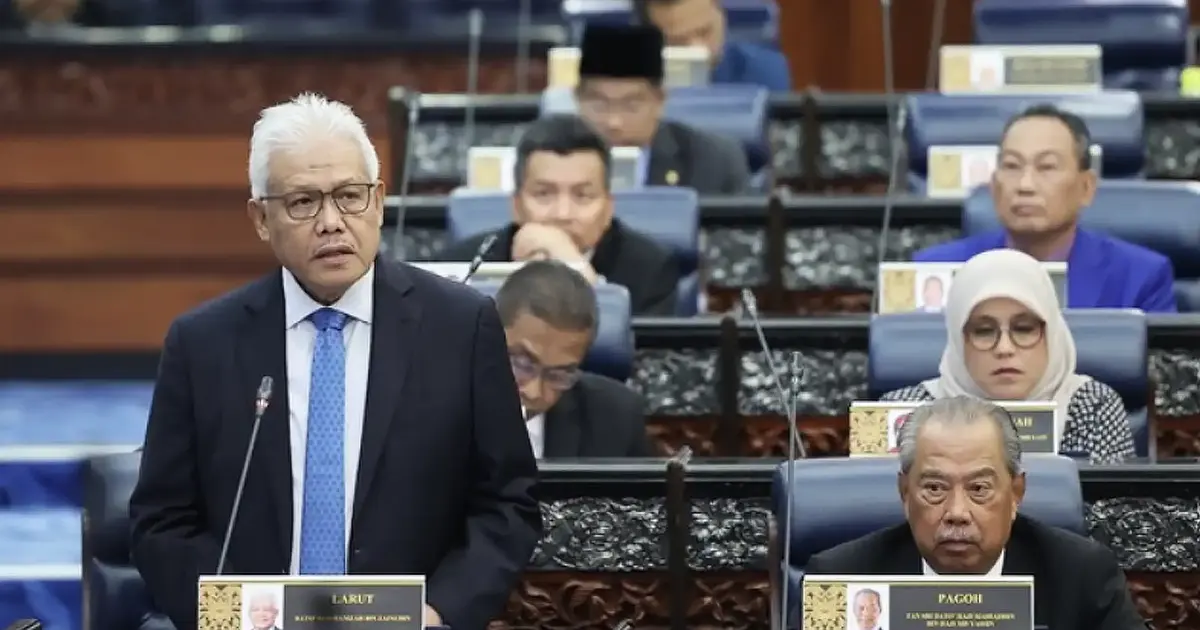
Hamzah Zainudin has returned to his place as opposition leader in Parliament's front row, a symbolic shift that reflects ongoing changes in Malaysia's fractious political landscape. The repositioning comes as Bersatu president Muhyiddin Yassin, who previously occupied the seat adjacent to the opposition leader, has been moved down eight places along the front bench, signalling a recalibration of parliamentary standing among the government's coalition partners and opposition blocks.
Seating arrangements in Parliament carry substantial weight in Malaysian politics, functioning as visible indicators of a lawmaker's influence and status within their party and the broader legislature. The front row positions are traditionally reserved for party leaders and senior figures, with proximity to the opposition leader's seat suggesting political prominence and parliamentary influence. When such shifts occur, they frequently signal internal party dynamics, coalition realignments, or shifts in perceived authority that extend beyond mere ceremonial considerations.
Muhyiddin's previous positioning near the opposition leader reflected a particular alignment during a specific political phase, when Bersatu's role in the parliamentary coalition carried particular significance. His descent down the front bench by eight positions represents a notable demotion in terms of visible parliamentary standing, suggesting either a diminution of his party's negotiating position or a realignment of internal priorities within the current government structure. For a party president, such a change carries implications for both personal standing and the party's broader parliamentary influence.
The reinstatement of Hamzah to the opposition leader's seat underscores the stability of his position leading the parliamentary opposition bloc. As opposition leader, Hamzah occupies a constitutionally significant role, serving as the official voice of parliamentary dissent and alternative governance. The front row placement functions as both recognition of this formal position and a practical arrangement enabling more effective questioning during parliamentary proceedings.
These seating modifications occur within the context of Malaysia's ongoing coalition politics, where government formations depend on careful management of multiple parties with distinct interests. The current administration comprises several coalition partners, each with its own parliamentary representation and internal leadership structures. Adjustments in parliamentary positioning often reflect negotiations between these partners or recalibrations based on performance in electoral contests or shifts in parliamentary votes.
For Malaysian observers of parliamentary affairs, such changes serve as barometric readings of shifting political power dynamics. The movement of senior figures up and down the front bench provides a public, visual representation of internal party evaluations and coalition arithmetic. Analysts monitor these arrangements carefully, as they frequently precede or follow significant political developments, policy shifts, or alterations in government-opposition relations.
The implications for parliamentary proceedings could be modest or substantial, depending on the broader context of these changes. If Muhyiddin's repositioning reflects broader concerns about Bersatu's parliamentary contribution or leverage, it may signal that the government coalition is prioritising other parties' interests or reconsidering power-sharing arrangements. Conversely, if the shift represents largely administrative reorganisation, its longer-term significance may prove limited.
Hamzah's restoration to the prominent opposition leader's seat reaffirms the opposition bloc's parliamentary standing and his role in articulating alternative policy directions. The opposition leader's position in Parliament provides a platform for questioning government decisions, proposing amendments, and rallying opposition MPs around shared priorities. Visibility and proximity to the government benches enhance the effectiveness of these parliamentary functions.
These seating changes also carry symbolic importance for party members and supporters, who interpret parliamentary positioning as reflecting their leadership's strength and effectiveness. Members of Bersatu may view Muhyiddin's movement down the front row with concern, potentially raising questions about the party's trajectory or leadership dynamics. Similarly, opposition supporters may view Hamzah's return to prominence as validation of the opposition bloc's parliamentary role.
The broader context of Malaysian parliamentary dynamics includes ongoing discussions about coalition stability, policy priorities, and the balance between various political forces competing for influence. With multiple elections potentially on the horizon, parliamentary positioning and the visibility of different leaders carry practical importance for each party's political messaging and public standing. Front bench arrangements thus function simultaneously as administrative logistics and as political statements.
Moving forward, observers of Malaysian politics will likely watch whether these seating changes signal the beginning of broader parliamentary realignments or represent relatively minor administrative adjustments to the legislative chamber's arrangements. The government coalition's stability, opposition unity, and the trajectory of various leaders' influence within their respective parties will all provide context for interpreting the significance of these visible parliamentary shifts. For the Malaysian public following parliamentary developments, such changes offer tangible markers of the evolving political terrain.

