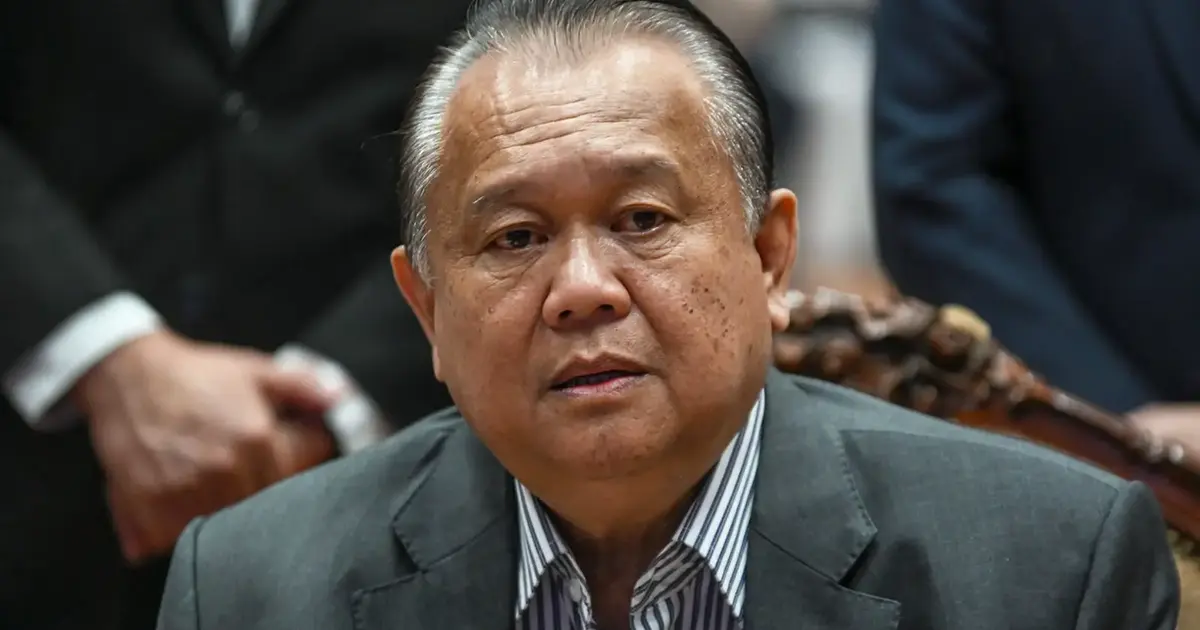
The political future of one of Sarawak's most prominent leaders remains shrouded in uncertainty, as GPS secretary-general Nanta sidestepped direct questions about whether he intends to defend his Kapit parliamentary seat or shift his focus toward state assembly politics. While the party official stopped short of offering clarity on his next electoral move, he provided assurances that his commitment to public service would persist regardless of the path he ultimately chooses.
Nanta's circumspection reflects a broader pattern of carefully managed ambiguity increasingly common among established politicians facing career inflection points. In Malaysia's competitive political landscape, where coalition dynamics and factional alignments constantly reshape opportunities for advancement, senior figures often maintain strategic silence about their intentions until timing and circumstances favour disclosure. For GPS, which has consolidated considerable influence within Sarawak's political architecture, the choices made by senior party personnel carry implications for intra-party succession and regional power distribution.
The question of whether Nanta will retain his Kapit seat carries practical significance beyond personal ambition. Parliamentary representation, particularly in constituencies with established incumbent advantages, functions as a foundation for party leadership roles and ministerial portfolios at the federal level. Conversely, state assembly membership offers alternative pathways to executive positions within Sarawak's government, where GPS wields substantial authority. The distinction between these two political arenas in Malaysian politics reflects the federal nature of the system and the distinct power structures operating at state and national levels.
GPS, formally Gabungan Sarawak, has emerged as a decisive player in Malaysia's political equation following the 2022 general election. The party's parliamentary representation and coalition leverage have positioned it as an essential coalition partner, affording its leadership significant negotiating power in federal government arrangements. Decisions by key GPS figures about their political focus therefore resonate beyond Sarawak itself, influencing the party's organisational capacity and strategic direction at the national level.
Nanta's refusal to confirm his electoral intentions may also reflect unresolved internal party discussions or ongoing negotiations with federal coalition partners. Political leaders frequently delay public announcements about contested positions or sensitive career moves until consultations conclude and consensus solidifies within their organisation. The GPS secretary-general role itself carries administrative and representative responsibilities that may factor into calculations about competing time demands and political energy allocation.
For Malaysian observers tracking political developments in East Malaysia, Nanta's ambiguity underscores the complexity of state-federal political relationships. Sarawak's governance remains substantially independent from peninsular Malaysian politics, with state elections operating on distinct timelines and concerning different sets of constituencies. Politicians navigating both state and federal arenas must balance commitments and strategic positioning across distinct political contests, a calculation particularly acute for senior party officials with comprehensive organisational responsibilities.
The commitment Nanta articulated to continued public engagement, despite his evasion on specific electoral plans, signals his intention to maintain prominence in whichever political venue he ultimately prioritises. Such assurances reflect a political environment where stepping back from active politics entirely carries reputational costs for senior figures, particularly those with established party positions. Whether through parliamentary work, state assembly duties, or party administration, maintaining visible engagement preserves political relevance and influence networks crucial for future positioning.
Sarawak's political landscape has experienced considerable turbulence over recent years, with shifting alliances and evolving coalition arrangements creating fluid opportunities for repositioning among established leaders. Nanta's current ambiguity may reflect calculations about optimal timing for moves that could enhance his influence or position within party hierarchies. The Malaysian political system increasingly rewards strategic patience, with premature announcements potentially constraining options or inviting unwanted factional challenges.
For GPS as an organisation, the pending clarity about senior figures' political intentions carries organisational implications. Party succession planning, candidate selection for forthcoming contests, and resource allocation all depend partly on understanding whether experienced leaders intend to remain in specific positions or transition elsewhere. Nanta's silence on these matters may indicate ongoing internal deliberations about party direction and leadership roles across different political levels.
The broader significance of Nanta's measured approach extends to understanding how Malaysian political elites manage their careers in an environment characterised by coalition volatility and shifting parliamentary mathematics. Senior politicians often employ strategic ambiguity as a negotiating tool, allowing flexibility in responding to evolving political circumstances. For GPS and its federal coalition partners, clarity about the party's senior leadership intentions carries implications for government stability and policy direction at both state and national levels.
Malaysian observers anticipating Nanta's decision should recognise that silence often signals active deliberation rather than genuine uncertainty. The political maturity demonstrated in his refusal to commit prematurely reflects an understanding that career-defining choices warrant careful consideration of multiple variables. His concurrent pledge to remain engaged in public service, however, establishes clear parameters: Nanta intends to remain a visible political actor in Sarawak's ongoing governance narrative, regardless of which specific electoral or administrative platform he ultimately selects for his continued participation.

