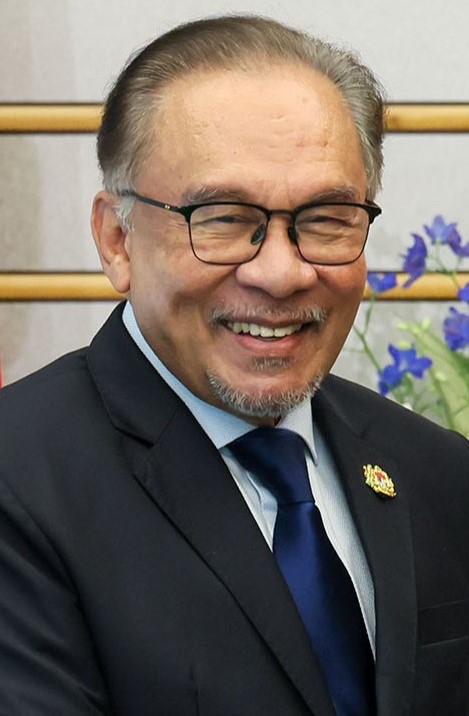
Deputy Prime Minister Datuk Seri Dr Ahmad Zahid Hamidi and other senior Cabinet ministers have collectively urged Malaysians to reflect deeply on the spiritual and practical lessons of Hijrah as the nation marks the arrival of Awal Muharram 1448H. Their appeals extend beyond ceremonial observance, framing the Islamic New Year as a pivotal moment for individual introspection and collective national progress during a period of significant global uncertainty.
Datuk Seri Dr Ahmad Zahid Hamidi emphasised that the significance of Maal Hijrah transcends symbolic calendar transitions. Rather, he characterised it as a powerful reminder that meaningful transformation demands more than rhetorical commitment—it requires sustained effort, rigorous discipline and unwavering determination to progressively improve one's circumstances and character. This interpretation positions the concept not merely as a religious observance but as a practical framework applicable to governance, institutional reform and personal development across Malaysian society.
The Deputy Prime Minister highlighted that Hijrah embodies fundamental principles of sacrifice and perseverance that remain essential for navigating contemporary difficulties. He argued these time-honoured values must continue shaping how Malaysians approach leadership responsibilities, professional obligations and community service. In his assessment, a world characterised by rapid and often disruptive change demands that citizens demonstrate intellectual courage when confronting necessary reforms, honest acknowledgement of systemic weaknesses, and sustained commitment to advancing shared prosperity despite obstacles.
Deputy Prime Minister Datuk Seri Fadillah Yusof expanded on this framework by explicitly connecting Hijrah's spiritual message to practical responses to Malaysia's current economic environment. He observed that the global landscape presents mounting complexities including supply chain vulnerabilities, international trade disruptions and persistent macroeconomic uncertainties that have tangibly affected Malaysian households and businesses. Against this backdrop, he contended that drawing lessons from Hijrah's ethos of prudent adaptation and resilient perseverance becomes especially valuable for national and household economic management.
Fadillah particularly stressed Islam's foundational teaching of moderation and its prohibition against wasteful consumption across all domains of life. He connected this religious principle directly to contemporary challenges, arguing that Malaysians must cultivate more disciplined spending behaviours, optimise resource consumption through conscious energy and water conservation, minimise food waste, and consciously prioritise genuine needs over discretionary wants. This reframing positions religious obligation as complementary to practical economic necessity during periods of constrained growth and rising living costs.
The Deputy Prime Minister articulated an important multiplicative effect of collective individual action, noting that when millions of Malaysians adopt modest efficiency measures simultaneously, the aggregate impact substantially improves family financial stability, strengthens community resilience and contributes meaningfully to national economic performance. This messaging acknowledges widespread public anxiety about cost-of-living pressures while offering concrete behavioural changes within citizen control.
Fadillah also underscored that Malaysia's foundational strength historically derives from its diverse population's capacity for unity across ethnic and religious lines. He warned against allowing legitimate differences in perspective to fracture social cohesion, instead advocating for deliberate cultivation of mutual respect, cooperative spirit and shared commitment to peaceful coexistence. This emphasis on unity assumes particular importance given periodic communal tensions and polarisation evident in Malaysian public discourse in recent years.
Communications Minister Datuk Fahmi Fadzil characterised the Islamic New Year as providing psychological and spiritual space for citizens to conduct meaningful self-examination, reorient their priorities and deepen their faith commitment as they navigate life's inherent uncertainties and difficulties. He encapsulated Hijrah's core teachings as encompassing the moral courage to pursue self-improvement, patient endurance when confronting adversity and sincere commitment to meaningful effort in all endeavours. His framing appealed to universal human experiences of aspiration and struggle rather than narrowly sectarian concerns.
Minister in the Prime Minister's Department (Religious Affairs) Zulkifli Hasan directed attention to specific religious practices appropriate for the occasion, encouraging Muslim Malaysians to approach Maal Hijrah as more than a statutory public holiday by engaging in personal prayer for divine mercy and forgiveness. He promoted the traditional practice of offering concluding prayers for the departing Islamic year before sunset prayers and opening prayers for the new year after sunset, recommending these acts be performed communally within families to reinforce household bonds and collective spiritual commitment.
The breadth of ministerial participation in issuing Maal Hijrah messages—spanning Agriculture, Science and Technology, Women and Family affairs, Education, National Unity, Investment, Trade, Digital Affairs, Health, Human Resources and Youth portfolios—demonstrates the government's intention to position this religious observance as transcending sectarian boundaries and interconnecting with the full spectrum of national governance priorities. This coordinated approach suggests Hijrah's principles are being deliberately integrated across policy domains from economic management to social cohesion to institutional reform.
The government's emphasis on Hijrah as a framework for navigating present challenges reflects sophisticated recognition that Malaysians increasingly require coherent narratives integrating spiritual meaning with practical guidance for managing economic anxiety, social fragmentation and institutional uncertainty. By anchoring contemporary imperatives of economic discipline, social unity and institutional integrity within Islamic theological tradition, government leaders attempt to provide moral legitimacy and spiritual motivation for sustained commitment to national resilience during an extended period of global instability and domestic change.