The Prime Minister's Department (Religious Affairs) is embarking on an ambitious initiative to democratise access to the intellectual output of Malaysia's leading Islamic thinkers and international Islamic scholars. The Maal Hijrah Lecture Series represents a deliberate effort to move rigorous Islamic discourse beyond the confines of universities and specialist circles into public spaces where ordinary Malaysians can engage with these ideas. The programme was formally unveiled at an event in Putrajaya where Minister in the Prime Minister's Department (Religious Affairs) Dr Zulkifli Hasan emphasised the importance of breaking down barriers between scholarly work and grassroots understanding.
Dr Zulkifli articulated a vision where Islamic thought becomes more accessible and relevant to daily life across Malaysian society. He stressed that allowing the insights of prominent Islamic figures to remain confined within academic institutions or restricted groups represents a missed opportunity to enrich public discourse. The minister's framing suggests frustration with the traditional model where valuable intellectual work reaches only specialists and students, rather than influencing broader public consciousness and policy discussions. This approach aligns with growing global recognition that complex ideas, especially those grounded in religious and ethical philosophy, need bridges to reach wider audiences effectively.
The initiative has already garnered support from key Malaysian educational institutions. Both Universiti Sains Islam Malaysia (USIM) and International Islamic University Malaysia (IIUM) have responded positively to the proposal, signalling institutional readiness to participate in delivering lectures and facilitating discussions. The involvement of these universities is particularly significant because they command both academic credibility and existing platforms for public engagement through their student bodies, alumni networks, and community connections. Their participation suggests the programme is not merely a government public relations exercise but rather a genuine collaboration between the state and established centres of Islamic learning.
Plans to expand partnerships beyond the initial universities indicate ambitions for nationwide reach. Dr Zulkifli indicated that the government intends to involve additional universities and institutions to ensure comprehensive distribution of these intellectual contributions. Such expansion is crucial for reaching Malaysians across different regions and demographic groups. The scaling strategy suggests recognition that no single institution can effectively disseminate ideas to all segments of Malaysian society, requiring a distributed network of delivery partners across the country.
A particularly noteworthy dimension of the initiative is its cross-religious framing. Dr Zulkifli expressed hope that the ideas shared through these lectures would resonate not only with Muslim Malaysians but also with non-Muslims. This aspiration reflects Malaysia's multicultural context and suggests that the government sees value in fostering interfaith intellectual engagement. Islamic philosophy addressing ethics, justice, governance, and human dignity often contains universal themes with relevance beyond the Muslim community. By intentionally positioning these lectures as contributions to broader public discourse rather than narrowly sectarian education, the programme acknowledges that religious scholarship can contribute meaningfully to national conversations.
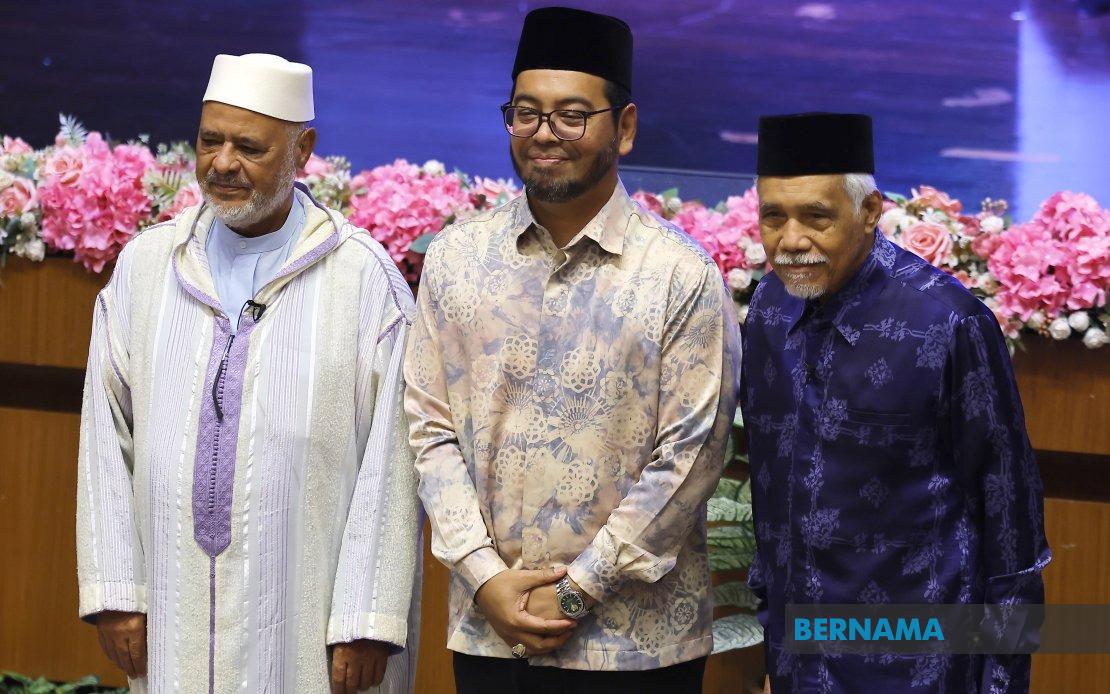
Two prominent scholars were honoured at the inaugural event, underscoring the calibre of thinkers involved in the initiative. Emeritus Professor Osman Bakar, rector of IIUM, received recognition as the national Maal Hijrah figure for 1448H/2026, while Prof Sheikh Dr Ahmad Al-Raysuni, a renowned Islamic jurisprudence expert from Morocco, was named the international Maal Hijrah figure. These selections reflect deliberate choices to celebrate both local scholarship and international Islamic intellectual traditions, positioning Malaysia as a participant in global Islamic thought. The awards carried material recognition including cash prizes, trophies, and certificates of appreciation, presented by Sultan of Perak Sultan Nazrin Shah at the national-level Maal Hijrah celebration at Masjid Putra.
The inclusion of an international scholar in the programme signals Malaysia's positioning within broader Islamic intellectual networks. Prof Ahmad Al-Raysuni's background in Islamic jurisprudence brings diverse methodological approaches and regional perspectives that can enrich Malaysian Islamic discourse. His selection demonstrates openness to international engagement rather than insularity, suggesting the government sees value in comparative Islamic thought and cross-border scholarly exchange. For Malaysian Islamic students and practitioners, exposure to how jurisprudential questions are addressed in different Islamic contexts can broaden understanding and critical thinking.
For Malaysia specifically, this initiative arrives at a moment when the country is navigating complex questions about the role of Islamic institutions in a plural democracy. Public discourse on Islamic matters often becomes polarised between hardline positions and modernist critiques, with limited space for nuanced scholarly engagement. By creating platforms for established Islamic intellectuals to share sophisticated, evidence-based thinking, the government may be attempting to elevate the tone of national conversations about Islam's role in contemporary Malaysia. This could help counter misinformation and populist religious rhetoric that sometimes dominates social media and grassroots discussions.
The timing and structure of the lecture series also carries implications for Malaysia's approach to religious leadership and influence. Rather than relying solely on mosque-based religious authority or appointed officials, the programme acknowledges the important role of independent scholars and intellectuals in shaping Islamic thought. This pluralistic approach to religious authority aligns with international best practices in religious education and engagement. It suggests recognition that sustainable religious understanding requires voices beyond formal institutional hierarchies.
Implementation challenges will likely emerge as the programme scales. Translating academic discourse into formats accessible to general audiences requires skills different from traditional scholarly work. Lecturers will need to balance intellectual rigour with comprehensibility, avoiding both oversimplification and inaccessibility. Additionally, ensuring genuine public engagement rather than tokenistic attendance at government-sponsored events requires strategic thinking about venues, timing, and promotion. Universities may naturally attract students and academic audiences, but reaching working professionals, traders, homemakers, and rural communities demands more creative approaches.
The Malaysian initiative reflects broader regional and global trends toward democratising access to knowledge and elevating public discourse. Countries across Southeast Asia and the Islamic world increasingly recognise that religious literacy among general populations strengthens social cohesion and improves policy outcomes. Educational initiatives focused on Islam often prove more effective than top-down religious regulation in addressing extremism or misconceptions. By investing in public intellectual engagement, Malaysia may be positioning itself as a model for how plural societies can strengthen religious understanding while respecting diverse perspectives.
Looking forward, the programme's success will depend on sustained commitment, adequate resourcing, and genuine integration with existing educational and community institutions. If effectively executed, the Maal Hijrah Lecture Series could meaningfully influence how Malaysians engage with Islamic thought, potentially creating space for more sophisticated public conversations about religion's role in contemporary society. The initiative also sets a precedent that government can facilitate intellectual discourse without controlling its content or direction, an important distinction for maintaining both credibility and academic freedom.