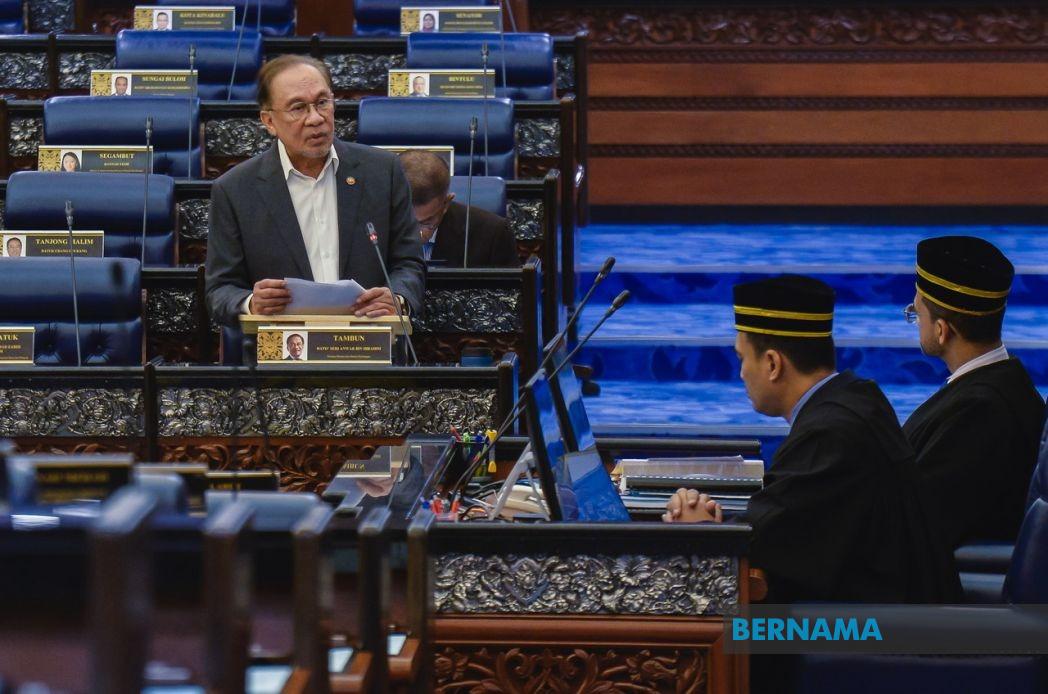
Prime Minister Datuk Seri Anwar Ibrahim moved to dispel confusion surrounding government restrictions on activities in Federal Land Development Authority settlements, emphasising during parliamentary question time that no blanket prohibition exists on programmes being held within FELDA communities. The clarification came as the government faces scrutiny over its management of FELDA affairs and the welfare of settler communities across the nation.
Anwar's remarks addressed concerns raised by Datuk Seri Hamzah Zainudin from Perikatan Nasional representing Larut, who questioned whether the administration had imposed restrictions on FELDA-related events. The Prime Minister explicitly denied issuing directives to cancel the FELDA Settlers' Day programme scheduled for Kluang in Johor on June 20 and 21, countering suggestions that the government was limiting activities in these settlements.
The distinction the Prime Minister drew between programme restrictions and electoral conduct regulations proves crucial for understanding government policy in FELDA areas. While state governments retain full authority to organise events and even issue land titles within FELDA settlements, such activities must remain compliant with established election laws. The government's position reflects a careful balance between respecting state autonomy and maintaining electoral integrity across federal land development schemes.
According to Anwar, the actual restriction applies exclusively to the use of federal government machinery and resources for campaign purposes. FELDA resources, equipment, and personnel cannot be mobilised for electoral activities, a constraint that applies uniformly across all government agencies. This technical prohibition has occasionally been mischaracterised as a blanket ban on programmes, creating unnecessary confusion among settler communities and state-level administrators who oversee FELDA areas within their jurisdictions.
The government's commitment to FELDA communities extends beyond clarifying procedural matters. Anwar highlighted a comprehensive agenda designed to reverse years of neglect that these settlements allegedly experienced under previous administrations. The MADANI Government views FELDA revitalisation as a priority area requiring sustained investment and improved service delivery across multiple dimensions of settler welfare.
Concrete initiatives already underway demonstrate the government's commitment beyond rhetoric. The establishment of dialysis centres within FELDA settlements addresses critical healthcare gaps that have long affected elderly and chronically ill settlers. This infrastructure expansion targets communities that historically lacked adequate medical facilities, a legacy of insufficient attention during earlier development phases. By deploying federal resources through dedicated agencies, the administration aims to ensure that FELDA residents access essential services comparable to those available in urban centres.
Beyond healthcare, the government is systematically upgrading development infrastructure across FELDA settlements. Deputy Prime Minister Datuk Seri Dr Ahmad Zahid Hamidi and Anwar have jointly prioritised expanding facilities throughout these communities, recognising that comprehensive rural development requires coordinated federal investment. Many settlements have languished in terms of infrastructure quality, public amenities, and service accessibility, creating a backlog that demands deliberate remedial action.
For Malaysia's settler communities, particularly those in FELDA areas that span multiple states, these clarifications carry significant implications. The distinction between programme freedom and electoral conduct compliance allows state governments to engage directly with constituents and undertake development activities without federal interference, while maintaining electoral standards that protect democratic integrity. This arrangement respects federalism while upholding national election laws that apply uniformly regardless of location or administrative jurisdiction.
The controversy surrounding FELDA programme scheduling reflects broader tensions between federal and state governments over resource allocation and administrative control. FELDA settlements exist within state boundaries yet remain federally administered, creating jurisdictional complexities that require careful navigation. Anwar's clarification attempts to reduce ambiguity by explicitly confirming that state-level political activities and developmental initiatives face no systemic obstruction, provided they comply with electoral regulations applicable throughout Malaysia.
For Southeast Asian observers tracking Malaysia's federal governance evolution, this episode highlights how resource-sharing agreements between federal and state authorities require constant clarification to prevent administrative gridlock. The FELDA issue extends beyond land administration to encompass questions about the appropriate scope of central government authority in territories that straddle federal and state jurisdiction. Clear communication about permissible activities becomes essential when settlements house politically engaged populations with strong historical connections to land and agricultural development.
Looking forward, the government's emphasis on improving FELDA conditions may shift political dynamics within these communities. Settlers who perceive genuine investment in their welfare and genuine respect for their autonomy may view government actions differently than during periods of alleged neglect. The combination of clarified administrative rules and concrete developmental commitments creates conditions for improved government-settler relations, though sustained follow-through remains essential for rebuilding trust.
The Prime Minister's parliamentary statement ultimately reinforces that Malaysian governance permits substantial state-level autonomy in FELDA areas, with federal authority properly confined to preventing electoral misconduct rather than restricting legitimate political engagement or development initiatives. This framework preserves democratic participation while maintaining electoral standards, a balance particularly important in communities with historical significance to Malaysia's agricultural and political development.

