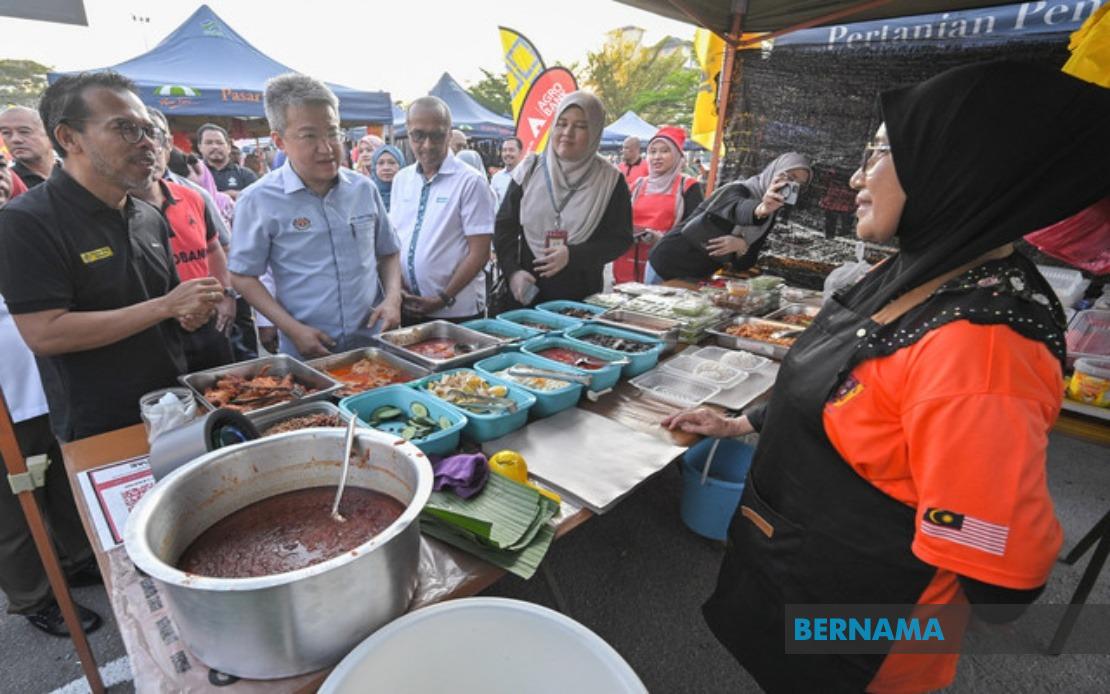
Malaysia's government is rolling out a substantial RM9.8 billion microfinancing initiative aimed at ensuring that hawkers and small traders across the country can access affordable credit to expand their operations. Deputy Finance Minister Liew Chin Tong made the announcement during a visit to the Dataran Puchong Permai Farmers' Market, where he stressed that the financing apparatus needed to be simplified and made more accessible to those operating at the grassroots level.
The scale of the allocation underscores official concern that small traders have historically struggled to secure capital through traditional banking channels, often facing bureaucratic hurdles or failing to meet stringent collateral requirements. By routing funds through six dedicated institutions—Bank Simpanan Nasional (BSN), Agrobank, Bank Rakyat, the Companies Commission of Malaysia, TEKUN Nasional, and Majlis Amanah Rakyat—the government aims to create multiple pathways for microfinance delivery. This distributed approach recognises that different segments of the trader community may have varying needs and operational structures, from registered sole proprietors to informal hawkers.
The Ministry of Finance is adopting a deliberately consultative stance, gathering direct feedback from grassroots traders to inform policy refinement. Liew indicated that such feedback would be elevated to the highest levels of government decision-making, potentially influencing future budget allocations. This bottom-up consultation mechanism signals a shift towards more responsive policymaking, where the lived experiences of traders inform capital allocation rather than top-down assumptions about what the sector requires.
The government's "Mikro Kredit Turun Padang" programme—literally "microfinance going out to the field"—represents a proactive outreach strategy, bringing lending agencies and advisory services directly to markets rather than requiring traders to navigate institutional headquarters. The Puchong iteration follows similar deployments at Taman Melawati, Kelana Jaya, and Bandar Tasik Permaisuri farmers' markets, indicating a systematic effort to saturate key commercial hubs with financing support. This ground-level approach addresses a critical information gap; many small traders may be unaware of available financing options or uncertain about application procedures.
Early results from the Puchong market suggest the initiative is gaining traction among its intended beneficiaries. Twelve hawkers have already secured approvals, with Amanah Ikhtiar Malaysia (AIM) providing financing to seven recipients, BSN to three, and Agrobank to two. These approvals span different lenders, demonstrating that competition among the six participating institutions could drive service improvements and more flexible terms. The diversity of approved applicants suggests that the programmes are reaching traders across different subsectors and experience levels.
Amanah Ikhtiar Malaysia's prominent role in the Puchong results reflects its established position as a microfinance specialist focused on low-income entrepreneurs. The inclusion of BSN and Agrobank alongside smaller specialised lenders creates a tiered system where traders can seek financing from institutions matching their scale and sophistication. TEKUN Nasional and Majlis Amanah Rakyat's involvement ensures that bumiputera traders and rural communities are not overlooked, addressing equity concerns that sometimes plague mainstream financing schemes.
For Malaysian traders and the broader small business ecosystem, this initiative carries several implications. First, it addresses a genuine market failure whereby informal and semi-formal traders struggle to prove creditworthiness through conventional metrics. By creating dedicated microfinance channels with simplified documentation and lower collateral thresholds, the government is effectively expanding the addressable market for credit. Second, the emphasis on advisory services—delivered by the six participating institutions—should help borrowers understand their obligations and manage repayment, improving loan sustainability and encouraging repeat borrowing as businesses grow.
The timing of this initiative reflects broader economic pressures on Malaysia's informal sector, where inflation and rising operational costs have squeezed margins without corresponding increases in trader revenues. Access to affordable capital at critical moments—whether to purchase inventory, upgrade equipment, or weather temporary shortfalls—can mean the difference between survival and closure for marginal operations. By reducing the cost and complexity of borrowing, the government aims to strengthen this vital segment of the economy.
From a Southeast Asian perspective, Malaysia's approach mirrors similar initiatives across the region, where microfinance has become a key tool for inclusive economic development. Countries like Indonesia, Thailand, and the Philippines have expanded microfinance systems recognising that hawkers and small traders form the backbone of urban livelihoods and employment. However, Malaysia's integrated approach—combining multiple institutional pathways with direct outreach—demonstrates a sophisticated understanding that one-size-fits-all microfinance rarely works effectively.
The feedback loop that Liew emphasised is potentially the most significant long-term innovation here. Rather than designing policy in isolation, the Ministry of Finance is committing to iterative refinement based on trader input. This could lead to tailored products addressing specific pain points—whether rapid approval timelines, flexible repayment schedules, or complementary business development support. If sustained and properly documented, this approach could establish a model for other Malaysian government initiatives seeking greater responsiveness.
Looking forward, the success of this RM9.8 billion allocation will depend on uptake rates, default performance, and whether participating traders report genuine improvements in capital access and business sustainability. The government's willingness to review and adjust based on grassroots feedback suggests a commitment to learning from implementation, rather than treating the initiative as a one-time deployment. For Malaysia's estimated one million hawkers and small traders, this represents a meaningful expansion of opportunities to formalise and grow their enterprises.

