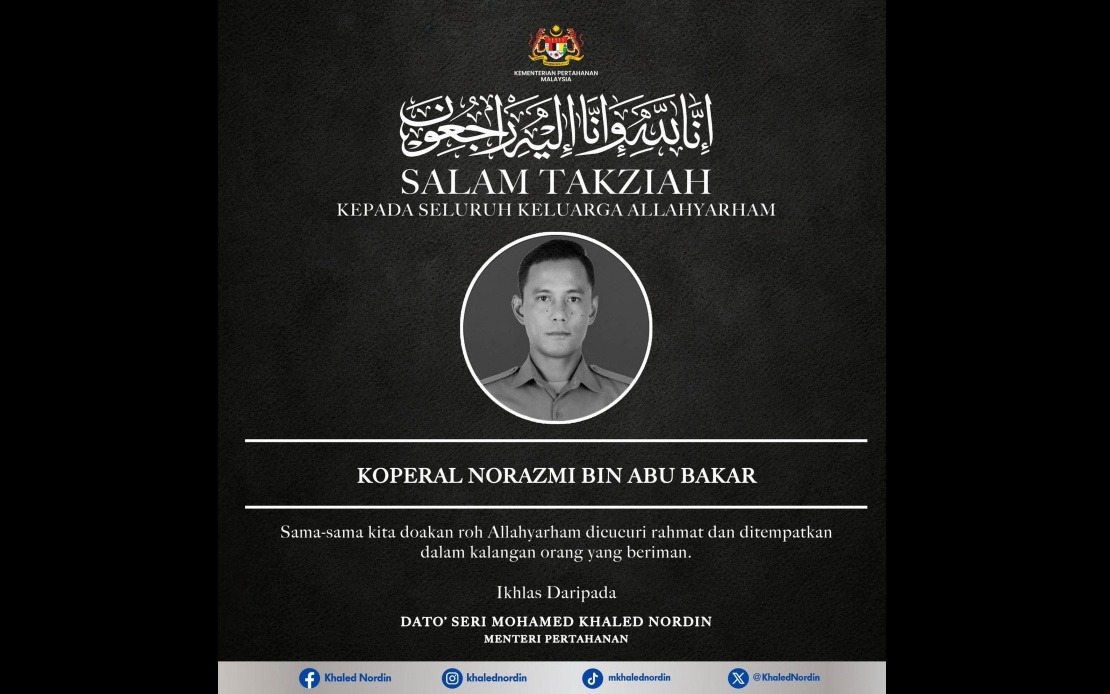
The Malaysian government and Defence Ministry have extended formal condolences to the families of Corporal Norazmi Abu Bakar and Private Siti Khadijah Sungip, who lost their lives in a catastrophic blast during a routine grenade-throwing training exercise in Kedah on June 16. Defence Minister Datuk Seri Mohamed Khaled Nordin conveyed the nation's grief through a social media statement, expressing prayers for the bereaved families as they navigate this profound tragedy.
Corporal Norazmi served with the 6th Battalion, Royal Malay Regiment, while Private Siti Khadijah was attached to the 1st Squadron, Royal Army Engineers Regiment. Both servicemembers sustained critical injuries during the incident at Hobart Camp's firing range in Gurun at 10:57 am and were immediately evacuated to Sultan Abdul Halim Hospital in Sungai Petani. Despite emergency medical intervention, neither soldier survived the journey to the hospital.
In his statement, Defence Minister Mohamed Khaled Nordin articulated the ministry's sorrow at the loss of the two personnel, emphasising the gravity of the situation. He requested prayers for mercy upon the departed soldiers' souls and sought divine forgiveness for them, reflecting the compassionate approach adopted by Malaysia's defence establishment in responding to the tragedy. The minister's words underscored the government's commitment to supporting the grieving families during this difficult period.
The incident represents a sobering reminder of the inherent risks that military personnel face during training operations, even when exercises are conducted under controlled conditions at designated firing ranges. Training accidents, though rare, remain an occupational hazard within armed forces worldwide. The explosion occurred during what should have been a standard component of military preparedness—a grenade-throwing exercise designed to maintain soldiers' proficiency and readiness.
The Malaysian Army has launched a comprehensive investigation into the circumstances surrounding the blast. Army Chief General Tan Sri Azhan Md Othman has personally directed that a thorough probe be undertaken to establish the root cause of the explosion. This inquiry will likely examine equipment condition, training protocols, adherence to safety procedures, and any other factors that may have contributed to the fatal incident.
For the families of Corporal Norazmi Abu Bakar and Private Siti Khadijah Sungip, the loss represents an immeasurable personal tragedy. The deaths of military personnel in training accidents typically trigger broader discussions within defence communities regarding safety standards, equipment maintenance, and procedural reviews. Malaysia's armed forces, like militaries across the region, maintain rigorous training schedules to ensure operational effectiveness, yet such incidents underscore the importance of continuous evaluation of safety measures.
The condolences extended by the Defence Ministry and government reflect institutional recognition of the sacrifices made by military personnel. Soldiers who participate in training exercises undertake risks as part of their service to the nation, and when such incidents occur, formal acknowledgment of loss serves both as a mark of respect and as an affirmation of collective responsibility toward those who serve.
The investigation into this accident will be closely monitored by defence authorities and likely will inform any necessary adjustments to training protocols or safety procedures. Such inquiries typically examine multiple dimensions including technical failures, human factors, environmental conditions, and compliance with established guidelines. Results from the investigation may lead to recommendations that strengthen safety frameworks across military training operations.
Beyond the immediate tragedy, the incident raises questions about force preparedness and the balance between maintaining combat readiness and minimising operational risks. Training remains essential for military effectiveness, yet each loss of life prompts reflection on whether existing safeguards are sufficient. Regional militaries, including those in Southeast Asia, often benchmark safety practices against international standards while adapting protocols to local conditions and resource availability.
The loss of Private Siti Khadijah is particularly significant as women constitute an increasingly important component of military forces throughout Southeast Asia. Her death in a training exercise highlights that female servicemembers share identical operational risks and demands as their male counterparts. This incident underscores the need for equitable attention to safety considerations regardless of gender within military organisations.
As the investigation proceeds, the Defence Ministry will likely engage with grieving families to provide support and transparency regarding findings. Such engagement helps families understand the circumstances of their loss and demonstrates institutional accountability. The broader military community will also reflect on this incident as it relates to their own training operations and safety protocols.
The incident serves as a poignant reminder that military service, even during peacetime training, carries inherent dangers. The sacrifice of Corporal Norazmi Abu Bakar and Private Siti Khadijah Sungip, though unintended, represents the commitment of Malaysian armed forces personnel to their duties. Their families' grief is shared by military institutions and the broader nation, and the thorough investigation now underway aims to prevent similar tragedies in future.