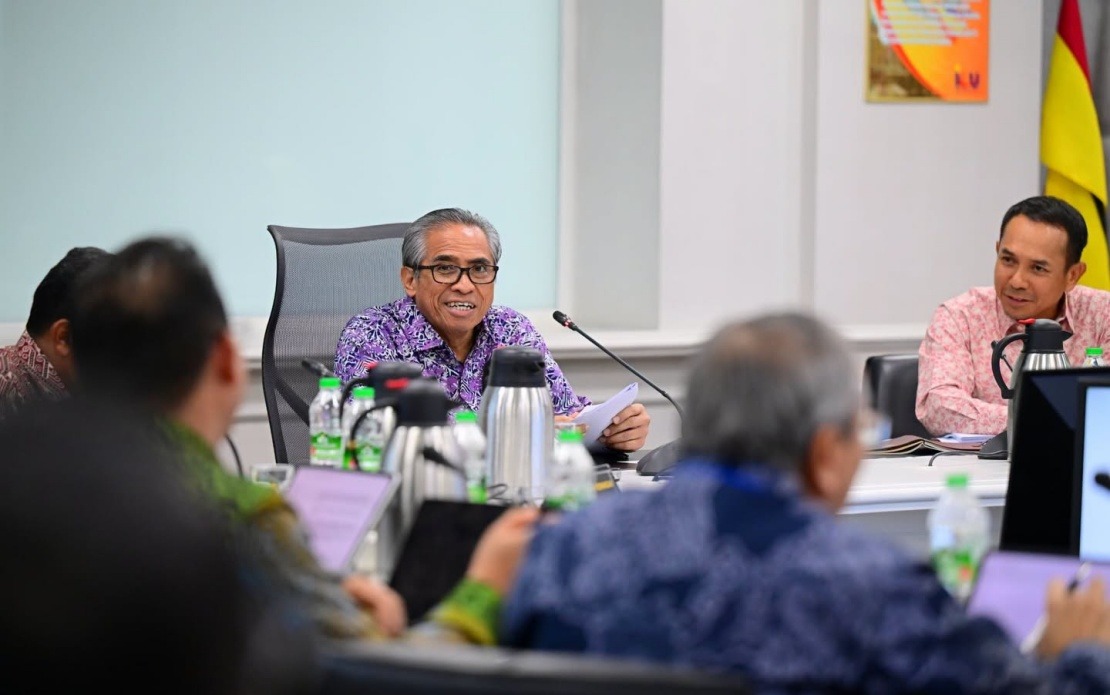
Malaysia's top civil servant has issued a sweeping directive to accelerate the delivery of tens of thousands of small-scale development projects that officials say represent immediate opportunities to improve public services and infrastructure. Chief Secretary to the Government Tan Sri Shamsul Azri Abu Bakar has instructed all ministry secretaries-general to make the implementation of over 40,000 identified projects their primary focus, signalling a shift towards completion of tangible, visible improvements that directly affect daily life across the country.
The directive emerged from discussions at the National Development Action Committee, chaired by Shamsul Azri, where senior officials agreed that these projects qualify as "low-hanging fruit" capable of delivering rapid returns. By reframing development strategy around smaller, achievable interventions rather than pursuing large-scale mega-projects, the government appears intent on demonstrating efficiency and responsiveness to constituent concerns. This approach potentially reflects lessons learned from earlier initiatives that struggled with implementation timelines or cost overruns.
The portfolio of projects encompasses a deliberately broad range of maintenance and upgrade work designed to touch the lives of ordinary Malaysians. Road repairs and drainage system maintenance form the backbone of the initiative, addressing persistent complaints about deteriorating local infrastructure. Equally significant are improvements to government residential quarters, a longstanding grievance among civil servants whose housing standards have lagged, alongside classroom refurbishments that directly support the education system serving millions of students nationwide.
Healthcare facility upgrades represent another critical component, acknowledging the strain on medical infrastructure particularly in rural and underserved regions. Public market and stall improvements signal attention to informal sector traders and small businesses that form the economic backbone of communities. These disparate interventions, while individually modest, collectively address pain points that accumulate into broader dissatisfaction with government service delivery.
A defining characteristic of this initiative is its emphasis on completion velocity. Shamsul Azri explicitly noted that most projects can reach completion within three to six month timeframes, a sharp contrast to infrastructure programmes that routinely stretch across multiple years. This compressed timeline suggests either that projects were pre-selected specifically for feasibility, or that bureaucratic processes are being streamlined to eliminate delays. Either interpretation carries implications for how government operates moving forward.
The directive mandates that secretaries-general personally conduct site visits and maintain close oversight of implementation progress. This requirement places accountability directly on ministry leaders rather than allowing projects to languish in lower-level departmental processes. By demanding hands-on monitoring and ground-level problem resolution, the instruction essentially creates a supervisory chain that should identify bottlenecks and authorise decisions without delay.
For Malaysian citizens, the practical significance lies in the prospect of visible improvements within their immediate environment. A repaired road, functioning drainage, or upgraded clinic represents tangible government action. This stands in contrast to technical infrastructure or policy changes that may benefit the economy but remain invisible to average residents. By deliberately targeting such visible projects, officials are calibrating public perception of government effectiveness.
The initiative also reflects strategic thinking about political economy. Small-scale projects distributed across numerous locations and communities can reach broader geographic constituencies than concentrated major infrastructure investments. This distribution strategy potentially maximises the number of communities and constituencies experiencing direct government action, with implications for how different regions perceive government attention and responsiveness.
From a regional perspective, Malaysia's pivot towards rapid-delivery small-scale projects offers lessons relevant across Southeast Asia, where many governments struggle with implementation capacity and political pressure for immediate results. The approach represents a pragmatic acknowledgment that perfection often becomes the enemy of delivery; by accepting smaller scope projects, officials can accumulate rapid successes that build institutional credibility and public confidence in government capacity.
Implementation success, however, will depend on whether secretaries-general can genuinely sustain the attention required across multiple projects simultaneously. The risk emerges when oversight becomes nominal rather than active, or when recurring funding constraints prevent projects from reaching completion despite initial mobilisation. Sustained political will beyond the initial announcement phase will ultimately determine whether this initiative becomes a model for future programme design or fades as another unfulfilled government directive.
The emphasis on resolving ground-level issues and conducting direct site visits also suggests recognition that bureaucratic distance between decision-makers and implementation realities often causes programmes to derail. By bringing ministry leaders into direct contact with project sites, the expectation is that problems receive immediate attention rather than being filtered through multiple administrative layers. Whether this cultural shift proves durable remains an open question.

