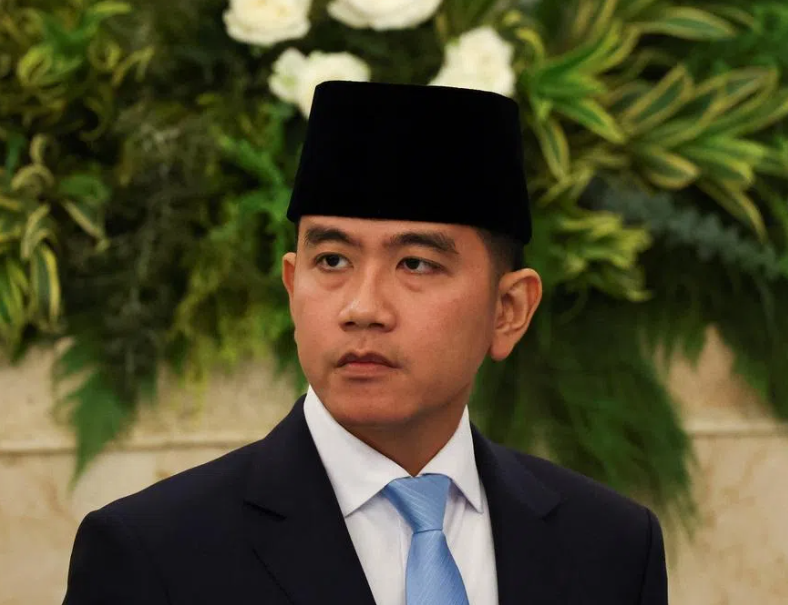
In a striking show of responsiveness, Vice-President Gibran Rakabuming Raka invited five university students who had been protesting against government policy to join him on an official working visit to eastern Indonesia in mid-June, just days after their demonstrations in Jakarta. The gesture appeared designed to signal openness to public grievances, yet the episode has sparked significant debate about the 38-year-old leader's genuine influence within President Prabowo Subianto's administration and his broader political calculations.
The students had taken to the streets opposing two major government initiatives: a universal free meals programme and the Red and White Cooperative initiative, an ambitious plan to establish thousands of village-run businesses throughout the nation. Following their activism, Gibran convened a closed-door meeting with student representatives, where he reportedly pledged to review their research findings and relay their concerns to the president. A statement from the Vice-President's Office quoted Muhammad Abdi Maludin, a student leader from Bung Karno University, as saying Gibran had been receptive and would audit the students' recommendations. This framing positioned the vice-president as a sympathetic intermediary between grassroots activists and the highest levels of government.
However, the public reception proved decidedly mixed. When Gibran posted about the meeting on Instagram, commenters quickly questioned both the authenticity of the engagement and the selection of attendees. Some observers noted that inviting representatives from Indonesia's largest and most prestigious universities would have lent greater credibility to the consultation. Critics on social media characterised the encounter as performative rather than substantive, suggesting that Gibran had carefully choreographed the entire affair to generate positive publicity without meaningful commitment to policy change. These sceptical reactions hinted at a deeper concern among Indonesian observers about whether their political leaders genuinely listen to student voices or merely perform inclusion for optics.
Analysts at Jakarta's Center for Strategic and International Studies have interpreted Gibran's newfound visibility around student concerns as a calculated political strategy with longer-term implications. Researchers note that the vice-president is deliberately cultivating an image as a communicative leader willing to engage ordinary citizens and critics—a persona especially relevant given that Indonesia's next presidential election looms in 2029. While Gibran has not publicly declared his candidacy, speculation about his electoral ambitions has persisted since his appointment alongside Prabowo in October 2024. By positioning himself as responsive to public concerns now, he may be laying groundwork for a future campaign that emphasises his accessibility and reformist credentials compared to more distant figures in government.
Yet the actual scope of Gibran's authority within the administration remains severely constrained. Unlike several of his predecessors who wielded substantial policy portfolios, the eldest son of former president Joko Widodo has not been assigned direct oversight of major government programmes. Despite being associated with high-profile projects such as Papua's development and the new capital Nusantara, he operates largely on the periphery of consequential decision-making. The free meals programme falls under the National Nutrition Agency, which reports directly to the president, while the Red and White Cooperative initiatives are coordinated across multiple ministries as a presidential priority. This fragmented governance structure means that any influence Gibran claims over these initiatives must be exercised indirectly through persuasion rather than direct authority.
The timing of Gibran's engagement with students coincided with genuine political vulnerabilities for the government. The free meals programme had drawn increasing scrutiny following corruption allegations within the National Nutrition Agency, culminating in June with the replacement and arrest of agency chief Dadan Hindayana alongside two former deputies on suspicion of procurement irregularities. When Gibran visited a primary school in East Nusa Tenggara during his eastern trip, he acknowledged the programme's shortcomings and called for improved governance. He instructed officials to accelerate implementation where infrastructure already existed and promised to address local grievances. These actions appeared designed to demonstrate vice-presidential concern without committing to major structural reforms that might contradict the president's established priorities.
Critical examination of the student meeting has revealed details that further undermine claims of genuine grassroots consultation. News outlets Kompas and Tribunnews reported in late June that students who attended the palace meeting subsequently received payments ranging from 2 million to 20 million rupiah. While the source and purpose of these sums officially remained under investigation by the Presidential Palace, the payments suggested that the engagement may have involved material inducements to participate. Such revelations reinforce perceptions that Gibran's outreach had been meticulously orchestrated rather than organic, and that the selected students did not represent Indonesia's most prominent campuses or largest student movements.
Academics studying Indonesian politics have characterised Gibran's strategy as fundamentally about demonstrating relevance rather than enacting substantive policy change. Researchers note that the vice-president faces a distinctive challenge: he operates within an administration where the president and military-linked officials exercise predominant control over flagship programmes, leaving limited space for independent vice-presidential authority. By engaging visibly with student protesters, Gibran signals that he remains an active political player even when denied direct policy levers. This visibility cultivation becomes particularly important for a vice-president seeking to establish a distinct political identity ahead of a potential future electoral contest.
The structural realities of Indonesian governance further constrain any meaningful impact from Gibran's student outreach. The military and police reportedly exercise substantial control over the free meals and cooperative initiatives, according to analysts at Padjadjaran University, suggesting that a vice-president without direct portfolio authority struggles to influence even controversial programmes generating public concern. The evidence indicates that Gibran has not been substantially involved in designing or implementing either initiative. Instead, his recent activism around student grievances appears designed primarily to demonstrate that he remains attuned to public sentiment and positioned as a bridge between dissatisfied citizens and government decision-makers.
For Malaysian observers watching Indonesian political developments, Gibran's manoeuvres offer instructive lessons about navigating limited executive authority within competitive political environments. The vice-president has seemingly calculated that cultivating a reformist public image and demonstrating accessibility to critics yields political returns even without substantial policy influence. This strategy acknowledges an important reality of contemporary Indonesian politics: public perception of leadership responsiveness can matter as much as tangible policy achievements in shaping electoral prospects. Whether such image-building ultimately translates into genuine political power will depend on Gibran's ability to secure more substantial authority within the administration or to translate popular sympathy into electoral support in 2029.
The broader implications extend beyond Gibran's individual trajectory to questions about how Southeast Asian governments balance public accountability with executive capacity. As student activism spreads across Indonesia and citizens demand greater responsiveness from their leaders, officials face pressure to demonstrate engagement with criticism. Gibran's approach—meeting with protesters, acknowledging concerns, promising to relay feedback to superiors—offers a model of performative responsiveness that may satisfy media narratives and public relations objectives without requiring fundamental policy shifts. Whether such engagement represents genuine political reform or merely sophisticated public relations will likely become clearer as the 2029 election approaches and Gibran's actual influence within the Prabowo administration becomes more evident.

