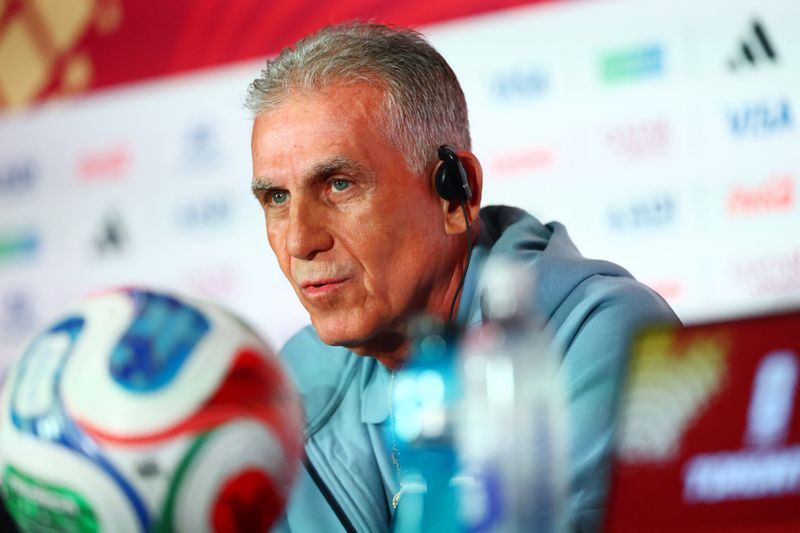
Ghana will proceed with their World Cup Group L encounter against Panama at Toronto Stadium on Wednesday, with or without midfielder Thomas Partey, according to coach Carlos Queiroz, as a Canadian federal court deliberates an appeal on Partey's entry into the country. The 73-year-old Portuguese tactician addressed reporters on Tuesday, a day before the crucial fixture, striking a measured tone despite the ongoing legal proceedings and the spotlight shining on one of his key players. His measured pragmatism underscores the delicate balancing act facing international football teams when legal and competitive pressures intersect at the highest level of the sport.
Canadian authorities had previously refused Partey entry into the country, prompting Ghanaian officials to lodge an urgent appeal that was heard in federal court on Tuesday. The Villarreal midfielder, who faces allegations of rape and sexual assault in Britain, has consistently denied all charges levelled against him. The situation has cast a shadow over Ghana's preparation for the tournament, yet Queiroz has chosen to keep his focus firmly on tactical preparation rather than engaging with the controversy surrounding his player. This approach reflects a broader principle in professional sports management: maintaining team cohesion and strategic focus when external forces threaten to derail competition preparation.
Queiroz was resolute in deflecting further commentary on the Partey situation, stating tersely that addressing such matters fell outside his remit as a coach. "To add more comments about issues that are nonsense is not part of my business," he explained at the press conference. Instead, he articulated his philosophy of working with available resources and adapting his tactical approach accordingly. The coach's determination to separate personnel complications from competitive strategy suggests Ghana has contingency plans in place should Partey remain unable to participate. Such contingency planning is standard practice among World Cup teams, though the absence of a player of Partey's calibre would undoubtedly reshape Ghana's midfield dynamics and passing options.
While maintaining composure over the Partey matter, Queiroz offered a candid assessment of Ghana's opponents, Panama. He acknowledged that the Central American nation represents a well-organised and tactically experienced outfit, qualities that command respect at World Cup level. Yet he was equally confident in Ghana's capacity to compete effectively, citing the team's array of technical and physical attributes. "We've got great experience, we've got quality, we've got speed, we've got skill," he told the assembled media. This balanced evaluation—recognising Panama's strengths whilst affirming Ghana's competitive tools—reflects both humility and confidence, the hallmarks of experienced coaching at major tournaments.
Queiroz identified pace and one-on-one play as areas where Ghana possesses particular advantages, suggesting his tactical approach may hinge on exploiting wide areas and direct attacking transitions. Conversely, he indicated that Panama's defensive shape and positioning contain vulnerabilities that Ghana's coaching staff have identified and prepared to exploit. Such granular tactical discussion, whilst common in post-training press engagements, rarely provides specific actionable intelligence to opponents. Rather, it signals to Ghana's own players and supporters that the coaching unit has done detailed preparation work and possesses clear game plans.
The coach's assessment of Panama as an experienced unit reflects the reality that Central American qualification for World Cups is increasingly competitive, with Panama having navigated a rigorous qualification pathway. The team's organisational discipline suggests they will pose a methodical, structured challenge rather than a disorganised opponent. For Ghana, success may hinge on whether they can penetrate Panama's defensive shape through rapid transitions, wide play, or set-piece situations. The match at Toronto Stadium will reveal whether Ghana's technical quality and athleticism can overcome Panama's organised approach within the specific context of Group L dynamics.
Beyond the immediate match preparation, Queiroz raised questions about FIFA's mandatory hydration breaks implemented during World Cup fixtures. These stoppages have generated debate among players and coaches regarding their effectiveness and true purpose. Queiroz indicated he would withhold detailed comment for now but called for a comprehensive integrity review once the tournament concludes. His request reflects a broader concern among some coaching figures that organisational decisions—even those ostensibly aimed at player welfare—warrant transparent scrutiny regarding whether they genuinely prioritise athlete wellbeing or serve commercial and marketing interests.
The hydration break issue carries particular relevance for Southeast Asian teams and supporters, given that the World Cup format increasingly incorporates matches across multiple climate zones and time zones. Understanding the genuine rationale behind such rules becomes important for smaller football federations developing their own protocols and policies. Queiroz's call for an "integrity report" that separates genuine health considerations from commercial imperatives suggests growing scepticism within the coaching community about the transparency of FIFA's decision-making processes on matters affecting player welfare.
As Ghana prepares for what amounts to a must-win fixture in Group L, the Partey uncertainty adds an unpredictable element to their planning. Queiroz's insistence that the team is ready regardless reflects both professional necessity and confidence in his squad's depth and adaptability. Whether that adaptability proves sufficient against Panama's experienced and organised approach will become apparent when the teams take the field. The outcome will significantly shape Ghana's tournament trajectory and their ability to progress from a competitive group that demands results from every available resource.