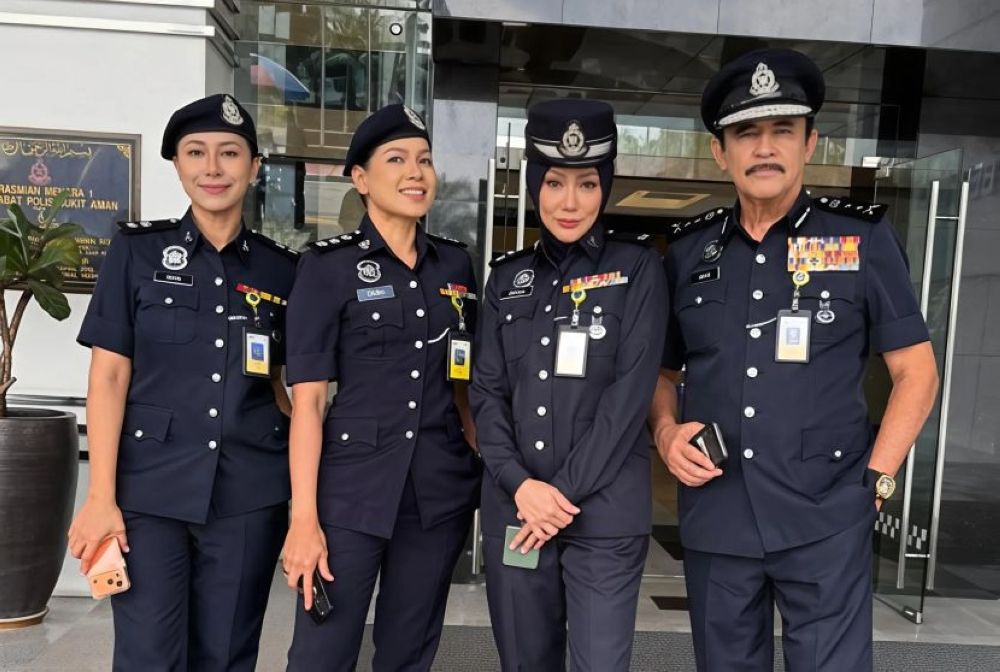
Datuk Yusof Haslam, the producer behind the highly anticipated police drama Gerak Khas 2.0, has made the difficult decision to excise all remaining scenes involving a cast member arrested on drug-related charges. The move comes merely a week after the series premiered, marking a significant disruption to what had otherwise been a largely completed production. With 90 percent of filming already in the can and only two weeks of production originally remaining, the producer opted to eliminate all outstanding scenes involving the actress rather than attempt to recast or reshoot the material.
The actress in question was detained during a raid conducted by officers from the Dang Wangi district police headquarters on July 7, during which she tested positive for three different types of controlled substances. The incident prompted immediate action from Skop Production, which determined that maintaining the drama's reputation took precedence over the logistical complications of removing a performer at such an advanced stage of post-production. According to Haslam's account, the remaining footage featuring the actress amounted to scenes scattered throughout Episodes 23 and 24 of the total 26-episode series, scenes that could be edited out without completely derailing the narrative structure.
Haslam emphasised that the production team would have never engaged the actress had they possessed foreknowledge of the situation. He noted that the performer had previously worked on other Skop Production projects without incident, suggesting the transgression came as an unexpected departure from her previously established professional conduct. The decision to remove her was described not as a desire to punish but as a necessary protective measure to shield the drama's credibility and the broader image of the production company itself. Haslam made clear that no future professional relationship would be extended to the actress, effectively ending any prospect of further collaboration.
In his response to critics or those seeking to understand the rationale, Haslam adopted a measured but firm tone. He rejected any appeals for reconsideration or explanations from the actress, communicating a message that transcended the immediate circumstance. His statement—that it is simply too late—conveyed the finality of the decision and the irreversibility of the consequences. Haslam framed the situation as a cautionary tale applicable to the entire entertainment industry, one that underscores how a single serious lapse in judgment can obliterate years of accumulated professional goodwill and achievement.
The producer had reportedly issued warnings on two separate occasions to the actress concerning the importance of maintaining conduct befitting someone associated with the drama. These interventions appear to have occurred before the arrest, suggesting that concerns about her judgment had already surfaced. At the time of those warnings, Haslam emphasised to all cast and crew the necessity of preserving discipline and avoiding activities or associations that might compromise either the production's reputation or that of the Royal Malaysia Police (PDRM), whose cooperation was essential to the project's authenticity and official standing.
Haslam's broader reflections on the incident reveal the challenges inherent in managing large casts and production teams, where individual actions can have disproportionate consequences. He drew an analogy to parenting, noting that even with clear expectations and repeated guidance, one cannot entirely control the personal decisions of others. He acknowledged the paradox of emphasising integrity and professional conduct throughout a production only to have a cast member's behaviour undermine those very values. His comments suggest frustration not merely with the actress but with the unpredictability of human nature when placed under the pressures and temptations of the entertainment industry.
The incident carries implications extending beyond the immediate production. Haslam directed his remarks toward other performers and crew members, effectively using the case as a broader warning within the industry. His observation that women in particular face heightened social scrutiny acknowledged the gendered dimension of public judgment in Malaysian entertainment and popular culture. By making this example highly visible, Haslam signalled that professional consequences for substance abuse and related criminal conduct would be swift and uncompromising, potentially influencing the behaviour of others working within the Malaysian entertainment ecosystem.
Gerak Khas 2.0 features a substantial ensemble including Hans Isaac, Erra Fazira, C. Kumaresan, and Salina Saibi. The drama centres on police work, with several actresses portraying inspectors within the force. Beyond the removed performer, the ensemble includes Tisha Shamsir, Nabiha Aimi, and Emily Elizabeth in key police roles. The timing of the arrest and the swift production response meant that considerable investment in filming and post-production work would ultimately prove wasted, underscoring the financial and creative stakes involved in such decisions.
The situation reflects broader tensions within Malaysia's entertainment industry regarding accountability and consequences. While the producer's swift action may be interpreted as taking a hardline stance, it simultaneously illustrates the vulnerability of productions to unforeseen personal misconduct by cast members. For broadcasters, networks, and production companies considering this drama, the incident raises questions about due diligence, background investigations, and the extent to which personal conduct should be monitored or controlled. Haslam's framing of the decision emphasises principle over pragmatism, suggesting that the long-term reputation of both the production and the institution being depicted—in this case the Royal Malaysia Police—justified the short-term production complications and financial losses incurred.
Moving forward, the absence of the actress's scenes raises questions about narrative coherence and whether viewers will notice the gap or whether the editing team can successfully integrate the remaining material without jarring transitions or logical inconsistencies. The drama's reception may be complicated by public awareness of the behind-the-scenes upheaval, particularly given the connection to serious criminal charges. The case serves as a stark reminder to aspiring actors that professional success, no matter how accomplished or extensive, offers no guarantee of immunity from the consequences of personal transgression, and that in the entertainment industry, reputational damage can accumulate with remarkable speed.

