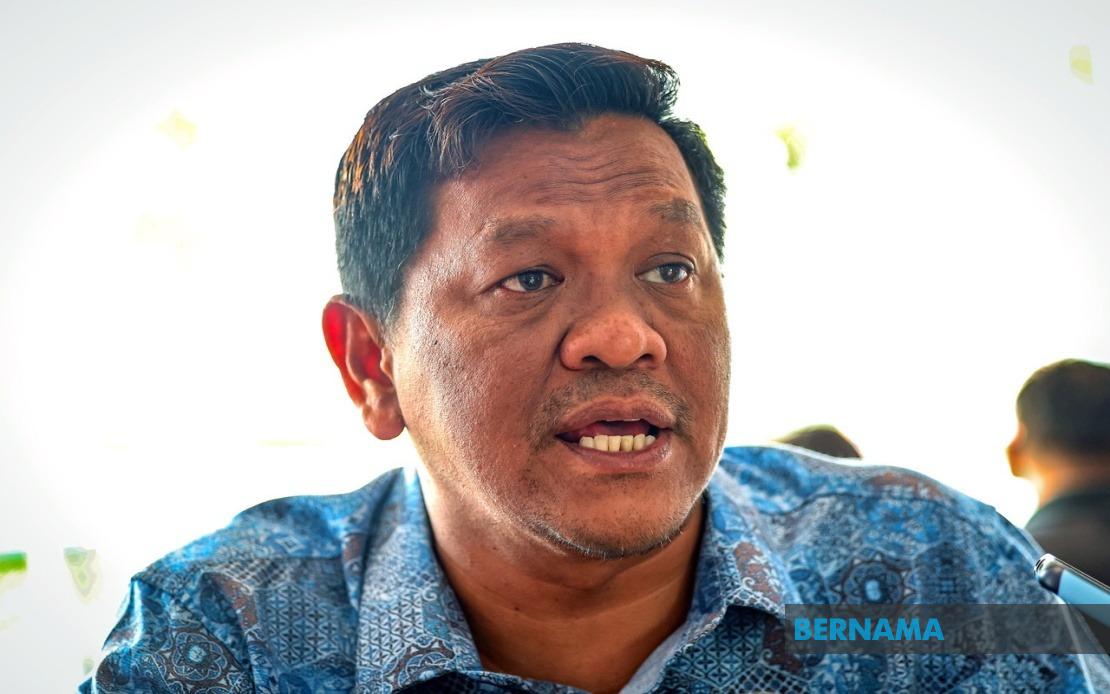
The National Security Council distributed RM5 fuel vouchers to 200 motorcyclists in the Renggam area of Kluang on June 25, targeting a demographic heavily dependent on petrol for daily commuting. The assistance scheme represents a targeted intervention by the government to address the financial pressures facing two-wheeler users, who form a substantial portion of Malaysia's workforce, particularly in smaller towns and rural municipalities where public transport remains limited and vehicle ownership is widespread.
Abdullah Izhar Mohamed Yusof, political secretary to the Communications Minister, framed the initiative as evidence of the government's commitment to grassroots welfare and national cohesion. Rather than positioning the vouchers as a one-off charitable gesture, he emphasised that this represents the beginning of a sustained engagement strategy designed to maintain regular contact with communities beyond formal election cycles. The scheme reflects broader policy thinking about how government agencies can maintain visibility and credibility among ordinary Malaysians while simultaneously addressing real cost-of-living pressures that affect household budgets.
The programme extended beyond simple voucher handouts to incorporate structured community dialogue and information sharing. Alongside the financial assistance, officials from the National Security Council, the Information Department, and the Department of Community Communications conducted briefing sessions addressing current national issues and allowed residents to articulate their concerns. This multi-layered approach suggests recognition that material assistance alone may prove insufficient without accompanying efforts to ensure communities understand government policies and feel their voices receive consideration from decision-makers.
Access to reliable government information remains a persistent challenge in Malaysia's smaller towns, where misinformation and competing narratives can gain traction when official channels fail to provide timely, comprehensible explanations of policy rationale. By combining voucher distribution with face-to-face information sessions, the programme attempts to build trust in government institutions while simultaneously demonstrating concrete support for household finances. This integrated model could serve as a template for future outreach initiatives across the country.
Abdullah Izhar committed to expanding and sustaining similar programmes nationwide, signalling that Renggam's event reflects broader strategic thinking rather than isolated local effort. He highlighted the importance of ensuring that diverse societal segments receive equal access to accurate information about government initiatives and benefit from assistance schemes proportionately. This language suggests awareness that rural and semi-urban communities sometimes perceive themselves as neglected by urban-focused policies, and that proactive outreach can help counter such perceptions.
Recipient M. Raja, a 56-year-old father of five from Taman Sri Jaya, expressed gratitude while indicating that the assistance, though welcome, addresses only immediate relief rather than structural solutions. His comment that monthly distribution would provide substantial benefit highlights the cumulative financial pressure on household budgets, where petrol costs represent a significant monthly expense for those dependent on motorcycles for employment or daily errands. His measured response—appreciative yet hopeful for expanded assistance—reflects the cautious optimism of working-class Malaysians when confronted with government welfare initiatives.
Another beneficiary, Hee Eeck Kwe, aged 66 from Kampung Baru, articulated satisfaction that rural communities were explicitly included in assistance programmes rather than overlooked in favour of urban centres. Perceptions of urban bias in government service delivery have long plagued Malaysia's political landscape, with rural constituencies frequently claiming that development funds and welfare schemes concentrate disproportionately in cities and major towns. Targeted outreach to smaller communities like Renggam serves both symbolic and practical purposes—demonstrating genuine commitment to inclusive governance while simultaneously reaching voters in constituencies that remain electorally significant.
The voucher scheme's specificity to motorcyclists reflects data-driven policymaking focused on the actual transportation patterns of lower-income Malaysians. Unlike generalised cash transfers, this targeted approach ensures assistance reaches those facing genuine transport costs while avoiding dispersion of resources to those with alternative mobility options. Motorcycles dominate personal transport in towns throughout Peninsular Malaysia and East Malaysia, where purchase prices remain affordable and operating costs relatively modest compared to cars, yet still impose meaningful burdens on household budgets for workers earning modest wages.
The programme's timing and implementation through the Jiwa@Komuniti MADANI Sembang Santai World Cup Edition framework demonstrates how government agencies increasingly embed assistance and engagement within cultural and community events rather than through purely administrative channels. This approach generates greater attendance, creates positive associations with government presence, and allows officials to interact with residents in relaxed settings rather than formal bureaucratic environments. Such methodology has become increasingly common across Southeast Asian governments seeking to improve public perception of state institutions.
Looking forward, the commitment to regular national rollouts of similar programmes positions this initiative within broader efforts to rebuild public confidence in government after years of political turbulence and institutional scrutiny. Each successful distribution event creates opportunities for photographed moments, social media content, and word-of-mouth communication that reinforce government engagement narratives. For residents in towns like Renggam, such tangible support carries particular significance where limited economic opportunities and persistent infrastructure gaps have sometimes fostered disconnection from federal institutions.
The dual approach of material assistance combined with information dissemination addresses two distinct but related challenges facing contemporary Malaysian governance: the genuine economic pressures affecting working households, and the information environment in which citizens form perceptions of government performance. By tackling both simultaneously through localised programmes, officials demonstrate recognition that sustainable political legitimacy requires both effective service delivery and transparent communication. Whether such initiatives prove sufficient to address deeper structural economic challenges remains uncertain, but their strategic value in maintaining grassroots engagement appears increasingly central to government planning.

