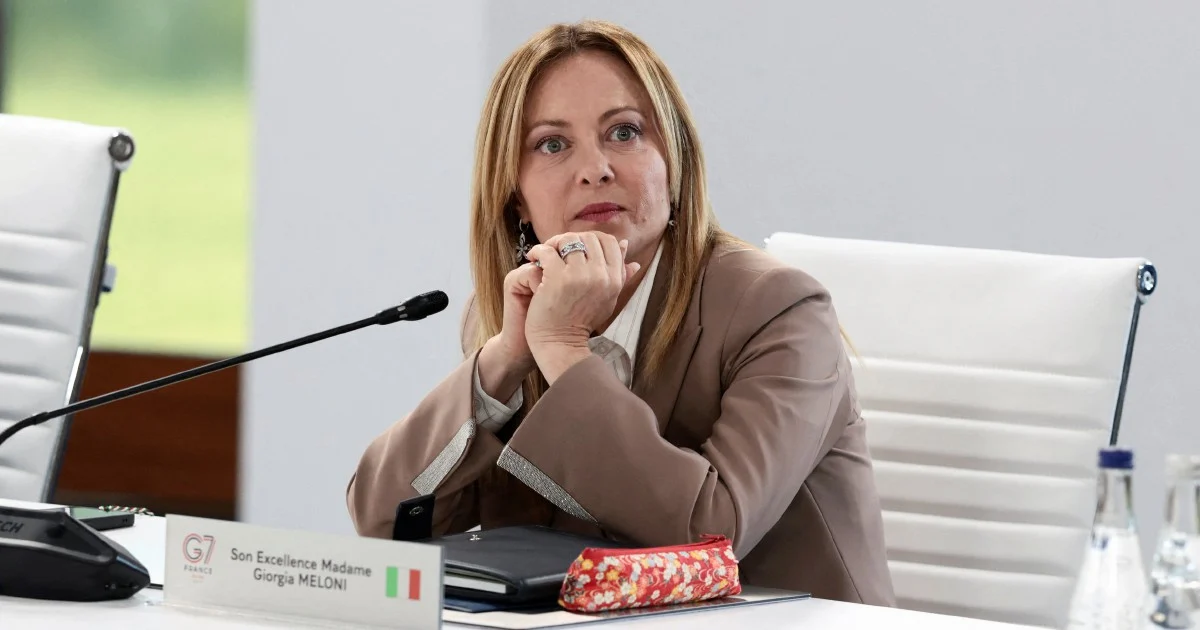
When Donald Trump took the presidential oath in 2025, Italian Prime Minister Giorgia Meloni stood alone among European leaders in receiving an invitation to the ceremony, signalling what many interpreted as the dawn of a strengthened alliance between the United States and Rome. Her presence at the inauguration suggested she had cultivated a uniquely privileged relationship with the returning American president, positioning Italy as Washington's preferred European partner at a time of mounting transatlantic tensions.
Meloni's initial alignment with Trump appeared to reflect both personal rapport and strategic calculation. Italy, as a member of NATO and the European Union, faced pressure to balance its commitments to Western institutions with its own national interests. The prime minister's early positioning as someone who could speak credibly to Trump seemed advantageous for securing favourable terms on trade, defence investments, and European policy decisions that might otherwise exclude Italian perspectives.
However, the apparent harmony has deteriorated significantly. Meloni has since become an increasingly vocal critic of Trump's policies and public statements, representing a dramatic recalibration of her diplomatic stance. This transformation raises important questions about what prompted such a reversal and what signals it sends to other European governments attempting to navigate relations with Washington.
The shift reflects the broader complexities facing European leaders in the Trump era. Initial assumptions about establishing special relationships with the president have proven fragile, as his policy priorities often clash with European economic and security interests. Meloni's evolution from insider to outsider mirrors broader patterns across the continent, where leaders who initially sought accommodation have found themselves defending European positions against American pressure.
For Malaysia and Southeast Asian nations, Italy's experience offers instructive lessons about the volatility of bilateral relationships built primarily on personal political alignments. Regional governments that have developed close ties with specific American administrations understand the risk of over-reliance on personalities rather than institutional frameworks. The instability demonstrated by Meloni's situation underscores why diversified diplomatic engagement and institutionalised agreements matter more than individual partnerships.
Meloni's criticism now extends across multiple dimensions of Trump's approach, suggesting a fundamental disagreement rather than tactical positioning. Her concerns likely encompass economic policies, international agreements, and broader geopolitical strategies that conflict with European perspectives. This marks a significant departure from the initial enthusiasm displayed at the inauguration ceremony.
The relationship deterioration also reflects constraints on Meloni's actual influence within European structures. Despite positioning herself as a Trump interlocutor, she remains bound by EU commitments and NATO obligations that frequently place her at odds with American unilateral actions. When Trump's policies challenge European interests, even sympathetic leaders like Meloni face domestic and institutional pressures to resist rather than accommodate.
For European unity, Meloni's shift potentially strengthens the case for more coordinated responses to American policy initiatives rather than individual capitals seeking special arrangements. If even a leader cultivated as a Trump ally finds collaboration untenable, the lesson suggests that European countries gain more leverage through collective positions than through competing for Washington's favour.
The Italian case also illustrates how transatlantic relations have become increasingly unpredictable. European leaders must now operate under conditions of greater uncertainty, where historical alliances and institutional frameworks provide less guarantee of alignment than in previous decades. This environment requires more flexible diplomacy while maintaining core commitments to shared values and institutions.
Meloni's positioning as both a Meloni who understood Trump and now as a credible critic gives her particular credibility in European circles. She can speak to Americans about European concerns without appearing ideologically opposed to Trump's broader vision, potentially making her arguments more persuasive to those in Washington open to European perspectives.
The deterioration in Meloni-Trump relations also reflects the challenges inherent in Italian politics, where coalitions and competing interests often require leaders to adjust positions based on domestic political considerations. As pressures from coalition partners and public opinion mount, maintaining an overly pro-Trump stance becomes increasingly difficult politically.
Looking forward, the episode suggests that European leaders must develop more sophisticated strategies for engaging with Washington that do not depend on personal relationships with individual American presidents. Institutional mechanisms, formal agreements, and multilateral frameworks provide more durable foundations for transatlantic relations than do the affinities between individual politicians.
For governments across Asia and beyond, Meloni's journey serves as a cautionary tale about constructing foreign policy primarily around personal connections with foreign leaders. Sustainable diplomatic strategies require deeper institutional foundations and diversified relationships that can withstand the inevitable shifts in personalities and political administrations.

