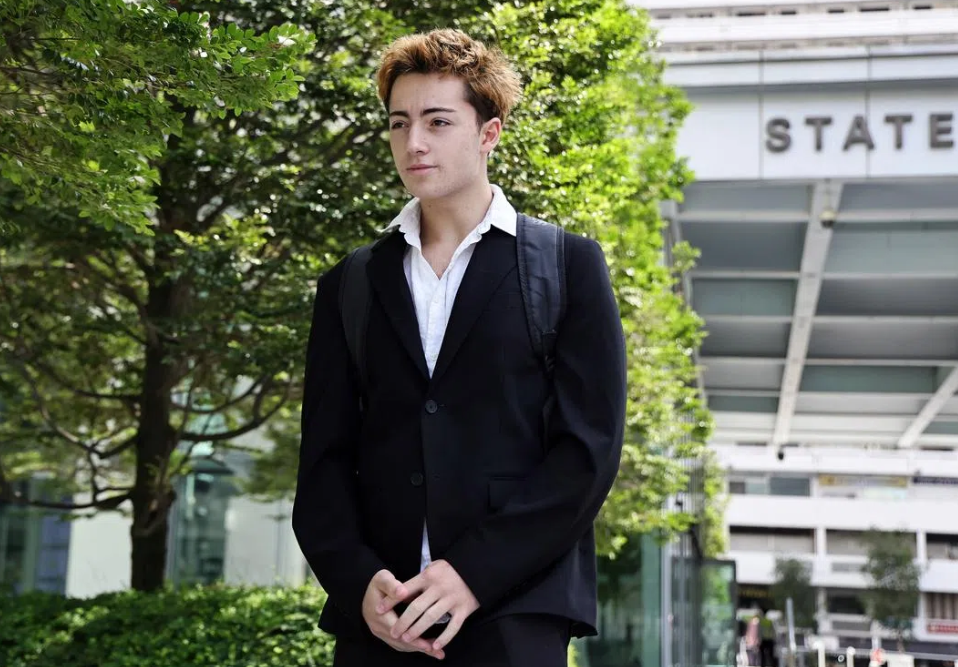
A teenager accused of contaminating a public vending machine in Singapore by licking a straw and returning it to the dispenser is expected to enter a guilty plea on July 13. Didier Gaspard Owen Maximilien, aged 19, faces two charges: committing mischief and being a public nuisance, both filed in April following an incident at Goldhill Centre on Thomson Road that allegedly occurred on or around March 12.
The French national is accused of removing a straw from an iJooz vending machine—a vendor known across Singapore for dispensing freshly squeezed orange juice—licking it, and placing it back into the straw dispenser for other customers to use unknowingly. What distinguishes this case from a simple act of poor hygiene is that Maximilien allegedly documented his actions on video and subsequently shared the footage on social media platforms, where it rapidly accumulated views and provoked widespread alarm.
The viral nature of the incident underscores a growing phenomenon in the digital age where acts of food contamination or public misbehaviour are often filmed and distributed online for shock value or entertainment. When the video surfaced on March 12, it generated substantial concern among internet users across Singapore and potentially beyond, raising awareness about food safety risks at unmanned or self-service dispensing systems. The incident highlighted vulnerabilities in the hygiene protocols of such machines, which rely on users maintaining basic standards of cleanliness and decorum.
The consequences of Maximilien's actions extended to the business itself. According to court documents, iJooz was forced to undertake a complete sanitation response, removing and replacing all 500 straws contained within the affected dispenser. This operational impact demonstrates the serious downstream effects that result from such incidents, imposing financial and logistical burdens on vendors and potentially damaging customer trust in self-service food and beverage systems. The company's decisive action reflected the severity with which such contamination incidents are treated in Singapore's regulated food and beverage environment.
For Malaysian readers, this case carries particular relevance given that similar vending machines and self-service beverage dispensers operate throughout shopping centres and public spaces across the country. The incident serves as a cautionary reminder about the importance of maintaining public hygiene standards and the potential risks associated with unmanned food service systems. It also illustrates how behaviour that might be considered a prank or harmless joke can have real consequences for businesses and public health perception.
The charges Maximilien faces carry significant legal weight under Singapore's legislation. A conviction for committing mischief can result in imprisonment for up to two years, a monetary fine, or a combination of both sanctions. The public nuisance charge carries the possibility of a jail sentence up to three months, a fine not exceeding $2,000, or both penalties applied concurrently. These sentencing guidelines reflect how seriously Singapore's judicial system treats deliberate actions that compromise public health and safety or cause disruption to community spaces and commercial establishments.
The case also touches on broader questions about digital citizenship and social media responsibility. The decision to film and upload such content suggests either a fundamental misunderstanding of the consequences of one's actions or a deliberate intent to provoke and shock for online engagement. In either scenario, the incident highlights how instantaneous global distribution of video content can amplify the impact of individual misconduct far beyond what might have occurred had the same action been committed privately.
Maximilien's expected guilty plea indicates that the defence has likely determined that contesting the charges would be neither strategically advantageous nor factually defensible, given the apparent video evidence and documentation of the incident. The July 13 date represents a procedural milestone where formal admissions of guilt would likely pave the way for sentencing considerations, though the court will ultimately determine what penalties are appropriate given the specific circumstances and any mitigating factors that may be presented.
For vending machine operators and food service businesses throughout Southeast Asia, this case reinforces the importance of implementing additional security measures such as surveillance cameras, tamper-evident packaging, and regular inspections. It also underscores the value of swift public communication and transparent responses when contamination incidents do occur, to maintain consumer confidence in such systems. In an era where a single incident can become a viral sensation within hours, the reputational stakes for businesses are extraordinarily high, making preventive measures and robust response protocols essential components of operational management.
The incident ultimately reflects how contemporary legal systems are grappling with enforcement in an age of social media, where individuals' poor judgment and desire for online notoriety can create real-world harms that demand serious legal consequences. As Maximilien's case concludes with his anticipated guilty plea, it may serve as a cautionary tale for others tempted to engage in similar behaviour for social media attention, demonstrating that such actions carry genuine legal jeopardy and lasting consequences.

