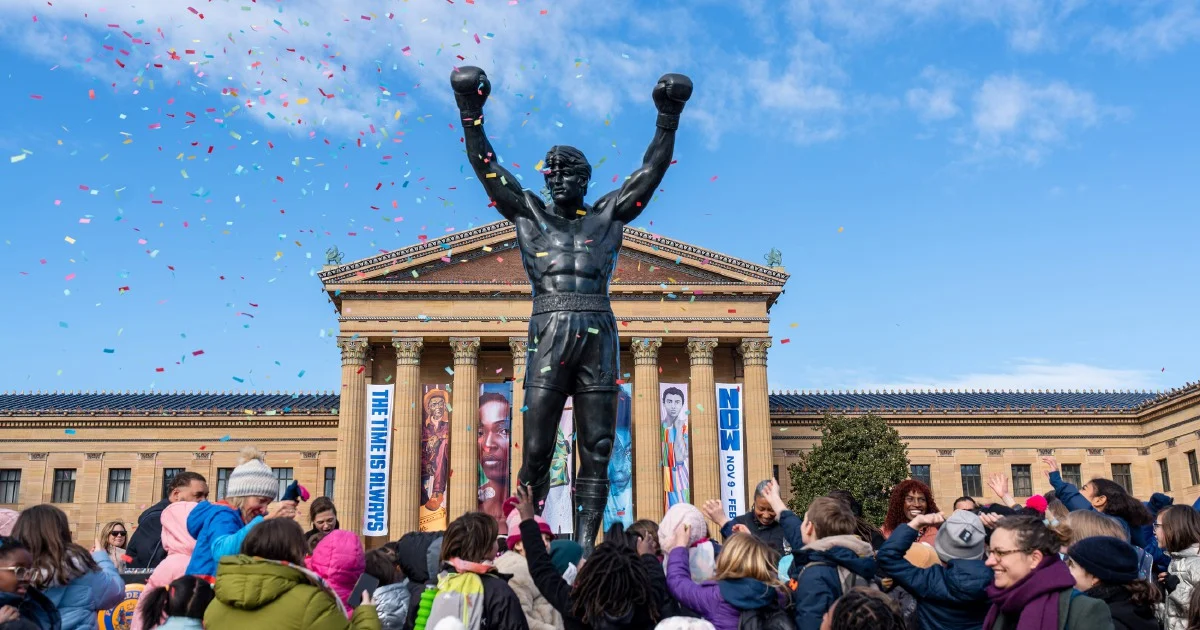
Philadelphia authorities issued a pointed plea to French national team supporters on Saturday, urging them to resist the temptation of adorning the city's celebrated Rocky Balboa statue with their national colours ahead of upcoming World Cup fixtures. The warning stems from a curious pattern of athletic calamities that has shadowed the teams of supporters who previously attempted to dress the bronze monument in their own national regalia, raising questions about whether superstition—or something more—governs outcomes in international sport.
The Rocky statue, located on the steps of the Philadelphia Museum of Art, has transcended its origins as a film prop to become one of America's most recognisable cultural landmarks. Tourists and locals alike flock to the site daily to recreate the famous training run sequence from Sylvester Stallone's 1976 film, making it an irresistible target for football supporters seeking iconic photo opportunities and atmospheric moments. The statue's prominence in the city's identity means it attracts particular attention during major sporting events, when national fan bases descend on Philadelphia en masse.
The specific pattern that has unfolded across multiple tournaments reveals a troubling consistency that has not escaped the notice of superstitious supporters worldwide. Teams whose fans dressed the Rocky statue in their national colours subsequently experienced elimination, injury crises, or unexpectedly poor performances in critical matches. While rational analysts might dismiss such correlations as coincidental, the sheer number of instances has created a growing mythology around the statue's purported curse—one that administrators and local officials now feel compelled to address directly.
For French supporters, many of whom travelled to Philadelphia harbouring World Cup ambitions for their national team, the warning carries particular weight given France's status as defending champions and genuine tournament contenders. The pressure to avoid any potential jinx becomes magnified when a team enters competition with genuine expectations of success. The psychological dimension of such superstitions cannot be understated; the belief in curses can subtly influence player confidence and fan morale in ways that ultimately manifest in tangible sporting outcomes.
Philadelphia's tourist infrastructure and sports culture make the city an inevitable hub during international tournaments. The metropolis routinely hosts World Cup matches, and its central location on the East Coast means thousands of international supporters inevitably converge on the site. The Rocky statue's combination of cultural significance and accessibility makes it a natural gathering point for these visiting fan groups, who seek to commemorate their presence in the city through symbolic gestures.
The decision by local authorities to formally warn visitors represents an escalation in how seriously the curse narrative has become embedded in World Cup folklore. Rather than dismissing supporters' concerns as mere superstition, officials appear to have calculated that direct intervention might prevent the statue from acquiring additional layers of jinx during this tournament cycle. This pragmatic approach acknowledges the reality that belief systems, however irrational they may appear to outsiders, shape human behaviour and collective psychology.
For Malaysian football enthusiasts and regional observers, the Rocky curse narrative offers an intriguing window into how global sporting cultures generate their own mythologies and belief systems. The pattern reflects universal human tendencies to seek explanations for unpredictable outcomes through supernatural frameworks. International tournaments amplify these tendencies by concentrating passionate supporters in shared physical spaces where collective emotion intensifies belief in symbolic power.
The statue's transformation from fictional film reference to supposed source of sporting misfortune demonstrates how cultural symbols accumulate meaning through repeated association and narrative construction. Each subsequent team's misfortune adds another layer to the curse mythology, making it increasingly difficult for supporters to dismiss the warnings rationally. The phenomenon also illustrates how modern sporting culture, despite its emphasis on data and analytics, remains fundamentally intertwined with pre-rational belief systems.
French officials and team management have presumably reviewed the available evidence regarding previous incidents involving the statue. Whether they issue their own directives to supporters remains unclear, but the formal warning from Philadelphia authorities makes it difficult for fans to claim ignorance. The curse narrative now possesses sufficient cultural traction that deliberately dressing the statue could be interpreted as courting disaster—a calculated risk few truly superstitious supporters would willingly embrace.
The broader significance of this warning extends beyond mere entertainment value. It highlights how international sporting events create temporary communities of passionate supporters whose behaviour is governed by complex networks of cultural belief, national pride, and accumulated superstition. For French fans heading to Philadelphia, the Rocky statue now represents not merely an iconic photograph opportunity, but a potential vector for supernatural intervention in World Cup fortunes. The curse, whether objectively real or purely psychological, has effectively transformed a bronze monument into one of the tournament's most consequential totems.

