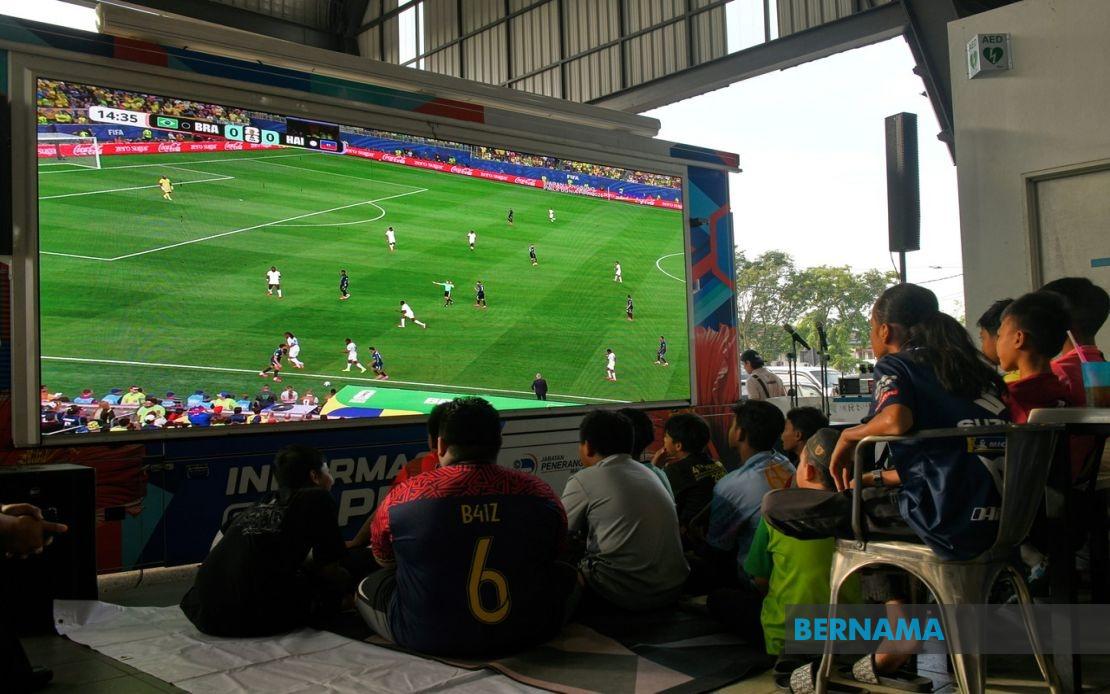
The Malaysian government's decision to offer free broadcasts of 2026 FIFA World Cup matches through Radio Televisyen Malaysia and Unifi TV is proving beneficial for restaurant operators and ordinary Malaysians seeking to watch the tournaments without incurring steep subscription costs. Communications Minister Datuk Fahmi Fadzil highlighted the positive reception during a community visit to Butterworth, noting that food and beverage business owners have particularly welcomed the measure as a significant cost-saving initiative in an increasingly expensive operating environment.
The initiative marks a departure from previous World Cup tournaments, when viewing matches typically required paid cable or streaming subscriptions that placed financial burdens on both commercial establishments and households. For some traders, according to Fahmi, this represents the first opportunity in over twenty years to air World Cup matches without expensive licensing arrangements or broadcasting fees. The sentiment reflects how important international sporting events are to Malaysian businesses, particularly restaurants and food courts that attract customers through televised entertainment.
Fahmi explained that viewers can access World Cup matches across multiple platforms—RTM's traditional broadcast channels, the RTMKlik streaming service, and Unifi TV—creating accessible options for different audience segments. This multi-platform approach ensures that regardless of technological preferences or infrastructure constraints, Malaysians throughout the country can participate in the global sporting spectacle. The widespread availability reduces the incentive for unlicensed or pirated broadcasts, benefiting both content rights holders and the government's broader digital strategy.
The initiative carries particular significance for Malaysia's food and beverage sector, which has faced mounting operational pressures. Restaurant owners can now showcase major sporting events as customer attractions without absorbing substantial broadcasting costs that would otherwise compress already-tight margins. Fahmi emphasised that the government hopes this policy will drive additional foot traffic to food establishments during match days, providing an economic stimulus to traders without requiring direct subsidy programs.
Beyond immediate cost relief, the free broadcast arrangement reflects government positioning on accessibility and public welfare. By framing sports consumption as a public good rather than a premium commodity, policymakers are acknowledging that major international events function as social glue in diverse societies. Malaysians from different backgrounds gather around televised matches, creating shared cultural moments that transcend ethnic and religious boundaries.
During his market visit, Fahmi interacted directly with traders and customers watching the Brazil-Haiti match, gathering unfiltered feedback about business conditions and operational challenges. These ground-level insights proved valuable—traders raised concerns about rising costs stemming from regional geopolitical tensions, particularly the ongoing West Asian conflict. Supply chain disruptions and commodity price inflation resulting from that instability have compressed profit margins for food businesses, making the World Cup broadcast initiative a tangible government response to trader concerns.
Fahmi's visit underscored his argument that political leaders must regularly engage with communities beyond formal settings to understand real economic pressures. He advocated for increased ground presence by fellow ministers, Members of Parliament, and state assemblymen, contending that firsthand observation of trader struggles creates accountability and informs evidence-based policy. This perspective reflects broader Malaysian political culture where visible, approachable governance is valued by constituents.
The Communications Minister flagged that international conflict impacts Malaysian consumers through increased prices for imported goods and certain commodities. While diplomatic efforts continue toward West Asian peace, immediate relief through cost-reducing measures like free sports broadcasts provides practical support. He committed to escalating trader feedback to Prime Minister Datuk Seri Anwar Ibrahim and Penang Chief Minister Chow Kon Yeow, establishing a feedback loop between grassroots business concerns and federal policy formation.
The free World Cup broadcast initiative also carries strategic implications for Malaysia's digital television transition and platform consolidation. RTM's involvement maintains the public broadcaster's relevance in modern media consumption, while Unifi TV's participation leverages private sector infrastructure to expand reach. This public-private coordination demonstrates how major sporting events can catalyse broader technology adoption and digital access improvements across the nation.
For Southeast Asian context, Malaysia's approach contrasts with neighbouring markets where World Cup broadcasting remains commercially restrictive. Singapore, Thailand, and Indonesia maintain varying subscription models, potentially making Malaysia's open-access strategy a competitive advantage for attracting expatriates and regional visitors during tournament periods. The policy implicitly positions Malaysia as a viewer-friendly destination where major international sporting events are communal experiences rather than gated commercial offerings.
Looking forward, the success of free World Cup broadcasts may influence government thinking on other major sporting events and entertainment programming. Should the initiative deliver measurable benefits to the food and beverage sector through increased customer volumes, policymakers might expand similar free-access models to other tournaments or cultural broadcasts. This could establish precedent for viewing sports as quasi-public services deserving government facilitation rather than purely commercial offerings.
The initiative ultimately reflects pragmatic policymaking that recognises small targeted interventions can meaningfully improve business conditions without massive budgetary commitments. By leveraging existing public broadcasting infrastructure and negotiating rights with tournament organisers, Malaysia provides tangible relief to economically-stressed traders while delivering accessible entertainment to citizens—a straightforward policy win in an environment where business confidence requires ongoing government attention.

