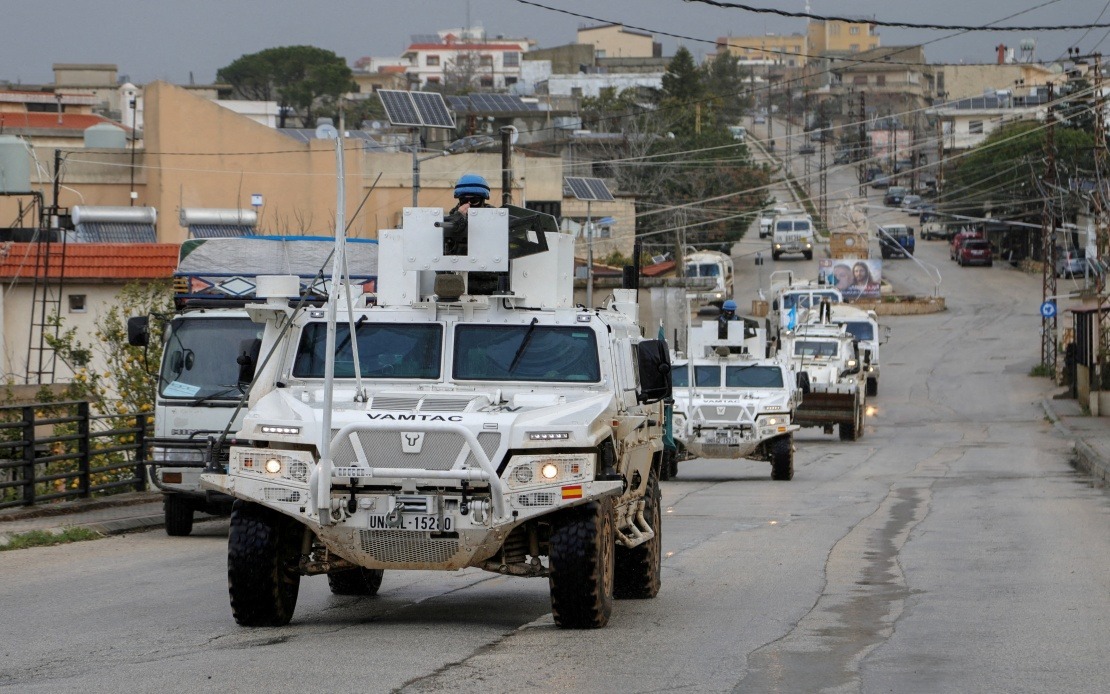
France and Italy have unveiled a strategic partnership aimed at establishing an international coalition to stabilise Lebanon once the United Nations Interim Force in Lebanon (UNIFIL) concludes its decades-long mandate at year-end. French President Emmanuel Macron unveiled the initiative during a bilateral meeting with Italian Prime Minister Giorgia Meloni in Antibes on Thursday, signalling a coordinated European response to a critical geopolitical challenge in the Eastern Mediterranean.
Macron framed the proposed coalition as essential to preserving Lebanese state capacity at a pivotal juncture. The French leader emphasised that the arrangement would operate in close coordination with both the European Union and the United Nations, aiming to reinforce Lebanon's institutional authority and strengthen its armed forces during a vulnerable transition period. This multilayered approach reflects recognition that Lebanon's stability depends not merely on external military presence but on building domestic institutions capable of asserting state control over national territory and preventing non-state actors from filling security vacuums.
The initiative carries particular urgency given Lebanon's fragmentation along sectarian lines and the influence wielded by armed groups with regional connections. By proposing to maintain an international footprint beyond UNIFIL's withdrawal, Paris and Rome are attempting to prevent Lebanese territory from becoming a platform for escalating regional tensions. Macron explicitly stated that preventing such an outcome remains a central motivation, acknowledging that Lebanon's internal stability and external conduct remain intertwined with broader Middle Eastern dynamics.
Meloni reinforced her French counterpart's reasoning, characterising an international presence as imperative to forestall what she termed an "extremely dangerous" security vacuum. Italy's emphasis on this risk reflects broader European concerns about Mediterranean stability and the cascading effects of state collapse in the region. For Italy in particular, Lebanon's trajectory carries direct implications given historical ties, Italian diaspora communities, and broader European security interests stretching across North Africa and the Levant.
Under United Nations Security Council Resolution 2790, UNIFIL's mandate expires on December 31, initiating a mandatory one-year withdrawal and drawdown process for all personnel stationed in Lebanon. This deadline creates the immediate policy imperative driving French and Italian planning. UNIFIL, established in 1978 following Israeli military operations, has served as a stabilising mechanism for nearly half a century, and its departure represents a structural break in Lebanon's security architecture that cannot be improvised at the last moment.
The proposed coalition model diverges from traditional peacekeeping frameworks in significant ways. Rather than seeking a direct UN Security Council mandate for a new multinational force—which could encounter Russian or Chinese vetoes given Syrian and Iranian interests—France and Italy are pursuing a looser configuration operating within UN frameworks but potentially initiated through bilateral or coalitional arrangements. This approach mirrors contemporary security partnerships in the Middle East and reflects the constraints imposed by great power competition within the Security Council.
For Malaysia and Southeast Asian observers, the French-Italian initiative illuminates broader patterns in how middle powers construct security responses when international institutions prove constrictive. The coalition model deployed here—combining diplomatic coordination, European institutional engagement, and national capability deployment—offers lessons applicable to regional security challenges in Southeast Asia, particularly regarding non-traditional threats and sovereignty preservation in strategically contested zones.
Lebanon's particular vulnerability stems from its fractured governance, the presence of Hezbollah as a state within a state, Iranian and Syrian regional influence, and proximity to Israeli security concerns. The country's financial collapse, ongoing political paralysis, and the aftermath of the Beirut port explosion have further eroded state capacity. Any international arrangement must address these structural weaknesses whilst respecting Lebanese sovereignty—a delicate balance that previous international interventions have struggled to achieve.
The timing of this announcement also reflects shifting European strategic thinking following the Russian invasion of Ukraine. European capitals increasingly recognise that regional instability can have continental repercussions and that proactive engagement in threatened areas serves European interests directly. Lebanon represents precisely the type of ungoverned or poorly governed space where instability can metastasise into broader security threats affecting Europe through migration, terrorism, and regional proxy conflicts.
France brings particular leverage to such initiatives given its permanent seat on the Security Council, Mediterranean naval capacity, and historical relationships in the Levant. Italy contributes significant military capabilities and institutional presence through Mediterranean operations. Together, they represent credible European power that neither dwarfs Lebanese sovereignty nor appears as American hegemonic extension—a positioning potentially more acceptable to various Lebanese constituencies.
The proposal remains preliminary, requiring extensive diplomatic negotiation with Lebanese authorities, regional powers, and other potential coalition members. Gaining acceptance from a Lebanese government already deeply fractured requires demonstrating that external support strengthens rather than constrains national sovereignty. Success also depends on preventing coalition participation from becoming another vector for proxy competition between Iran and Gulf States through competing alliance structures.
For Southeast Asia, the French-Italian model presents both opportunities and cautionary lessons. The commitment to coordinating through existing international institutions whilst creating flexible, coalition-based arrangements offers alternatives to both traditional peacekeeping and great power spheres of influence. However, the initiative also underscores how regional powers must actively construct their own security architectures rather than passively awaiting international rescue.

