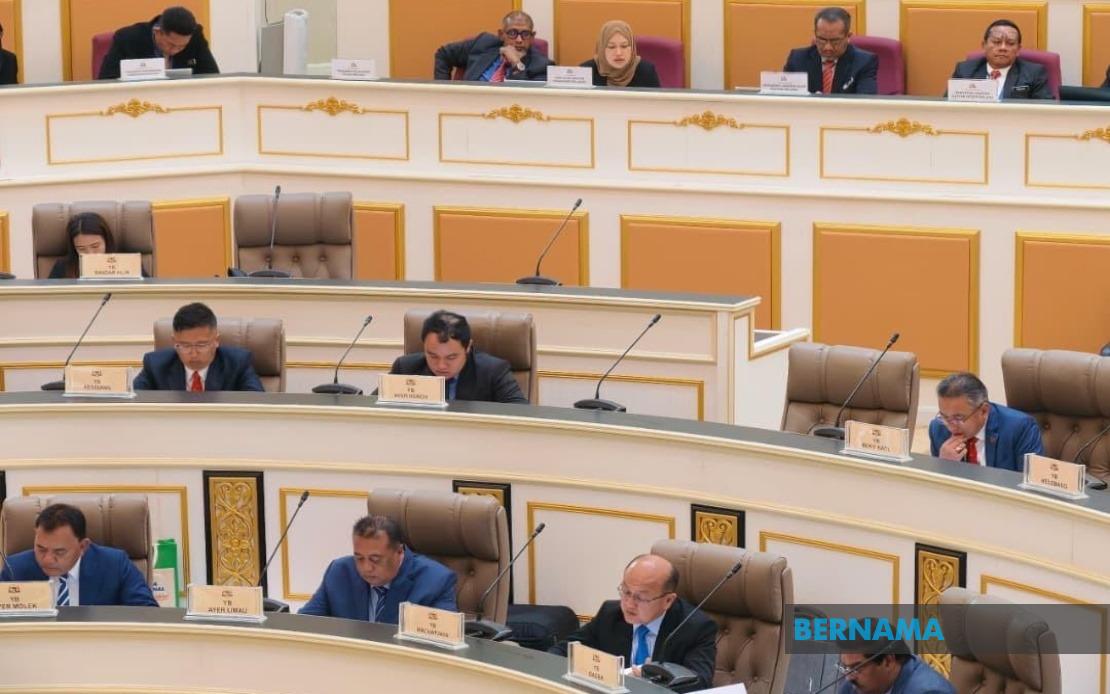
The political landscape of Melaka's State Legislative Assembly underwent a significant reconfiguration on the final day of sitting, as four Democratic Action Party assemblymen relocated their seating arrangements to sit alongside opposition lawmakers. This physical relocation reflects a deeper rupture within the state's ruling coalition, marking a notable setback for the Pakatan Harapan alliance and complicating the administration's parliamentary arithmetic in the peninsula's historic state.
The four assemblymen who moved to the opposition benches are Allex Seah Shoo Chin representing Kesidang, Low Chee Leong from Kota Laksamana, Leng Chau Yen from Banda Hilir, and Kerk Chee Yee from Ayer Keroh. Their realignment now positions them adjacent to Perikatan Nasional lawmakers and independent assemblymen, following an announcement made the previous day regarding their party's withdrawal of parliamentary support from the Barisan Nasional-led administration. This development underscores the fragility of coalition arrangements in Malaysian state politics, where individual assemblymen's grievances can rapidly translate into structural instability.
Notably, the sole representative from Parti Amanah Negara, Adly Zahari from Bukit Katil who simultaneously chairs the Melaka Pakatan Harapan coalition, maintained his position within the government bloc. His decision to remain seated with the ruling coalition creates an unusual bifurcation within the Pakatan Harapan delegation, signalling potential internal disagreement over the party's wider strategy and approach to the constitutional amendments that triggered the crisis.
The catalyst for this political upheaval centres on legislative amendments to the Melaka State Constitution that would enable the appointment of nominated assemblymen, a mechanism that the DAP vehemently opposes. Melaka DAP chairman Khoo Poay Tiong characterised the party's immediate withdrawal of government support as consistent with the party's principled stance against what it views as anti-democratic provisions that circumvent electoral accountability. The party contends that creating pathways for appointed rather than elected representatives fundamentally undermines democratic legitimacy and concentrates power beyond the scrutiny of voters.
This constitutional dispute carries implications extending well beyond state-level politics. Malaysia's constitutional architecture has long permitted both federal and state-level appointment mechanisms for legislative bodies, yet the Melaka case highlights growing resistance from opposition parties to what they perceive as creeping authoritarianism. The nominated assemblyman model reduces the electorate's direct influence over governance and has become a flashpoint in broader debates about electoral integrity and democratic participation across Southeast Asia.
Prime Minister Datuk Seri Anwar Ibrahim publicly appealed to Melaka DAP to postpone their decision, urging the party to prioritise state development and public welfare above internal coalition disputes. His intervention reflects the federal government's stake in maintaining stability within BN-controlled territories and preventing further defections that might weaken Kuala Lumpur's political position. However, the Prime Minister's plea ultimately proved unsuccessful, suggesting that DAP's grassroots concerns about democratic principles overrode federal-level pressure.
Assembly Speaker Datuk Ibrahim Durum addressed the House on the day of relocation, appealing to all assemblymen to conduct proceedings with discipline and propriety whilst observing established parliamentary conventions. This formal acknowledgment of the seating change underscores the legislative significance of the DAP's withdrawal and signals the Speaker's awareness that parliamentary decorum would be essential to managing a more fractious assembly dynamic going forward.
The constitutional amendment issue has exposed fault lines within Melaka's political coalitions that may have longer-term consequences for state governance. By creating a mechanism for appointed rather than elected representation, the amendments ostensibly provide the ruling coalition with greater flexibility in managing numbers, yet they simultaneously alienate coalition partners committed to electoral democracy. The DAP's decision to quit the government bloc rather than accept these provisions suggests that ideological commitments to democratic principles can supersede coalition loyalty when sufficiently provoked.
For Malaysian voters and political observers, this episode illustrates the persistent instability of multi-party coalitions at the state level and the challenges inherent in maintaining unity across ideologically diverse partners. The Melaka situation also demonstrates how constitutional matters can swiftly transform into existential coalition crises, particularly when smaller parties perceive threats to democratic norms that their larger coalition partners are prepared to tolerate.
Looking forward, the realignment raises questions about the sustainability of BN governance in Melaka without DAP's legislative support. While the government may still command a numerical majority through Perikatan Nasional representatives and independents, the loss of DAP backing signals eroding consensus on fundamental governance questions. Whether other Pakatan Harapan representatives in other states might face similar pressures regarding nominated assembly mechanisms remains an open question, with potential implications for coalition stability across Malaysia's federal system.

