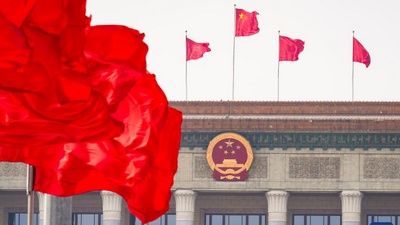
China's Central Commission for Discipline Inspection and the National Commission of Supervision announced on Saturday, June 20, that they are investigating Zhu Changjie, the former vice-chairman of the Xinjiang Uygur autonomous region, for alleged serious breaches of Party discipline and violations of national law. The investigation marks another significant development in Beijing's ongoing anti-corruption campaign, though authorities have provided minimal details about the specific allegations against the 69-year-old official.
Zhu's career trajectory reflects the typical progression of senior Chinese bureaucrats within regional government structures. Born in Dongming county in Heze, located in Shandong province, Zhu studied agronomy before joining the Communist Party of China in 1985. He commenced his professional career in 1976, working through a succession of administrative positions within Xinjiang's regional hierarchy over more than four decades.
His early work experience centred on Xinjiang's local government apparatus, where he held various responsibilities in different prefectures across the autonomous region. Specifically, Zhu occupied leadership roles in the Bayingolin Mongol autonomous prefecture and Aksu prefecture, regions that serve important administrative and economic functions within Xinjiang's governance structure. These postings provided him with extensive experience managing complex provincial matters across the expansive northwestern territory.
Zhu's most prominent administrative responsibilities came during the late 2000s and 2010s, periods when Xinjiang faced significant governance challenges and policy shifts. From 2009 until 2017, he directed the Xinjiang regional public security department, a position overseeing law enforcement operations across one of China's largest and most strategically important regions. This eight-year tenure coincided with intensified security operations in Xinjiang following several high-profile incidents. During the same period, from 2011 to 2018, Zhu simultaneously served as vice-chairman of the Xinjiang regional government, a senior administrative role involving oversight of substantial budgetary and policy matters affecting tens of millions of residents.
The investigation into Zhu arrives within the broader context of Xi Jinping's extensive anti-corruption drive, which has persisted as a central pillar of Chinese governance since 2012. The campaign has ensnared thousands of officials at all levels, from local administrators to Politburo members, and has become both a mechanism for disciplinary accountability and an instrument for consolidating political authority. The targeting of senior regional officials has been particularly notable in western provinces where governance structures and resource allocation have faced elevated scrutiny.
Xinjiang's administrative and security apparatus has experienced unusual attention from central authorities in recent years, reflecting its geopolitical significance and the region's role in Chinese development strategies. Officials responsible for public security, ethnic relations, and counterterrorism efforts have faced particular oversight. Zhu's position directing the security apparatus during a transformative period in Xinjiang's governance makes his investigation potentially consequential for understanding internal Party dynamics and enforcement priorities.
The lack of specific details surrounding the investigation is characteristic of how Chinese authorities typically manage high-level political cases, particularly those involving sensitive regions. Public announcements generally confirm investigations without elaborating on underlying allegations, timelines, or evidence until formal charges are eventually filed. This opacity complicates external analysis but reflects institutional practices designed to control narrative and prevent interference during investigative proceedings.
For Malaysian and Southeast Asian observers, Zhu's investigation underscores the continued volatility of China's senior bureaucratic structures and the unpredictability that characterises career trajectories for regional administrators. The case also illustrates Beijing's determination to maintain control over administrative practices in strategic frontier regions, regardless of an official's seniority or prior tenure. The investigation demonstrates that length of service and administrative experience provide insufficient protection against Party discipline mechanisms.
The implications extend to understanding how Beijing manages governance in regions designated as strategically critical. Xinjiang's importance to China's Belt and Road Initiative, its vast energy resources, and its geographical significance as a gateway to Central Asia ensure that administrative personnel remain subject to intense scrutiny. Officials managing sensitive portfolios across western regions must navigate complex expectations regarding security, development, and political reliability simultaneously.
Zhu's case also reflects the generational transition occurring within China's ruling structures. As older cadres who accumulated experience during earlier reform periods gradually exit leadership roles, investigation outcomes influence perceptions regarding institutional stability and predictability for remaining officials. The investigation thus carries significance beyond the individual case, signalling broader patterns in how the Party apparatus evaluates performance and conducts accountability across regional governments.
The absence of additional information prevents definitive assessment of the investigation's trajectory or likely outcomes. However, the decision to announce proceedings publicly through official channels rather than managing the matter internally suggests that authorities consider the case sufficiently significant for wider Party awareness. Whether the investigation concludes with administrative sanctions, legal proceedings, or other disciplinary measures remains to be determined as the process unfolds.

