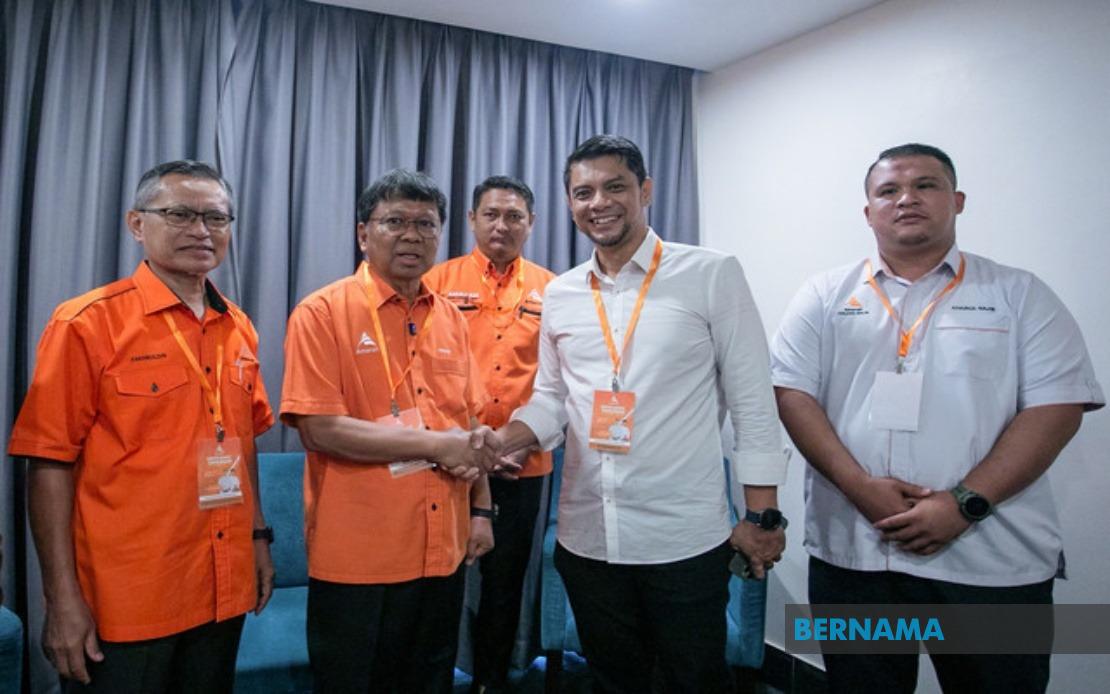
Hasnul Zulkarnain Abd Munaim, the former Titi Serong state assemblyman, has made his way back into the fold of Parti Amanah Negara following an almost six-year absence from the party. The readmission, approved during Amanah's National Management Meeting and National Leadership Meeting held on June 18, marks a significant development in Perak's political landscape and reflects broader patterns of political realignment within the state.
According to Perak Amanah chairman Datuk Asmuni Awi, the decision to reinstate Hasnul Zulkarnain came after careful consideration by the party's top echelon. Asmuni indicated that while Hasnul Zulkarnain had previously signalled his intention to return to Amanah, the political circumstances and party climate had not previously aligned to permit such a discussion. The chairman's comments suggest that the party has adopted a more accommodating stance towards welcoming back defectors, a strategy that mirrors approaches taken by other political organisations within Malaysia.
The timing of this readmission carries particular significance given the current trajectory of Amanah's internal deliberations. Asmuni articulated the party's conviction that this represented an opportune moment to reassess applications from former members seeking re-entry. This shift in approach indicates that Amanah is attempting to consolidate its organisational strength by reconnecting with individuals who maintain ideological alignment with the party's foundational principles, even if they have spent time in other political structures.
Hasnul Zulkarnain's return is not merely a symbolic gesture but carries practical implications for Amanah's standing in Perak. The former state youth chief has long maintained close ties within Amanah's organisational network, and his readmission is expected to provide tangible reinforcement to the party's operational capacity. Asmuni articulated the belief that numerous former members who departed from Amanah continue to harbour affinity for the party's ideological foundations, suggesting that Hasnul Zulkarnain's case may serve as a precedent for broader reconciliation efforts.
Hasnul Zulkarnain himself welcomed the party's decision, framing it as evidence of the leadership's confidence in his ability to deliver substantive contributions to Amanah's work. This measured response underscores that his return is not being positioned as a triumphant vindication but rather as a renewed commitment to collective party objectives. His appreciation for the readmission indicates a pragmatic understanding of the political dynamics that led to his original departure and the conditions that have now necessitated his return.
The four-year journey that brought Hasnul Zulkarnain to this juncture began in March 2020, when he left Amanah alongside two other state legislators from different parties amid the tumultuous political transformation that swept Perak. During that pivotal month, alongside former Tronoh assemblyman Yong Choo Kiong and former Buntong assemblyman A. Sivasubramaniam, both from the Democratic Action Party, Hasnul Zulkarnain announced his transition to independent status. This coordinated departure occurred in the immediate aftermath of the formation of the Perikatan Nasional government in Perak, a transition that fundamentally altered the state's political configuration.
Within months of becoming an independent, Hasnul Zulkarnain pursued a new political home by joining Parti Pribumi Bersatu Malaysia in July 2020. His decision to move to Bersatu rather than immediately finding refuge in another established opposition structure reflected the complex calculations that individual politicians must make during periods of heightened political flux. The three-month interval between leaving Amanah and joining Bersatu suggests a period of careful deliberation regarding his political positioning.
The broader context of Hasnul Zulkarnain's political journey illuminates persistent tensions within Malaysia's political system. The fluidity with which elected representatives migrate between parties, particularly during moments of governmental transition, highlights the pragmatic rather than purely ideological motivations that sometimes guide political behaviour. However, Amanah's willingness to readmit Hasnul Zulkarnain after he spent several years in Bersatu suggests that contemporary Malaysian political parties are becoming more sophisticated in their approach to managing party membership, distinguishing between temporary departures driven by circumstance and permanent ideological divorces.
For Perak's political ecosystem, Hasnul Zulkarnain's return to Amanah could amplify the party's capacity to contest future elections and strengthen its organisational presence across constituencies where he maintains personal networks. His prior experience as both an assemblyman and youth movement leader provides institutional knowledge that the party can leverage, particularly in grassroots mobilisation efforts. Additionally, his return may signal to other Amanah members who have departed for various political vehicles that pathways for reconciliation remain open under the current leadership.
The readmission also reflects Amanah's evolving strategic calculations regarding its role within the opposition coalition and the broader political landscape. By demonstrating a capacity to welcome back former members, the party projects an image of internal stability and confidence, qualities that matter significantly in maintaining cohesion during periods when opposition parties face sustained pressure. This approach contrasts sharply with more rigid organisational models that permanently exile members who leave, potentially driving them toward rival parties rather than facilitating eventual reconciliation.
Hasnul Zulkarnain's case also resonates with patterns observed throughout Southeast Asia where political parties increasingly recognise that maintaining relationships with departing members—even across periods of separation—can prove strategically valuable. In Malaysian politics specifically, where demographic fluidity and shifting coalition dynamics characterise state-level elections, the ability to reintegrate experienced politicians can enhance a party's competitive positioning.
Looking ahead, the significance of this readmission extends beyond Hasnul Zulkarnain's personal trajectory. It signals that Amanah under its current leadership is pursuing a consolidation strategy focused on internal strengthening rather than ideological purity enforcement. Whether this approach generates broader returns through additional readmissions of former members, or whether Hasnul Zulkarnain remains an exceptional case, will provide important indicators of Amanah's strategic direction as the party navigates the approach toward the next electoral cycle.

