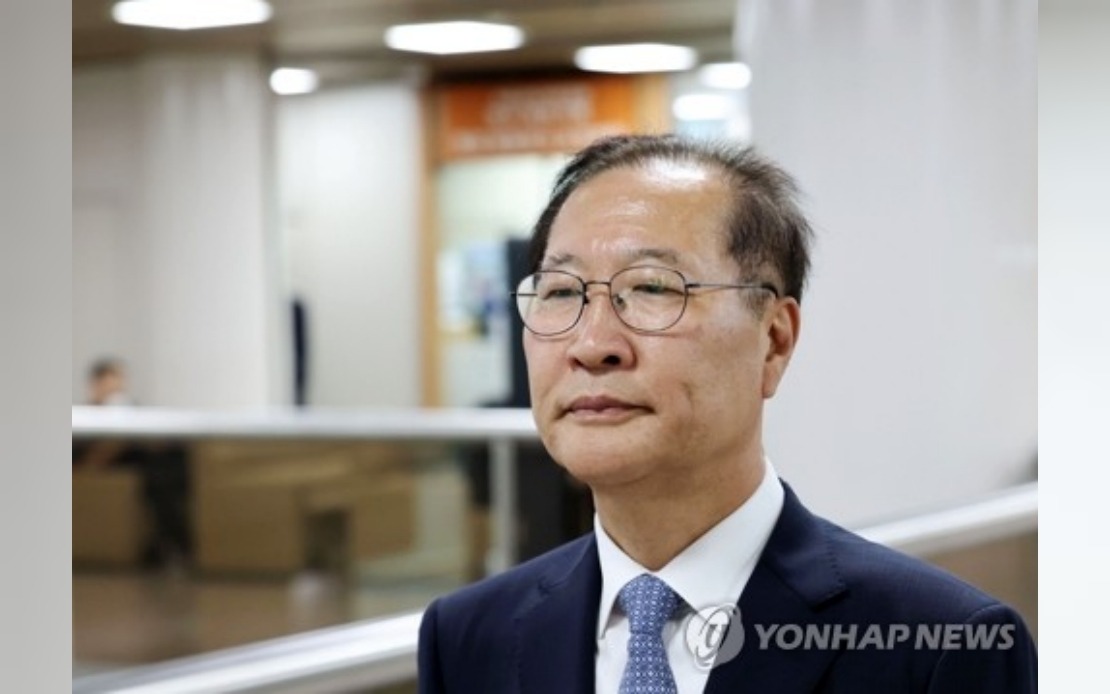
South Korea's former Justice Minister Park Sung-jae has been handed a 25-year prison sentence after a Seoul district court found him guilty of playing a pivotal role in an attempt to overturn constitutional governance through his participation in former President Yoon Suk Yeol's ill-fated martial law declaration on December 3, 2024. The sentence, delivered on Monday, surpassed the 20-year imprisonment recommendation made by the special counsel team leading the investigation. Park was taken into immediate custody, with the court expressing concerns about potential evidence tampering.
The Seoul Central District Court's decision reflects a watershed moment in South Korea's modern political history, as a senior government official faces significant prison time for supporting what prosecutors characterise as an insurrectionary act against the state. The gravity of the conviction extends beyond Park himself, symbolising broader accountability measures targeting those who participated in the constitutional crisis triggered by Yoon's dramatic and ultimately short-lived declaration. The convicted former minister's role as justice minister—traditionally a guardian of legal order—made his participation particularly egregious in the court's assessment.
Park's culpability rested on specific actions taken after Yoon's declaration. Prosecutors demonstrated that he convened a meeting of senior ministry officials to facilitate what prosecutors termed preparatory measures for the putative martial law administration. The court accepted evidence that Park's directives concerned deploying prosecutors to newly created martial law institutions, evaluating prison capacity in anticipation of mass arrests of political opponents, and mobilising ministry staff responsible for travel restrictions. These concrete steps, rather than mere ideological support, formed the substance of the insurrection charge.
In its judgment, the court emphasised that Park fundamentally abandoned his constitutional duty to uphold democratic governance. The judges stated that facing evidence suggesting the insurrection might succeed, Park calculated his personal interests and chose participation over constitutional fidelity. This framing suggests the court viewed the former minister's actions not as passive compliance but as active reinforcement of an anti-democratic scheme. The decision articulates a powerful message about ministerial responsibility during constitutional crises—senior officials cannot claim ignorance or compulsion when supporting attempts to overturn the constitutional order.
Park's conviction places him in company with other senior cabinet members already convicted for similar roles. Former Prime Minister Han Duck-soo and former Defence Minister Kim Yong-hyun have both received convictions for playing key roles in the insurrection. This pattern of high-level accountability suggests the judiciary is applying consistent standards across the executive branch, treating all officials who supported martial law as equally culpable regardless of their ministry or proximity to the president. The scale of convictions among Yoon's inner circle underscores how comprehensively the coup attempt implicated the government.
President Yoon himself received life imprisonment in February for orchestrating the martial law declaration, though he has launched an appeal against that conviction. The prospect of Yoon potentially overturning his life sentence creates uncertainty about whether the lower-ranking officials' convictions might ultimately be reviewed or modified through appellate proceedings. Nevertheless, the appellate courts have shown no sign of leniency in reviewing similar cases, suggesting that even if Yoon's conviction is reversed or reduced, officials like Park might face sustained accountability.
The court rejected additional corruption charges against Park stemming from separate circumstances. The special counsel had indicted him for allegedly providing inappropriate orders to subordinates following a request from Yoon's wife, Kim Keon Hee, in May 2024 regarding prosecution investigations into allegations against her. The court determined these charges fell outside the special counsel team's designated investigative authority, though prosecutors could theoretically pursue them through conventional channels. This distinction between the insurrection charges and the corruption allegations reflects how the special counsel's mandate was narrowly defined.
Park's legal team announced immediate plans to appeal the 25-year sentence, contending that the judgment lacks proper factual and legal foundation. The defense's framing suggests they will challenge the court's interpretation of Park's actions as constituting insurrection rather than mere administrative support for executive directives. This appellate strategy likely emphasises the ambiguity between following orders from a sitting president and actively participating in constitutional violation. However, appeals courts in South Korea have historically upheld insurrection convictions in politically sensitive cases, making Park's prospects of sentence reduction uncertain.
The special counsel team indicated reluctance to appeal the decision, viewing the judgment as appropriately articulating the legal duty of justice ministers to resist unconstitutional martial law declarations and preserve constitutional order. This position from prosecutors signals confidence in the verdict's soundness and suggests they view the sentence as sufficiently vindicating their investigative work. The special counsel's restraint from pursuing further appeals contrasts with the defense's aggressive appellate strategy, possibly indicating confidence that higher courts would sustain the conviction.
For Malaysian and Southeast Asian observers, this case illustrates how established democracies with mature constitutional frameworks respond to executive overreach. South Korea's judicial system demonstrated independence in convicting multiple cabinet ministers despite their powerful positions, suggesting institutional resilience. However, the reliance on special counsel investigation and the protracted legal proceedings also highlight vulnerabilities in democratic systems when sitting executives attempt constitutional subversion. The case serves as a cautionary study in how quickly governmental machinery can be mobilised toward anti-democratic ends when senior officials prioritise political loyalty over constitutional duty.
The conviction further demonstrates that Korean courts are treating the martial law episode as a systemic failure requiring institutional accountability rather than dismissing it as an isolated executive aberration. By convicting not merely the president but his cabinet members and senior advisors, the judiciary signals that participation in constitutional violations carries serious consequences regardless of official position. This comprehensive approach to accountability may deter future coup attempts by raising the anticipated personal costs for officials tempted to participate. Whether this deterrent effect proves durable will depend partly on how appellate courts ultimately treat these convictions in coming months.

