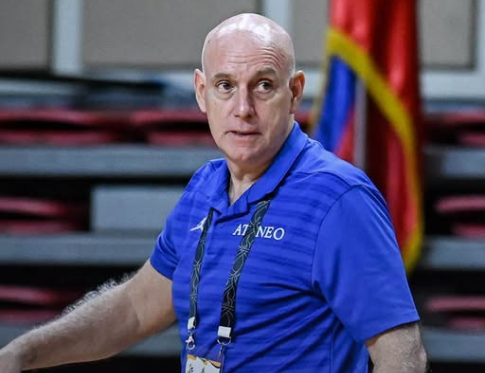
Philippine law enforcement authorities have recommended filing charges against former Ateneo de Manila University men's basketball coach Thomas Anthony 'Tab' Baldwin and 10 team staff members for violating the nation's Anti-Hazing Act, following the June 8 drowning deaths of players Rene Baterbonia and Divine Adili during a training exercise in Dipaculao, Aurora.
The Philippine National Police Criminal Investigation and Detection Group (PNP CIDG) submitted its recommendation after a comprehensive investigation into the incident, which has raised serious concerns about athlete safety and coaching practices in Philippine university sports. The case examines whether a team-building activity crossed into illegal hazing territory, representing a significant shift in how authorities interpret the 2018 anti-hazing law beyond traditional initiation rituals.
Baldwin was joined on the charge sheet by the team's two strength and conditioning coaches Grant Dearns and Ceasar Vicent Javellana Elumba, three assistant coaches Dean Caesar B. Castaño, Sandro Nicholas Romero Soriano and Reynaldo Jacinto, two student managers Paolo Manuel Maceda Adevoso and Andrew Lorenzo 'Drew' Bondoc Salud, physical therapist John Eric Quiambao Rueca, and utility personnel Aris Ramos Pronce and Joel 'Boy' Palmiano Rapa. All 11 individuals were present at the Aurora beach location and have been accused of planning and participating in the activity that led to the deaths.
According to government investigators, the June 8 training day exemplified a dangerous escalation of physical demands that systematically exposed vulnerable athletes to hazardous conditions. Players began the day at 4am with a four-kilometre run, followed by intense physical games with punishments imposed on those who performed poorly. The seawater component of the training commenced around 2 to 2:30pm, coinciding precisely with the day's active high tide at 2:27pm—a timing that created particularly treacherous ocean conditions characterised by powerful rip currents, surging waves, and unpredictable seabed depths.
The PNP CIDG's interpretation marks an important expansion of how anti-hazing legislation applies to athletic programmes. Rather than focusing solely on traditional initiation ceremonies, authorities determined that Republic Act No. 11053 encompasses forced physical conditioning combined with exposure to environmental hazards. Officials emphasised that no one among the 11 team personnel questioned the wisdom of conducting marine activities during peak tidal conditions or paused the increasingly punishing physical regime despite obvious dangers.
Government prosecutors highlighted a critical detail regarding the purpose of the activity. Among the 20 team members present at the Aurora training session, only 17 would ultimately appear on the official roster submitted to the University Athletics Association of the Philippines. This selection mechanism transformed the supposedly collaborative team-building exercise into a de facto trial event, using gruelling physical tests to determine which athletes would earn spots on the competitive squad. Such a framework creates psychological pressure that may compromise athlete safety judgment.
The investigation raised puzzling questions about the circumstances surrounding the two deaths. When authorities recovered the bodies of Baterbonia and Adili from the ocean, neither corpse bore evidence of weights or other objects that might have increased their vulnerability to drowning. The absence of such additions suggested the victims simply could not manage the physical demands imposed upon them during an extended open-water training session conducted under physiologically extreme conditions.
Baldwin had previously acknowledged responsibility for the tragedy in a nine-minute video statement released through Ateneo's official social media channels, offering an apology to the families and community. However, the police investigation proceeded independently, accumulating evidence that transformed what the coaching staff may have intended as a demanding but instructive training regimen into a reckless endangerment scenario violating Philippine law.
The case carries significant implications for how Philippine universities and athletic associations regulate sports training practices. Unlike many Southeast Asian nations, the Philippines has explicit statutory protections against hazing that extend well beyond initiation practices into ongoing training methodologies. This ruling establishes precedent that excessive physical conditioning combined with hazardous environmental exposure, even when not framed as traditional hazing, may constitute criminal violations.
For the broader Malaysian and regional sporting community, the case underscores the critical importance of independent oversight of athletic training methods and environmental safety protocols. Universities across Southeast Asia often operate with minimal external scrutiny of coaching practices, particularly in high-pressure competitive environments where athletic success can overshadow safety considerations. The Philippines' legal action suggests an evolving regional approach to athlete welfare that may influence coaching standards elsewhere.
The investigation involved multiple law enforcement agencies and produced substantial documentation supporting the charges. The case will proceed to the Department of Justice for case build-up and preliminary examination before formal charges are filed, allowing judicial review of whether the evidence substantiates violations of the Anti-Hazing Act. The outcome may reshape how Philippine universities structure training programmes and establish clearer boundaries between intensive athletic development and illegal hazing practices.

