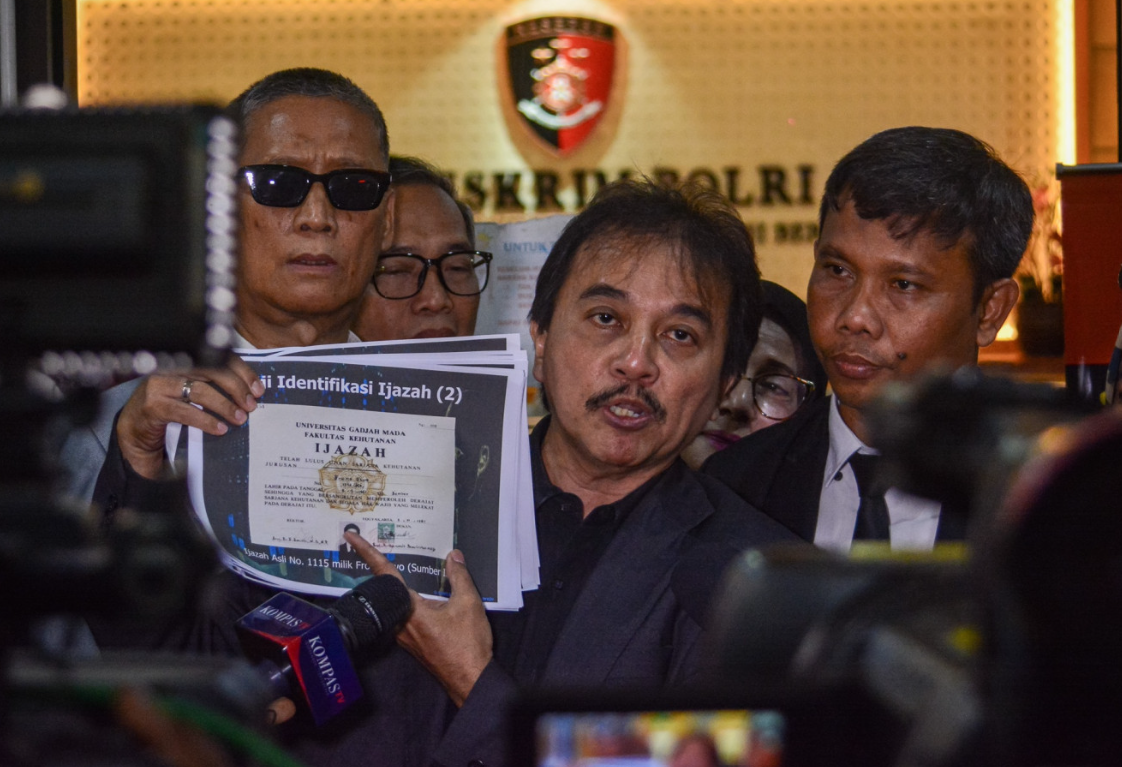
The detention of former youth and sports minister Roy Suryo and health activist Tifauzia Tyassuma by Jakarta police on Friday marks a sharp intensification in one of Indonesia's most contentious political disputes. Both individuals were arrested at their homes as suspects in a defamation case connected to their long-standing allegations that former president Joko Widodo's university diploma is not authentic, according to Roy's legal counsel Ahmad Khozinudin. The move represents a significant hardening of official response to criticism that has festered since 2019, when questions about Jokowi's academic credentials first gained traction through social media channels.
Police characterised the arrests as procedurally routine, insisting they were necessary ahead of transferring the investigation to the Jakarta Prosecutor's Office for the next phase of the criminal justice process. Sr Comr Iman Imanuddin, who heads the General Crimes Directorate, explained that the detention was intended to facilitate the handover of suspects and evidence while completing standard administrative requirements, including health assessments and evidence verification. The framing emphasised efficiency rather than punitive intent, though critics questioned the necessity of physical custody given that both suspects had reportedly cooperated with all previous police summonses and reporting obligations.
The underlying dispute centres on accusations that Roy and Tifa manipulated electronic documents to substantiate their assertions regarding Jokowi's diploma credentials. Beyond defamation, prosecutors have pursued charges under the Electronic Information and Transactions Law, which prescribes sentences of up to six years imprisonment. This legislative framework has become increasingly contentious in Indonesia, with civil rights advocates arguing it is weaponised against political opponents and critics of powerful figures. The charges against Roy and Tifa sit within this broader pattern of legal proceedings that has unfolded across multiple venues since 2019.
The diploma controversy itself has evolved through successive phases of escalation and investigation. Civil litigation commenced in 2022, followed by police investigations and court proceedings that intensified during 2025. Significantly, the National Police declared Jokowi's diploma genuine in May 2025 and formally closed their original forgery inquiry, seemingly bringing closure to the matter. However, Roy Suryo and others reiterated their objections during a case review conducted in July 2025, ensuring the dispute remained politically alive and legally contested despite official institutional findings.
Roy's credentials as a former minister under Susilo Bambang Yudhoyono lent his accusations a measure of political weight and institutional standing, distinguishing him from ordinary social media critics. His persistence in challenging the diploma's authenticity across multiple legal proceedings and public forums positioned him as a symbolic figurehead for those unconvinced by official police conclusions. The detention thus carries implications beyond the immediate individuals involved, signalling official intolerance for sustained institutional criticism from established political figures.
Refly Harun, representing both suspects, immediately challenged the detention order, contending that it was excessive and premature. He highlighted that the prosecutor's office would not formally receive the case until Monday, rendering immediate custody superfluous from a procedural standpoint. His arguments reflected a broader defence strategy questioning whether detention served legitimate investigative purposes or instead functioned as punitive intimidation against individuals who had consistently cooperated with authorities. The timing appeared designed to maximise discomfort and demonstrate official displeasure with their continued allegations.
The police investigation initially identified eight suspects across the defamation case, though this roster has contracted through negotiation and mediation. Eggi Sudjana, Damai Hari Lubis and Rismon Sianipar all had charges dropped following successful mediation processes, suggesting that extrajudicial settlements could provide pathways for other accused parties. Yet Roy and Tifa's prosecution proceeded despite their lawyers' apparent willingness to pursue similar reconciliation approaches, indicating official determination to pursue at least some dimensions of the case to conclusion.
For Southeast Asian observers, this prosecution illustrates broader tensions endemic to democratic systems navigating challenges to institutional authority and political leaders' personal credentials. Indonesia's experience reflects wider regional patterns wherein cybercrime and defamation legislation intersect with political contestation, creating environments where critics of high-ranking officials face legal exposure. The ITE Law has attracted sustained criticism from international human rights organisations for its vagueness and susceptibility to abuse against legitimate political speech and whistleblowing.
The diploma controversy itself taps deeper questions about transparency, institutional accountability and the boundaries of acceptable criticism within democracies. While police investigations concluded the credentials were genuine, Roy and his allies maintained substantive doubts about official findings, suggesting fundamental disagreements regarding evidentiary standards and investigative integrity. These epistemological disputes cannot be resolved through criminal prosecution; they require transparent institutional review and public confidence in fact-finding processes.
For Malaysian readers, the Indonesian case offers instructive parallels with local experiences managing political scandals and allegations against national leaders. The question of how societies balance freedom of expression against protections for individual reputation particularly resonates given Malaysia's own evolving jurisprudence surrounding defamation, cybercrime provisions and political communication. The wholesale detention of critics, even those operating within institutional frameworks, raises concerns about prosecutorial discretion and the weaponisation of criminal law against political opponents across Southeast Asia.
The diplomatic and institutional consequences remain uncertain. International observers are monitoring whether Indonesian authorities will pursue convictions or whether detention functions primarily as a deterrent against further public questioning of official narratives. The precedent established here may influence subsequent political controversies and determine whether institutional critics face legal jeopardy for sustained public contestation of official positions.

