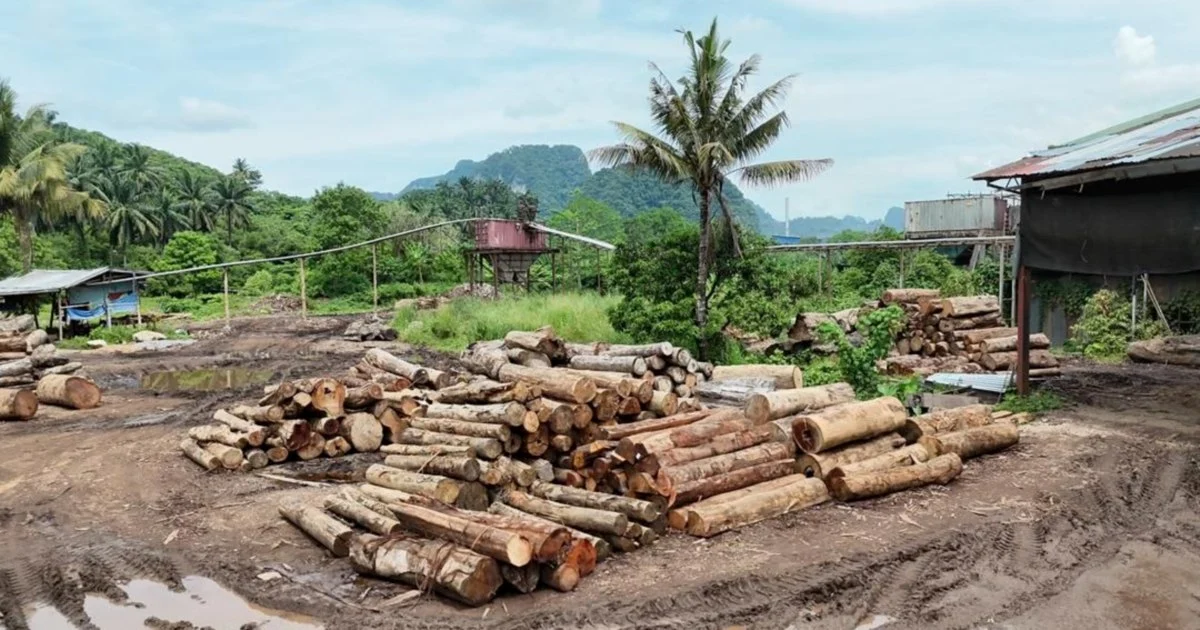
Forest conservation authorities conducted simultaneous enforcement operations across Kelantan and Terengganu, resulting in the arrest of eleven suspects and the recovery of valuable forest resources and equipment. Among those taken into custody were four Indonesian nationals, highlighting the cross-border dimension of timber trafficking that continues to challenge enforcement efforts in the region. The seized materials, comprising illicit timber stocks and processing machinery, have been valued at RM2.43 million, underscoring the substantial economic scale of illegal logging operations in East Coast peninsular Malaysia.
The raids represent part of ongoing efforts by the Government of Forests (GOF) to combat the persistent problem of unauthorised timber extraction and illicit wood trafficking that has plagued Malaysia's forest reserves for years. Operations of this scale and success rate demonstrate the coordination and resource allocation now being directed towards environmental crime enforcement in states where deforestation pressures have intensified. The involvement of foreign nationals in these networks reflects a broader pattern observed across Southeast Asia, where transnational organised crime groups exploit porous borders and weak enforcement points to extract valuable timber resources.
Kelantan and Terengganu have emerged as particular hotspots for illegal logging activity, owing to their extensive forest coverage, accessibility to processing facilities, and proximity to shipping routes that facilitate smuggling operations. The concentration of enforcement resources in these two states signals official recognition that the problem has reached critical levels. Trees logged illegally not only represent a direct economic loss to the state, but their extraction disrupts ecosystem services, threatens biodiversity, and undermines Malaysia's international commitments to sustainable forest management.
The machinery seized during these operations holds significant investigative value beyond its material worth. Processing equipment, transport vehicles, and related assets often provide investigators with crucial leads regarding the scale, sophistication, and operational networks behind timber trafficking enterprises. By tracing ownership, maintenance records, and usage patterns of confiscated machinery, enforcement teams can establish links between seemingly disparate operations and identify key organisers and financiers operating at the top of these criminal hierarchies.
The presence of Indonesian nationals among those detained raises important questions about bilateral cooperation and information-sharing between Malaysian and Indonesian forest authorities. Cross-border timber trafficking typically involves networks that span both nations, with operations in one country often coordinated with processing, storage, or export arrangements in the other. Enhanced coordination at the enforcement level, supported by political commitment from both governments, remains essential to disrupting these transnational supply chains effectively.
The monetary value attached to confiscated materials—RM2.43 million—underscores why illegal logging remains attractive to criminal networks despite escalating enforcement risks. These proceeds represent significant income for organisers and financiers, particularly when weighed against the minimal investment required to mount operations in remote forest areas where surveillance capacity remains limited. The economics of timber trafficking in Southeast Asia remain fundamentally imbalanced in favour of illegal operators unless penalties, detection rates, and enforcement visibility increase substantially.
These operations occur against a backdrop of Malaysia's broader forest conservation challenges. The country has committed to reducing greenhouse gas emissions and protecting biodiversity as signatory to international environmental agreements. Unchecked illegal logging directly undermines these commitments and complicates efforts to maintain forest cover at levels consistent with national development objectives and climate action targets. Each tonne of timber removed illegally represents both immediate revenue loss and long-term environmental cost.
The enforcement model demonstrated in these operations—coordinated multi-agency actions spanning multiple states with significant resource seizures—suggests investment in forest crime detection and investigation capabilities has expanded. However, sustainability of such efforts depends on consistent funding, trained personnel, and technological capacity to monitor vast forest areas. Intelligence-led enforcement, as evidenced by the precise timing and location of these raids, indicates that information gathering and tip-off mechanisms are functioning adequately, though room for improvement remains.
For Malaysian consumers and legitimate timber businesses, operations targeting illegal suppliers create opportunities to strengthen market differentiation around legally certified products. As enforcement against illegal timber intensifies, the competitive advantage of companies committed to sustainable sourcing becomes more pronounced. Industries dependent on timber—construction, furniture manufacturing, and pulp production—benefit from reduced supply of illegally obtained competitors' raw materials, though short-term price effects may occur during market adjustments.
The detained individuals now face investigation and potential prosecution under forest conservation and environmental protection legislation. Sentencing outcomes from comparable cases typically carry imprisonment terms and substantial fines, though penalties vary based on factors including quantities involved, prior criminal history, and degree of culpability. Media coverage of these enforcement actions serves an important deterrent function, signalling to potential offenders that detection and prosecution risks exist.
Moving forward, the scale and consistency of enforcement operations will prove crucial to addressing timber trafficking. These raids represent a single enforcement cycle, and sustained pressure requires comparable operations across subsequent months and years. Intelligence gathering, international cooperation with Indonesian authorities, and community reporting mechanisms that incentivise reporting of suspicious logging activity all contribute to comprehensive enforcement strategies that move beyond reactive operations toward proactive disruption of criminal networks.
The Kelantan and Terengganu operations demonstrate that detection and apprehension of timber traffickers remains possible with adequate resource deployment and operational coordination. The challenge facing Malaysian authorities involves scaling these successes across the country's remaining vulnerable forest zones while maintaining pressure on networks that have operated with relative impunity for extended periods.

