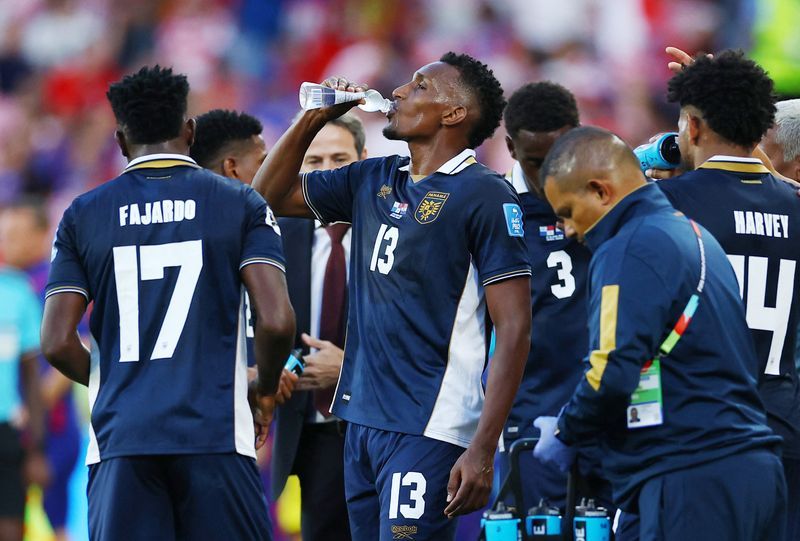
FIFA president Gianni Infantino has moved to silence mounting criticism of the mandatory hydration breaks now woven into World Cup matches, rejecting suggestions that the stoppages exist primarily to serve commercial interests. Speaking on Wednesday, Infantino asserted that the governing body's position is rooted entirely in athlete welfare and competition integrity, not revenue generation or broadcaster convenience.
The three-minute breaks, positioned at the 22nd and 67th minutes of every match across the tournament, have triggered sustained pushback since fixtures began. Critics spanning players, coaches, and fans have questioned whether the measure genuinely serves the stated purpose of helping athletes manage intense heat across North America, or whether it primarily creates additional advertising windows that benefit media partners. The suspicion gained traction when broadcasters utilised the stoppages to insert commercial content, amplifying viewer frustration.
Infantino's rebuttal hinges on a financial argument: FIFA received no extra money from introducing the breaks because all broadcast and commercial contracts predated the announcement. This distinction matters legally and politically, as it removes the financial motive that sceptics might otherwise attribute to the decision. By this logic, the organisation gains nothing commercially from the stoppages and therefore has no incentive to support them for profit. The argument carries weight within FIFA's governance framework, though it does not necessarily address the practical reality that broadcasters benefit from the additional time slots, whether FIFA captures that value or not.
The strategic dimension of the breaks has emerged as perhaps the most substantive concern among high-profile coaches. The stoppages grant in-game opportunities for coaching staff to deliver fresh tactical instructions and adjustments—a privilege previously unavailable without substitutions or natural stoppages. England manager Thomas Tuchel argued the interruptions fundamentally alter match character, while Uruguay's Marcelo Bielsa contended that fragmenting the game into shorter intervals strips away what makes football distinctive as a continuous, flowing sport. Both coaches articulated a philosophical objection: that the breaks reshape the sport's essential nature.
Not all voices have rejected the measure outright. Spain coach Luis de la Fuente and Netherlands captain Virgil van Dijk have acknowledged the legitimate health rationale behind hydration breaks in extreme heat. However, both have questioned whether the rule should apply universally across all venues and weather conditions. Their critique reveals a more nuanced position: the breaks may be justified in genuine heat emergencies but seem unnecessary in cooler climates or under covered stadiums where environmental stress is minimised. This distinction highlights gaps in FIFA's implementation, where a one-size-fits-all approach may overreach.
Infantino attempted to address the universality question by invoking both player welfare and competitive fairness. He emphasised that the World Cup's compressed schedule—played over 39 days with teams potentially facing eight matches in that span—makes scheduled rest moments valuable for athlete recovery. This framing resets the debate from pure hydration to broader fatigue management across an unusually demanding tournament structure. The extended schedule and fixture congestion indeed present legitimate medical justification for regulated rest intervals.
The competitive fairness argument carries particular force. Infantino noted that without standardised breaks, coaching decisions would depend partly on ambient conditions. A coach in a cooler match would theoretically have fewer tactical opportunities than a counterpart managing a hotter fixture, creating an unequal advantage divorced from actual team quality. This logic suggests that uniform breaks establish a level playing field, ensuring that tactical flexibility depends on deliberate tournament design rather than geographic accident. Southeast Asian readers, familiar with regional tournaments where weather variability can affect matches, may recognise the legitimacy of this concern.
Yet Infantino's fairness argument contains an internal tension. The breaks create equal tactical opportunity, but they also impose the same stoppages even when heat is not genuinely a factor. Venues with climate control or cooler ambient temperatures arguably do not need the breaks, yet receive them anyway. This universalisation might serve fairness in one sense while creating unnecessary interruptions in another. The logic works best if the underlying premise—that all venues genuinely require heat management—holds true across all tournament sites.
The FIFA president also offered a performance-based defence, asserting that the breaks have not visibly reduced match intensity or player exertion levels. If matches retain their pace and physical demand despite the stoppages, then the breaks arguably fulfill their stated purpose without compromising the sport's competitive quality. This empirical claim would require independent verification through match analysis, but it provides a testable framework for evaluating the measure's actual impact rather than relying purely on perception or coach opinion.
The hydration break controversy reflects broader tensions within modern football between commercial imperatives, athlete welfare, and competitive integrity. FIFA faces pressure to prioritise player health amid climate challenges while maintaining match flow that fans value and broadcasters depend upon. The dispute also reveals generational divides among coaches: some, particularly European tacticians, view the breaks as unwelcome disruptions, while medical professionals and physiologists may evaluate them differently based on heat stress data.
For Malaysian and Southeast Asian football communities, the debate carries relevance beyond the World Cup. Regional tournaments increasingly contend with extreme heat, humidity, and air quality issues that legitimately threaten player welfare. How FIFA resolves this tension—whether breaks remain universal or become conditional—may influence how AFF Cup organisers and other regional bodies approach similar challenges. The question ultimately asks whether football can adapt its fundamental rules to modern environmental realities without fundamentally changing the sport itself.

