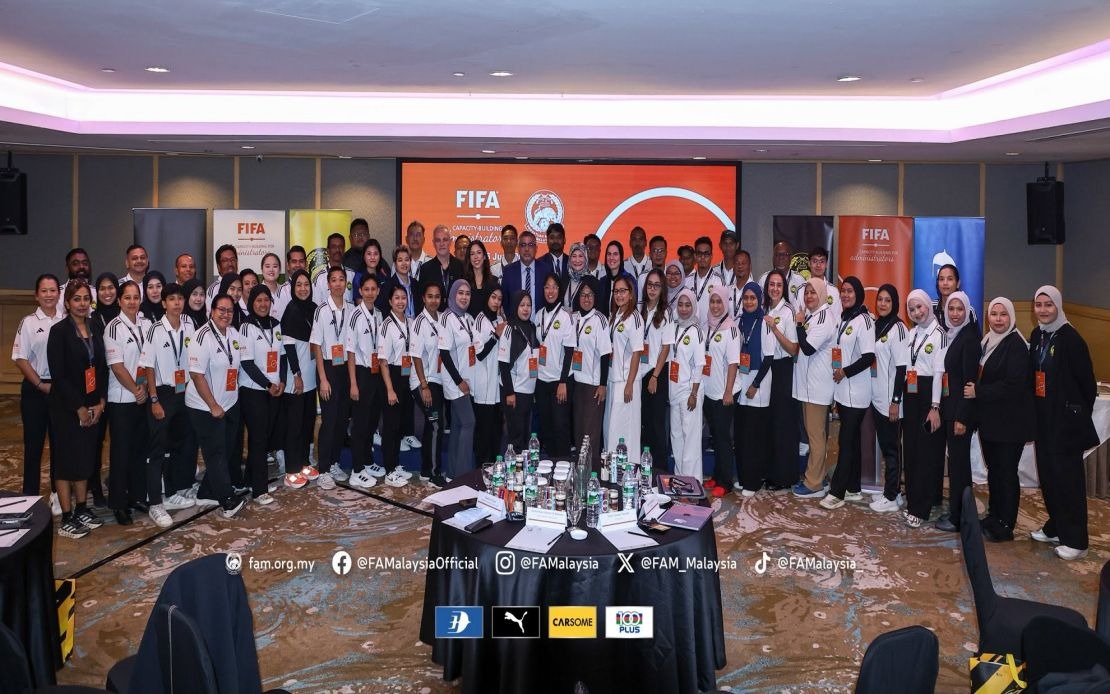
The Football Association of Malaysia launched its FIFA Capacity-Building For Administrators 2026 programme this week, signalling a strategic shift toward building robust management infrastructure for women's football beyond the playing field. The four-day initiative, conducted by FIFA Women's Football Development Experts Safia Abdeldayem and Pema Choden Tshering, represents a deliberate investment in the non-technical dimensions that underpin successful sports ecosystems. Rather than focusing exclusively on player skill development and tactical coaching—areas that have traditionally dominated sports investment—FAM recognises that sustainable growth requires equally strong administrative foundations, qualified managers, and structured governance systems.
The programme addresses a recognised gap in Malaysian women's football: the relative scarcity of trained administrators and team managers equipped with contemporary best practices in sports management. Participants will engage with specialised modules covering Women's Leadership, Women's Competition structures, Club and Players' Rights, and Strategic Planning. These components target the practical knowledge managers and administrators need when coordinating women's teams, handling regulatory frameworks, protecting athlete interests, and plotting long-term institutional development. The breadth of topics reflects FIFA's global approach to developing women's football, ensuring that Malaysian participants benefit from international standards and benchmarks established across multiple confederations and leagues.
FAM's emphasis on this administrative dimension reflects a deeper understanding that women's football in Malaysia has matured sufficiently to require professionalisation beyond grassroots level. While technical coaching expertise remains vital, the absence of skilled administrators can create bottlenecks in league organisation, player development pathways, and institutional credibility. By systematically training team managers and administrative officers, FAM creates a multiplier effect: each trained individual returns to their club or organisation equipped to implement better practices, which gradually permeates the entire ecosystem. This institutional knowledge transfer proves particularly valuable in Southeast Asia, where women's football is still developing and informal, experience-based management approaches remain common.
The participation of senior FAM figures—including Secretary-General Datuk Noor Azman Rahman, AFC Women's Football Committee member Datuk Suraya Yaacob, and Women's Football Technical Director Soleen Al-Zoubi—underscores the association's commitment to this initiative. Their presence at the programme's launch signals to the broader Malaysian football community that administrative development carries strategic importance equivalent to on-field performance. This high-level engagement also ensures that insights generated during the training will directly inform FAM's policy decisions and resource allocation going forward, creating accountability and practical implementation pathways.
Malaysia's position within Asian football provides additional context for this initiative. The AFC has increasingly prioritised women's football development, with growing investment in competitions and capacity-building across member nations. Malaysia, as a mid-tier football nation in the region, faces competitive pressure from neighbours investing heavily in women's programmes. Strengthening administrative capabilities positions Malaysian clubs and the national system to compete more effectively at regional level, where organisational efficiency and professional management structures increasingly differentiate successful programmes from struggling ones. Teams managed professionally tend to attract better sponsorships, retain players more effectively, and develop stronger youth pathways.
FAM's framing of this programme as part of broader ecosystem development rather than isolated training reveals strategic thinking about sustainable growth. The association explicitly connects administrator development to expanding women's leadership across football more broadly. This approach aligns with global trends acknowledging that women's sports require not only female players but female decision-makers, managers, and administrators at all levels. Malaysia's football landscape has historically concentrated management roles among male administrators; developing female leaders in administrative positions addresses both equity and practical capability gaps simultaneously.
The competitive dynamics within Southeast Asia add urgency to these capacity-building efforts. Thailand, Vietnam, and Indonesia have all invested significantly in women's football development in recent years, with improving national team performances and growing domestic leagues. Malaysia cannot rely on historical football tradition alone; building competitive advantage requires systematic development of administrative talent that enables clubs to operate professionally, attract quality coaching and playing talent, and sustain operations through economic cycles. The FIFA partnership provides external validation and expertise transfer that Malaysian institutions might struggle to develop independently.
The programme's focus on competition structures and players' rights reflects contemporary international standards for sports administration. Modern women's football operates within complex regulatory environments involving player contracts, intellectual property, broadcasting rights, and compliance with gender equality standards. Administrators trained only through experience may lack systematic understanding of these frameworks, creating legal and ethical risks for clubs and players. Formalised training ensures consistent application of standards across Malaysian women's football, protecting player interests while establishing professional norms that attract investment and sponsorship.
Looking forward, FAM's commitment to systematic administrator development should cascade through the entire women's football structure. Training delivered to team managers and administrative officers working at club level will eventually influence coaching, recruitment, and player welfare practices. When administrators understand contemporary best practices in competition management and player rights, they can advocate for policy changes at federation level that gradually raise standards across the sport. This bottom-up influence, combined with top-down policy direction from FAM leadership, creates reinforcing momentum toward professionalisation.
The partnership with FIFA provides access to global networks and experience that would be prohibitively expensive for FAM to develop internally. Women's football has undergone profound transformation internationally over the past decade, with increasing professionalisation, higher investment, and more sophisticated management approaches. By hosting FIFA-led capacity building, Malaysia taps into this global knowledge base without requiring substantial domestic research and development. Participants return to their organisations carrying practical tools, international examples, and networks that extend Malaysian women's football's connections beyond regional boundaries.
Sustainability remains a critical consideration in assessing such programmes. Single training events generate temporary enthusiasm but lasting impact requires institutional follow-up, ongoing professional development opportunities, and mechanisms ensuring trained administrators continue advancing their skills. FAM should consider establishing alumni networks among programme participants, creating mentorship structures, and possibly developing certification standards recognising administrator competency. These follow-up mechanisms would transform the FIFA programme from isolated training into the foundation for a continuous professional development culture in Malaysian women's football administration.
Ultimately, this programme reflects recognition that women's football development requires comprehensive investment across all dimensions of sport—not merely player recruitment and technical coaching. By systematically developing the next generation of administrators and team managers through FIFA-led capacity building, FAM invests in institutional foundations that enable sustainable growth, professional standards, and competitive improvement. As Malaysian women's football increasingly competes regionally and aspires to continental relevance, these administrative capabilities will prove as consequential as technical excellence on the field.

