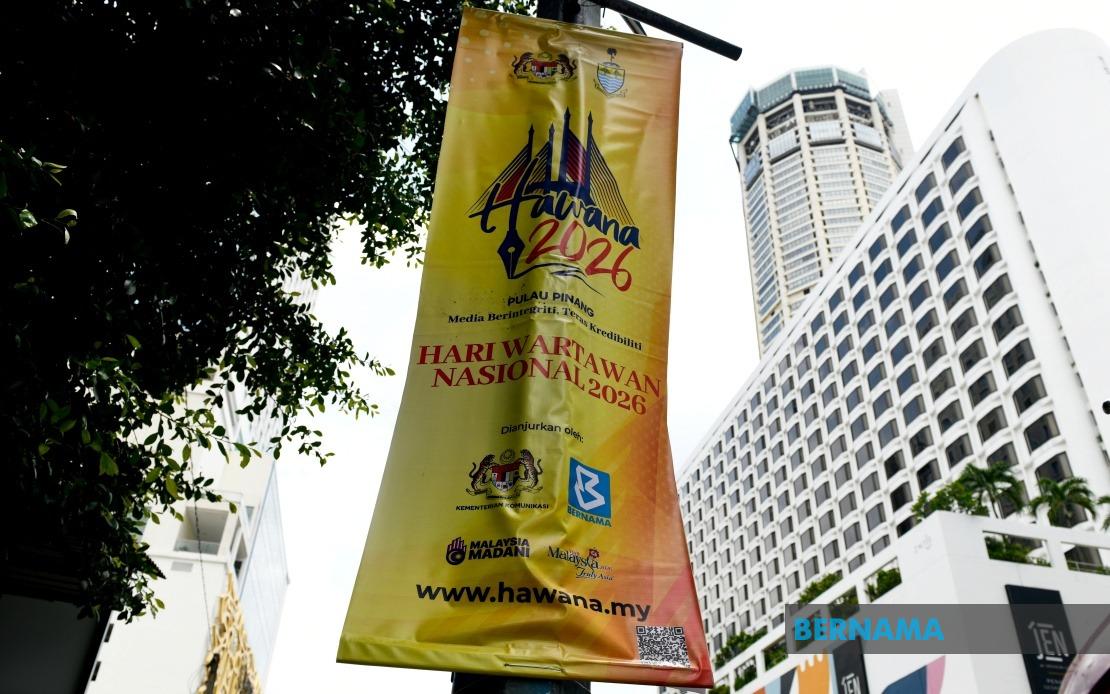
Communications Minister Datuk Fahmi Fadzil has embarked on a two-day working visit to Penang to oversee the concluding events of HAWANA 2026, the nation's premier platform for honouring the contributions and professionalism of media practitioners. The high-profile visit underscores the government's commitment to strengthening the role of journalism in national development, particularly at a time when media credibility and integrity face increasing scrutiny in the digital age.
Fahmi's packed itinerary reflects the breadth of engagement the ministry intends to foster across different segments of the media industry. His opening engagement at the Malaysia Media Retreat Programme 2.0 in Seberang Jaya sets the tone for substantive discussions among media leaders, editors-in-chief, and executives from both local and international news organisations. This retreat serves as a critical gathering point where strategic priorities for Malaysian journalism can be discussed and aligned with national development objectives.
The evening engagement with Penang Yang Dipertua Negeri Tun Ramli Ngah Talib underscores the importance of state-level collaboration in advancing media-related initiatives. The state government's involvement signals recognition that journalism's role in governance and public discourse extends beyond federal structures, requiring coordinated engagement at regional levels to ensure consistent messaging and support for the media sector throughout Malaysia.
A notable component of the visit is the RIUH Pi HAWANA Carnival at PICCA Convention Centre, which broadens the definition of media celebration to encompass the creative industries more broadly. The three-day carnival, now in progress, demonstrates an evolving understanding of how traditional media, digital content creation, and artistic expression intersect in contemporary communication landscapes. The inclusion of workshops in cyanotype printmaking, albumen printing, and stone-carving alongside media dialogue suggests an intentional effort to position journalism within a larger ecosystem of creative expression.
The carnival's attendance figures and vendor mix reveal important insights about Malaysia's creative economy. Hosting more than 24 local creative product brands alongside 20 food and beverage vendors within a free-admission setting indicates government strategy to democratise access to creative industries while providing commercial opportunities for small and medium enterprises. The diverse performance lineup, featuring acts from Sakura Band to emerging artists like Chelsea Ng, reflects contemporary Malaysian cultural diversity and appeals to younger audiences who may not traditionally engage with formal journalism platforms.
On his second day, Fahmi's morning participation in the Jiwa@Sembang Santai programme at Seberang Jaya Public Market Food Court represents an interesting approach to accessibility and ground-level engagement. Holding a dialogue with media practitioners in a public market setting, rather than in formal institutional spaces, signals an effort to make ministerial engagement feel more organic and connected to everyday community life. This grassroots approach may also serve to gather unfiltered feedback from media professionals about sector challenges and opportunities.
The centrepiece of Fahmi's visit is the HAWANA 2026 Grand Finale, themed "Media Integrity Strengthens Credibility", scheduled for the afternoon at Butterworth. The selection of this particular theme reflects ongoing concerns about misinformation, disinformation, and declining public trust in media institutions globally. By positioning media integrity as foundational to credibility, the government emphasises that technical competence alone cannot sustain journalism's vital role in democracy and informed citizenship.
Prime Minister Datuk Seri Anwar Ibrahim's participation in officiating the grand finale elevates the event's political significance and demonstrates top-level government commitment to the media sector. The expected attendance of approximately 1,000 media practitioners from within and outside Malaysia transforms the event into an important international platform for showcasing Malaysian journalism standards and engaging with global media trends. This international dimension allows Malaysian journalists to benchmark their practices against global best standards while positioning the nation as a serious participant in regional and international journalism discourse.
The involvement of the Malaysian National News Agency (Bernama) as the implementing agency for HAWANA is strategically significant. Bernama's position as the national news agency gives the event official government endorsement while ensuring it remains grounded in professional journalism standards. The agency's role ensures that discussions about media integrity and credibility are led by practitioners with deep institutional knowledge of Malaysian media landscape challenges and requirements.
For Malaysian and Southeast Asian observers, this event represents a critical moment in regional media development. Southeast Asia faces persistent challenges around press freedom, ownership concentration, and resource constraints for investigative journalism. The HAWANA 2026 grand finale, bringing together a substantial number of regional and international media practitioners, creates opportunity for knowledge sharing and identification of common solutions to regional journalism challenges. The emphasis on media integrity also signals regional acknowledgment that journalism's sustainability depends not merely on commercial viability but on public trust and institutional credibility.
The broader context for Fahmi's visit involves ongoing media sector evolution amid technological disruption and changing consumption patterns. Malaysian media organisations, like their regional counterparts, navigate tension between digital transformation requirements, revenue model sustainability, and maintenance of editorial standards. HAWANA 2026's focus on integrity and the inclusion of workshops on traditional creative techniques alongside contemporary media dialogue suggests recognition that effective journalism requires both innovation and preservation of foundational professional values.
Looking ahead, the outcomes of dialogues at HAWANA 2026 may inform future media policy and government support mechanisms. The strong ministerial attendance and government investment in the event suggest potential for concrete policy initiatives emerging from practitioner feedback. For Malaysian journalists, the event provides a platform to articulate sector priorities, discuss resource constraints, and advocate for policy environments that support quality journalism while respecting editorial independence.

