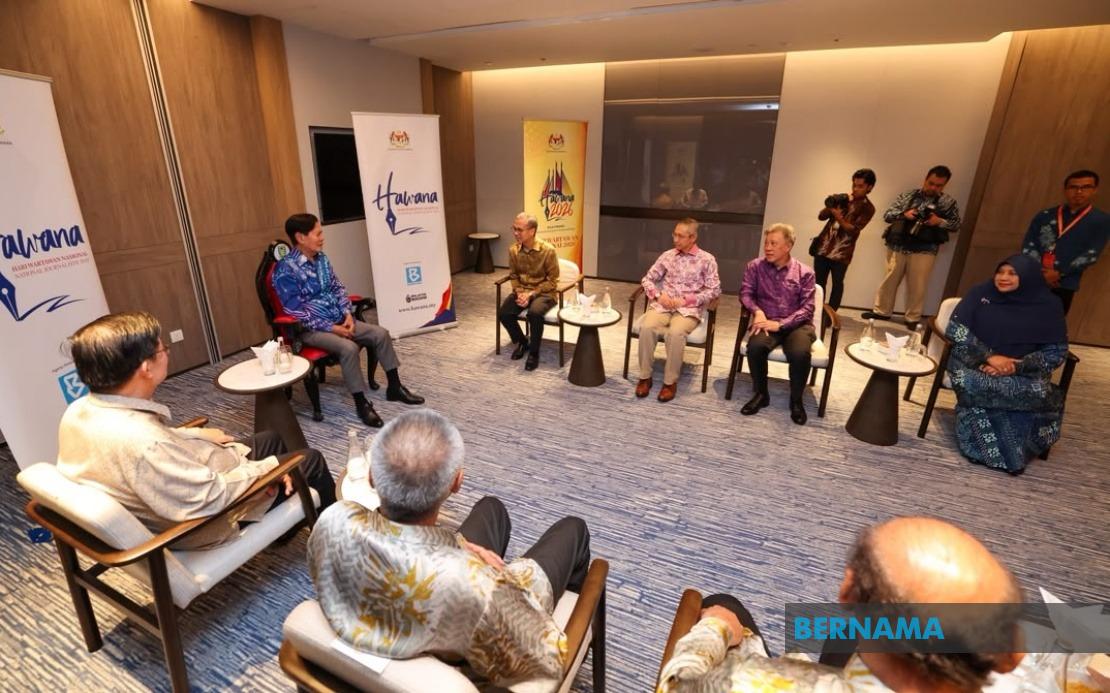
Communications Minister Datuk Fahmi Fadzil has called on media professionals throughout ASEAN to deepen their collaborative efforts in tackling misinformation and ensuring the accuracy of reporting across borders. Speaking at the National Journalists' Day (HAWANA) 2026 celebration dinner in Butterworth, Penang, on June 19, Fahmi emphasised that regional media outlets must work more closely together, pooling resources and exchanging knowledge to uphold journalism standards and combat the growing threat of false narratives that undermine public trust.
The minister's appeal reflects growing concerns within Southeast Asia about the proliferation of misinformation in an age when information spreads faster than editorial verification can keep pace. Fahmi framed the challenge not merely as a professional issue but as a fundamental matter affecting regional stability and development. He argued that strengthened partnerships among ASEAN media organisations would create a more resilient information ecosystem, capable of identifying and neutralising misleading content before it gains widespread traction across multiple countries.
In his address, Fahmi articulated a broader vision of journalism's role in democratic societies and regional governance. He described media as the essential connective tissue linking citizens to factual understanding of current events, while also serving as a critical intermediary between government decision-makers and those tasked with implementing policies. This framing underscores how misinformation doesn't merely affect public perception but can create friction between different stakeholder groups, including policymakers and the communities they serve.
The urgency of Fahmi's message stems from the accelerating velocity of information distribution in Southeast Asia, where social media platforms have become primary news sources for millions. In such an environment, responsibility and truthfulness in journalism have become increasingly difficult to maintain without institutional support and cross-border coordination. Fahmi stressed that journalism grounded in integrity and verifiable facts remains indispensable, even as competing narratives fight constantly for public attention and credibility.
The HAWANA 2026 celebration itself carries significance beyond ceremonial recognition of journalists. Fahmi positioned the event as a platform for reinforcing media professionals' commitment to elevating standards within the journalism profession during an era of unprecedented challenges. These challenges extend beyond traditional concerns about editorial independence and now encompass sophisticated disinformation campaigns, foreign interference through social media manipulation, and the erosion of institutional trust in news organisations.
Penang's role as host for this regional commemoration reflects Malaysia's positioning as a leader in media governance discussions within ASEAN. The presence of Penang Governor Tun Ramli Ngah Talib, Chief Minister Chow Kon Yeow, and other state officials underscored the event's significance to both state and national agendas. By elevating the occasion to a state-level dinner, Malaysian authorities signalled their view that media collaboration and misinformation prevention are matters worthy of high-level political attention.
The gathering also brought together key institutional players in Malaysia's media landscape and ASEAN communications governance. Malaysian National News Agency (Bernama) chairman Datuk Seri Wong Chun Wai and chief executive officer Datin Paduka Nur-ul Afida Kamaludin, alongside representatives from ASEAN Communications Ministers' meetings, created a forum where practical collaboration mechanisms might be discussed and established. Such gatherings provide opportunities for formalising information-sharing protocols and establishing agreed standards for fact-checking and source verification.
For Malaysian readers and Southeast Asian observers, Fahmi's call carries particular relevance given the region's experience with election-related misinformation, religious sensitivity campaigns, and geopolitical disinformation. ASEAN nations have witnessed how false narratives can inflame communal tensions, influence electoral outcomes, and undermine confidence in institutions. A coordinated regional response to these threats could prove more effective than isolated national efforts, though implementing such collaboration requires overcoming significant challenges including language barriers, different legal frameworks, and varying press freedom standards across member states.
The emphasis on knowledge exchange and best practices suggests Malaysia is advocating for a collaborative rather than regulatory approach to combating misinformation. This positions professional journalism communities as the primary defenders against false information, supported by institutional partnerships and shared methodologies. Such an approach relies on journalism's self-regulatory mechanisms and professional ethics rather than government censorship or algorithmic controls.
Fahmi's recognition of Penang State Government's support for hosting HAWANA 2026 also highlights how sub-national governments are becoming active participants in regional media governance. This distribution of responsibility across national and sub-national levels reflects the reality that misinformation operates at multiple scales, from local community discussions to cross-border social media campaigns. Addressing the challenge effectively requires coordinated action at all governmental levels.
Looking forward, the call for strengthened ASEAN media collaboration will likely influence how regional journalism organisations structure their partnerships and training initiatives. Media outlets may increasingly pursue joint fact-checking operations, shared investigations into regional stories, and coordinated responses to viral misinformation. Such arrangements would be particularly valuable when addressing stories that affect multiple ASEAN nations simultaneously or involve cross-border elements.

