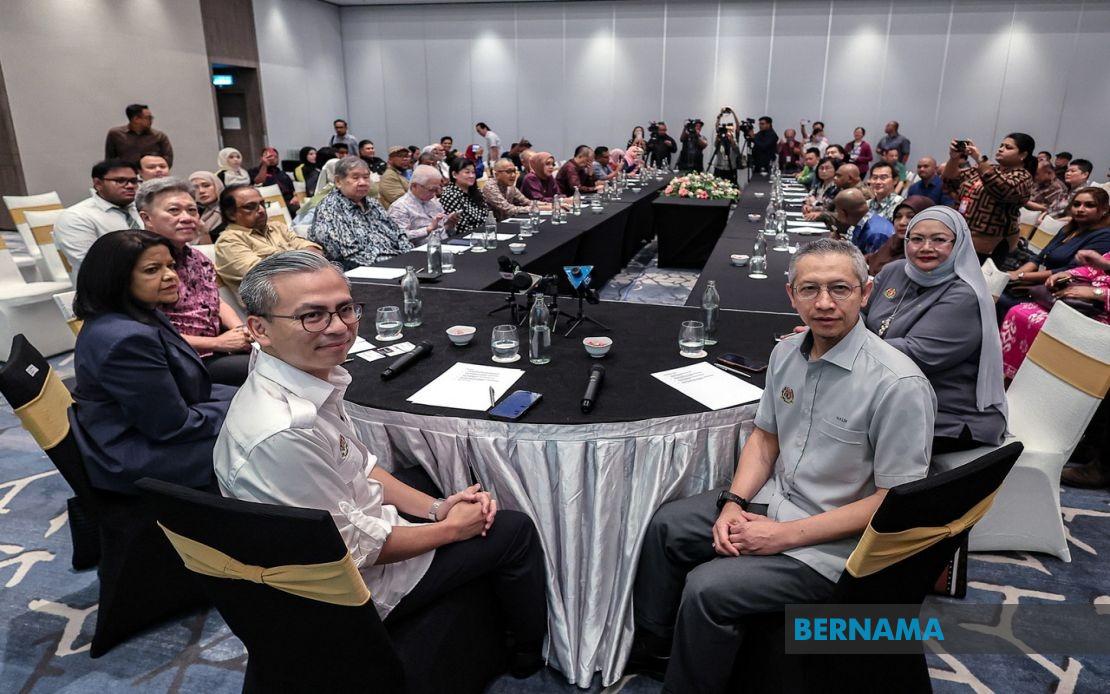
Communications Minister Datuk Fahmi Fadzil has outlined an innovative approach to strengthening government-media relations by proposing that retreat sessions become a permanent fixture at every future National Journalists' Day (HAWANA) celebration. The proposal was unveiled during a dialogue session held in Butterworth on June 20 in conjunction with HAWANA 2026, signalling a shift towards more institutionalised engagement between the government and Malaysia's news industry at a critical moment for the sector's future.
The initiative would position each annual HAWANA gathering as more than a commemorative event, transforming it into a substantive working forum where media practitioners can directly interface with senior government officials. Under the proposal, the Communications Ministry would coordinate with the Malaysian Media Council (MMC) to oversee the logistical and administrative arrangements, ensuring consistency and professional delivery across successive celebrations. This formalisation reflects recognition that structured dialogue mechanisms can yield tangible policy outcomes when properly organised and resourced.
Fahmi articulated a clear purpose for these sessions: gathering comprehensive feedback, perspectives, practical insights, and concrete proposals from across the media industry for subsequent submission to government bodies. The retreat framework would create a systematic channel for practitioners to articulate their concerns and aspirations directly to policymakers, rather than relying on ad-hoc meetings or informal networks. This structured approach carries implications for how the government might receive and act upon industry input in future years.
The scope of discussion envisaged extends beyond immediate operational matters to encompassing substantive policy questions and potential legislative amendments. Participants would be encouraged to raise issues related to existing acts and laws affecting the media sector, including those that may require revision to reflect contemporary realities. Additionally, the sessions would address fundamental questions concerning the long-term sustainability and economic viability of Malaysia's media industry—matters that have become increasingly urgent as the sector navigates digital disruption and changing audience consumption patterns.
The dialogue session itself drew significant representation from across Malaysia's media establishment and government. Attending were Communications Ministry secretary-general Datuk Abdul Halim Hamzah and deputy secretary-general (Strategic Communications and Creative Industry) Datuk Bahria Mohd Tamil, alongside Malaysian National News Agency (Bernama) chairman Datuk Seri Wong Chun Wai, Bernama chief executive officer and HAWANA 2026 working committee chair Datin Paduka Nur-ul Afida Kamaludin, and Malaysian Media Council chairman Tan Sri Nallini Pathmanathan. The presence of senior editors and representatives from local media organisations underscored the collaborative nature of the initiative.
A principal concern animating the proposal is the acute economic challenge facing mainstream media organisations in the digital age. Fahmi identified a particularly vexing issue: content produced by traditional news outlets, when distributed across social media platforms, generates negligible financial returns or commercial revenue. This structural problem represents a growing threat to the viability of professional journalism and newsrooms that rely on sustainable revenue streams to fund their operations. The minister's acknowledgment of this challenge signals government awareness of the industry's economic pressures and openness to exploring collaborative solutions.
In response to the revenue generation problem, Fahmi indicated that the government stands ready to facilitate discussions between the MMC and major social media platforms regarding compensation mechanisms or revenue-sharing arrangements. This positioning suggests potential government engagement with the complex questions surrounding digital platform economics, intellectual property, and fair distribution of value created by journalistic content. The willingness to serve as a facilitator rather than imposing unilateral mandates indicates a nuanced understanding that solutions require multi-stakeholder negotiation.
The proposal carries significance for Southeast Asia's media landscape beyond Malaysia's borders. As digital platforms increasingly shape how news circulates across the region, and as traditional media businesses face similar economic pressures, Malaysia's approach to institutionalising government-media dialogue and addressing platform economics may offer instructive lessons. Regional peers grappling with comparable challenges—from Thailand to Indonesia to the Philippines—may observe how structured consultation mechanisms function in practice.
For Malaysian readers and the domestic media ecosystem, the initiative represents both opportunity and a need for clarity. The retreat framework could provide a genuine venue for industry voices to influence policy development affecting their sector's future, from regulatory reforms to potential government support mechanisms. However, success will depend on whether such forums translate into actionable policy changes or remain symbolic exercises. The credibility of the process hinges on demonstrating that government officials take practitioner input seriously and respond substantively rather than perfunctorily.
The timing of this proposal coincides with broader global conversations about media sustainability and the relationship between governments and journalism. As misinformation concerns and platform regulation occupy increasing policy attention worldwide, Malaysia's creation of structured dialogue channels between communications ministry officials and practitioners could contribute meaningfully to evidence-based policymaking in these domains. Whether the government subsequently demonstrates openness to uncomfortable truths or industry critiques will ultimately determine the retreat model's effectiveness and legitimacy.
Moving forward, observers should watch for concrete outcomes emerging from the first formal retreat session. Will specific policy recommendations be generated and publicly documented? Will government responses to industry proposals be communicated transparently? The success of Fahmi's proposal will ultimately be measured not by the elegance of the consultation mechanism itself, but by whether it produces meaningful institutional change benefiting Malaysia's journalism profession and, by extension, public access to quality news and information.

